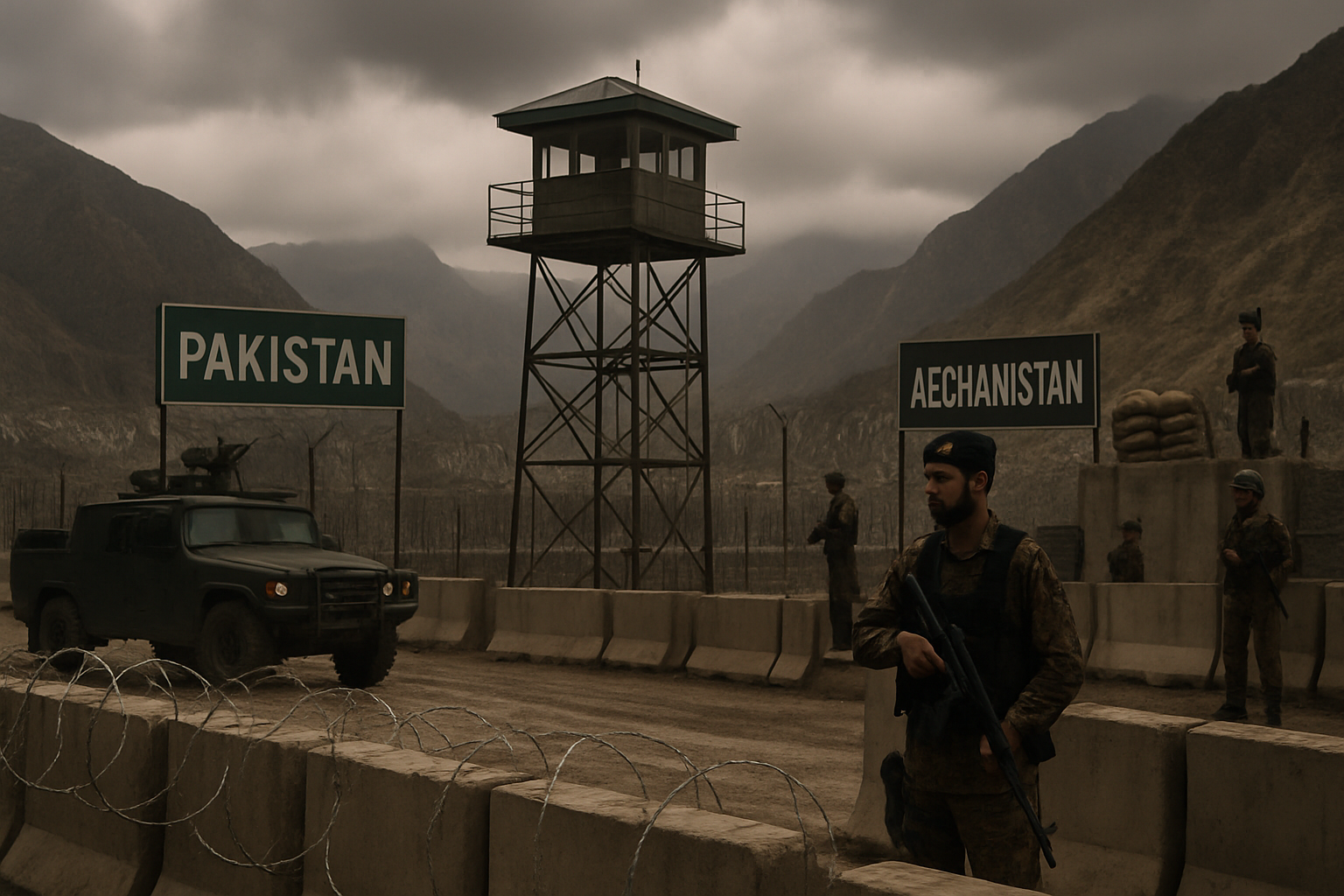
Pakistan formally summoned Afghanistan's deputy ambassador to protest a devastating terrorist attack in Bajaur district that killed 11 Pakistani soldiers, marking the latest escalation in deteriorating cross-border security relations between the neighboring nations.
The diplomatic demarche, issued on Wednesday afternoon, comes after militants linked to the banned Tehreek-e-Taliban Pakistan (TTP) launched a coordinated assault on security forces in Bajaur on February 16, 2026. The attack involved a vehicle-borne improvised explosive device followed by gunfire, resulting in the deaths of 11 Pakistani military personnel.
According to Pakistan's Foreign Office spokesperson Tahir Andrabi, the Afghan diplomat was handed a formal note expressing "deep concern over the use of Afghan territory" in the attack. The statement condemned the assault "in the strongest possible terms" and emphasized Pakistan's growing frustration with cross-border militant activities.
Strategic Implications of Waning Influence
The diplomatic protest occurs against a backdrop of Pakistan's acknowledged diminishing influence in Afghanistan. Defense Minister Khawaja Asif recently admitted that Pakistan has lost its traditional sphere of influence in Afghanistan to wealthier regional powers, including Turkey, the United Arab Emirates, Qatar, Saudi Arabia, and China.
In an interview with Germany's Deutsche Welle, Asif described how Pakistan's historical role as a primary power broker in Afghan affairs has been supplanted by countries with greater financial resources and economic incentives. This shift represents a fundamental realignment of regional dynamics that has left Pakistan with reduced leverage over Afghan Taliban policies.
"The spokesperson emphasized Pakistan's concern over the continued presence of Tehreek-e-Taliban Pakistan leadership in Afghanistan and its operations from across the border."
— Pakistan Foreign Office Statement
Pattern of Cross-Border Terrorism
The February 16 Bajaur attack represents part of a disturbing pattern of cross-border terrorism that has intensified since the Taliban's return to power in August 2021. Pakistani security forces have been conducting intensive counter-terrorism operations, with more than 400 militants eliminated in February 2026 alone during operations in Balochistan province.
The sophisticated nature of recent attacks, including the coordinated assault in Bajaur that involved both explosive devices and sustained gunfire, demonstrates the retained operational capabilities of militant groups despite sustained military pressure. Intelligence sources suggest these organizations benefit from sanctuary in Afghanistan's mountainous border regions, where complex terrain and limited government control provide operational advantages.
Pakistan's Foreign Office specifically highlighted that TTP leadership is "based in Afghanistan" and "operates with impunity from Afghan soil," despite repeated Taliban assurances about preventing the use of Afghan territory for attacks against neighboring countries.
International Mediation Efforts
The current tensions unfold despite recent confidence-building measures, including a February 2026 prisoner exchange facilitated by Saudi Arabian mediation. The Kingdom successfully negotiated the release of three Pakistani soldiers who had been captured during October 2025 border clashes, representing a significant diplomatic gesture timed with the holy month of Ramadan.
However, the immediate aftermath of the Bajaur attack suggests that such goodwill measures have proven insufficient to address underlying security challenges. Pakistan's demands for "immediate, concrete and verifiable measures against all terror groups operating from Afghan soil" represent a clear ultimatum to the Taliban government.
Regional Security Architecture
The crisis reflects broader challenges in post-2021 South Asian security architecture. Pakistan faces the dual challenge of maintaining border security while managing diplomatic relationships with a Taliban government it has not formally recognized. The situation is complicated by Pakistan's own internal challenges, including economic pressures and domestic security concerns across multiple provinces.
Recent diplomatic discussions between Pakistani officials and international partners, including meetings between Pakistan's Special Representative for Afghanistan Mohammad Sadiq and Russian Ambassador Albert P. Khorev, demonstrate the global dimension of these bilateral challenges. Both sides have emphasized the need for coordinated diplomatic responses to address shared regional security concerns.
Military Response Considerations
Pakistan has previously conducted cross-border military operations when deemed necessary for national security, and current threats carry additional weight given the broader regional security context. Defense Minister Asif has indicated that Pakistan would not hesitate to take military action if militants continue operating freely from Afghan soil.
However, unilateral Pakistani military operations inside Afghanistan would risk escalating bilateral tensions and complicating international engagement efforts with the Taliban. The government faces the complex challenge of balancing diplomatic engagement with security imperatives while managing domestic political considerations.
Taliban Response Capabilities
The effectiveness of Pakistan's diplomatic pressure will ultimately depend on the Taliban's capability and willingness to control militant groups within Afghanistan's borders. This represents a critical test of Taliban governance capabilities and their commitment to preventing Afghan territory from being used for attacks against neighboring countries.
The Taliban's response to Pakistan's demands will likely determine whether diplomatic solutions can prevail or if Pakistan will follow through on threats of military action. Recent weeks have been crucial in determining whether prisoner exchanges and confidence-building measures can provide a foundation for addressing underlying security challenges, or whether a cycle of violence and retaliatory threats will continue to dominate Pakistan-Afghanistan relations.
Path Forward
The current crisis represents a pivotal moment for both nations and the broader region. Pakistan's ultimatum demands concrete Taliban action against terrorist groups, while the Taliban must demonstrate effective territorial control and governance credibility. The outcome will significantly influence regional stability, international engagement with Afghanistan, and the future of cross-border terrorism management in South Asia.
As international observers closely monitor these developments, the situation underscores the complex challenges facing regional stability when state-level capabilities intersect with transnational terrorist networks. The resolution of this crisis may serve as a template for addressing similar security challenges in other regions where territorial sovereignty and cross-border terrorism create ongoing tensions between neighboring states.