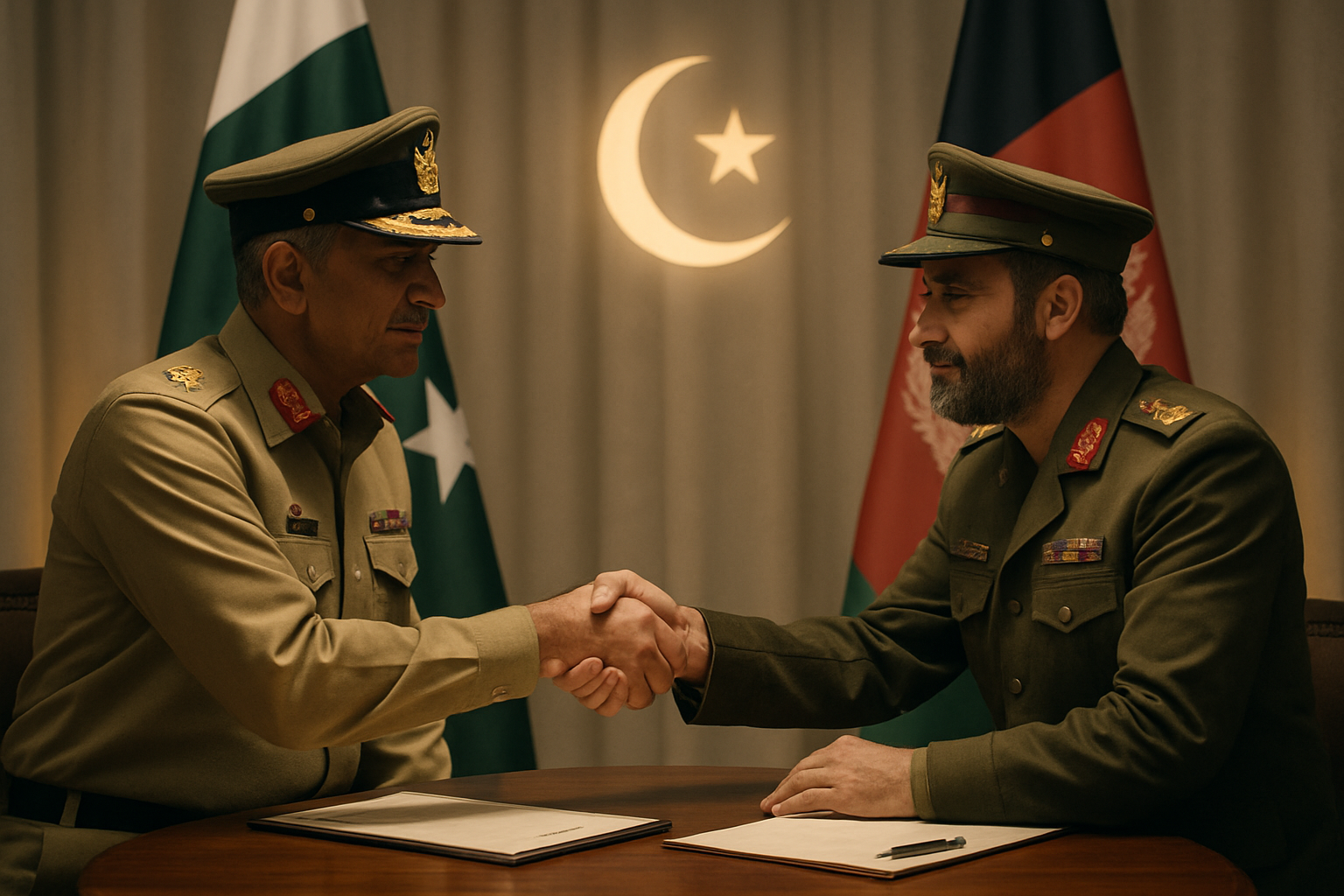
Pakistan and Afghanistan announced a temporary ceasefire for Eid al-Fitr on March 19, 2026, marking the first significant de-escalation in the deadliest border conflict between the neighbors since the Taliban returned to power in August 2021.
The breakthrough came after sustained diplomatic pressure from Saudi Arabia, Qatar, and Turkey, ending a month-long military confrontation that began with a Taliban attack in Bajaur and escalated into what Pakistani Defense Minister Khawaja Asif declared "open war" on February 27.
The Hospital Strike That Changed Everything
The turning point came on March 16 when Pakistani airstrikes allegedly hit the Omid Addiction Treatment Hospital in Kabul's Pul-e-Charkhi area. Taliban officials claim the attack killed over 400 people and wounded 260 at the 2,000-bed drug rehabilitation facility, making it the deadliest single incident in the escalating conflict.
Pakistan categorically denied targeting the hospital, maintaining that its strikes hit Camp Phoenix military installation "several kilometers away" as part of Operation Ghazab lil-Haq. However, the disputed attack sparked international condemnation and urgent calls for a ceasefire.
"This war has been imposed upon Pakistan by terrorists and their sponsors. The public needed to understand the context behind Operation Ghazab lil-Haq."
— Lt-Gen Ahmed Sharif Chaudhry, Pakistan's Inter-Services Public Relations Director General
International Mediation Success
The ceasefire announcement represented a diplomatic victory for regional mediators who had struggled for weeks to contain the escalating violence. Saudi Arabia welcomed the temporary truce, praising both sides for responding to calls from the Kingdom, Qatar, and Turkey.
Pakistani Information Minister Attaullah Tarar announced the pause in military operations against "terrorists and their support infrastructure in Afghanistan" effective from midnight March 19 through midnight March 23. Afghan government spokesperson Zabihullah Mujahid reciprocated, stating the truce came "at the request of friendly Islamic countries."
A Month of Unprecedented Violence
The conflict began on February 16 when Tehreek-e-Taliban Pakistan (TTP) militants launched a devastating attack in Bajaur district using a vehicle-borne improvised explosive device that killed 11 Pakistani soldiers. Pakistan retaliated on February 22 with airstrikes on seven alleged terrorist camps in Afghanistan's Nangarhar and Paktika provinces, claiming to have killed 80+ militants.
However, the strikes also resulted in civilian casualties, including eight schoolchildren killed in Behsud district, prompting Afghanistan to threaten a "measured and appropriate response." The situation rapidly deteriorated when Pakistani Defense Minister Khawaja Asif made the unprecedented declaration of "open war" against the Taliban government.
Humanitarian Catastrophe
The month-long confrontation created a severe humanitarian crisis. The UN's Office for the Coordination of Humanitarian Affairs (OCHA) reported 16,370 families newly displaced across 10 Afghan provinces. The UN Assistance Mission in Afghanistan (UNAMA) documented 185 civilian casualties between February 26 and March 5, with the majority being women and children.
The World Health Organization warned that emergency medical oxygen was available to only 23 hospitals, while hundreds of health centers were forced to close. The conflict compounded Afghanistan's existing humanitarian emergency, where 88% of female-headed households already struggle to meet minimum living requirements.
Economic Warfare
The military confrontation devastated bilateral trade, which collapsed by 59% over seven months, with Pakistan's exports dropping from $550 million to $228 million. Traditional trade routes at Chaman-Spin Boldak and Torkham faced repeated closures, affecting border communities dependent on cross-border commerce.
The Durand Line Dispute
At the heart of the conflict lies the contested 2,640-kilometer Durand Line, established by British colonial authorities in 1893 but never recognized by any Afghan government. Pakistan maintains that TTP operates "with impunity from Afghan soil," while the Taliban categorically denies providing militant sanctuary.
The porous mountainous terrain along this disputed border has long provided sanctuaries for various militant groups, complicating security operations for both countries and creating a persistent source of bilateral tension.
Nuclear Implications
The confrontation between nuclear-armed Pakistan and Taliban-controlled Afghanistan represented the most serious test of the post-2021 South Asian security architecture. International observers closely monitored the situation to prevent any escalation beyond conventional operations.
Chinese officials at the UN had warned about the presence of ISIS-K, al-Qaeda, and ETIM militants in Afghanistan, contradicting Taliban claims of having defeated terrorism within their borders.
Failed Diplomatic Efforts
Multiple mediation attempts had failed before the Eid breakthrough. A Saudi-mediated prisoner exchange in February 2026 that saw three Pakistani soldiers released from Taliban custody proved insufficient. Initiatives by Turkish Foreign Minister Hakan Fidan, Iranian mediation offers, and Russian Special Envoy efforts all fell short of preventing military escalation.
Pakistan acknowledged its diminished regional influence compared to wealthier powers like Turkey, UAE, Qatar, Saudi Arabia, and China, forcing greater reliance on military solutions to address security challenges.
Religious Diplomacy Breakthrough
The Eid ceasefire represented the success of faith-based diplomacy, with Islamic scholars issuing fatwas calling for Muslim nations to cease fighting during the holy month of Ramadan. The timing coincided with Eid al-Fitr celebrations, providing a religious and cultural framework for peace.
Saudi Arabia's Foreign Ministry emphasized that "prioritizing dialogue and peaceful solutions remains the best path to resolving ongoing disputes," while reaffirming the Kingdom's commitment to continuing diplomatic efforts in coordination with brotherly and friendly countries.
Uncertain Future
Despite the temporary truce, underlying issues remain unresolved. The Taliban maintains that "the path of talks remains open" and seeks resolution through "mutual understanding and respect." However, Pakistan indicates it has "no rush" to end its military campaign without concrete anti-militant measures from Kabul.
The five-day ceasefire window provides a crucial opportunity for intensive diplomatic engagement, but the fundamental disagreements over cross-border terrorism, disputed borders, and competing sovereignty claims require sustained international effort to address.
Global Template
The Pakistan-Afghanistan crisis has become template-setting for 21st-century conflict resolution, where territorial sovereignty concerns intersect with transnational terrorism challenges. The success or failure of diplomatic containment will influence how the international community approaches similar challenges involving nuclear-armed neighbors and disputed borders.
As both nations observe the temporary ceasefire during Eid celebrations, the international community continues to pressure for a sustainable peace framework that addresses legitimate security concerns while respecting territorial integrity, protecting civilians, and ensuring compliance with international law.
The coming days will be critical in determining whether this religious and cultural respite can transform into a lasting diplomatic solution or whether the region will return to the devastating cycle of military confrontation that has claimed hundreds of lives and displaced thousands of families along one of the world's most volatile borders.