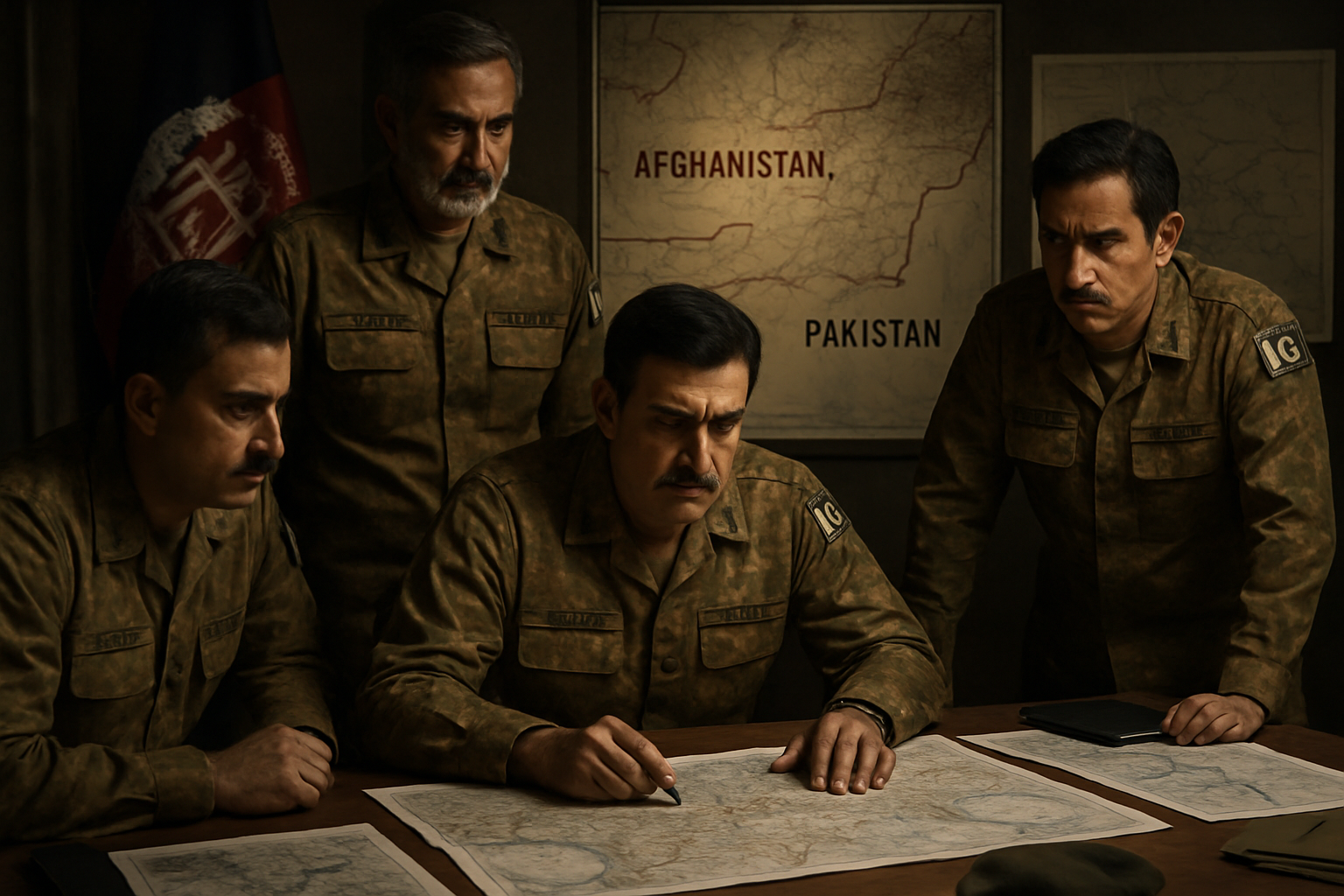
Pakistan's Defense Minister Khawaja Asif announced on Friday that military operations in Afghanistan will continue indefinitely until the government achieves its objectives, while opposition leader Maulana Fazlur Rehman called for a comprehensive policy review, warning of Pakistan's growing regional isolation.
Speaking to media outlets, Asif declared there was "no fixed timeline" for ending Pakistan's military operations in Afghanistan and confirmed that pressure on the Taliban administration would remain in place as fighting along the frontier persists. This announcement comes as the region faces its most serious security crisis since the Taliban's return to power in August 2021.
Military Operations Continue Despite International Pressure
The current military campaign, known as "Operation Ghazab lil-Haq" (Divine Wrath), began following a devastating February 16 attack in Bajaur district that killed 11 Pakistani soldiers. The Tehreek-e-Taliban Pakistan (TTP), referred to by Pakistani military as "Fitna al-Khawarij," claimed responsibility for the coordinated assault using a vehicle-borne improvised explosive device.
Pakistan's response has been swift and extensive. On February 22, Pakistani forces conducted airstrikes on seven alleged terrorist camps in Afghanistan's Nangarhar and Paktika provinces, claiming to have eliminated over 80 militants. However, the strikes also resulted in significant civilian casualties, including the deaths of eight schoolchildren in Behsud district, according to UN documentation.
"We must reflect on whether all the mistakes lie on Afghanistan's side. A stable and sovereign Afghanistan would better serve regional peace and long-term strategic interests."
— Maulana Fazlur Rehman, JUI-F Leader
The crisis escalated dramatically on February 27 when Defense Minister Asif formally declared "open war" against Afghanistan's Taliban government, marking the most serious military confrontation since the Taliban's return to power.
Opposition Calls for Policy Reassessment
In stark contrast to the government's military approach, Maulana Fazlur Rehman, leader of Pakistan's Jamiat Ulema-e-Islam (JUI-F), has called for a fundamental reassessment of the country's Afghanistan policy. Addressing a ceremony organized by JUI-F leader Kafeel Nizami, Rehman criticized what he described as "contradictory state narratives" toward Afghanistan.
Rehman questioned why bilateral relations have failed to improve despite more than seven decades of engagement between the neighboring countries. He urged policymakers to abandon efforts aimed at maintaining influence over Kabul and warned against repeated attempts at regime change, arguing that such approaches have historically failed.
The opposition leader's concerns extend beyond Afghanistan to Pakistan's broader regional standing. He warned that Pakistan's relations with India, Iran, and Afghanistan are under strain, while several regional states are strengthening partnerships with India instead.
Humanitarian Crisis Deepens
The ongoing military operations have exacted a devastating toll on civilian populations. According to the UN Office for the Coordination of Humanitarian Affairs (OCHA), more than 16,370 families have been newly displaced across 10 Afghan provinces since the conflict began.
The UN Assistance Mission in Afghanistan (UNAMA) has documented 185 civilian casualties since late February, with 56 people killed and 129 wounded. The majority of these casualties are women and children, highlighting the conflict's disproportionate impact on vulnerable populations.
The World Health Organization has been forced to deliver emergency medical oxygen to only 23 hospitals, while hundreds of health centers have closed due to funding cuts and security concerns. This medical crisis compounds Afghanistan's existing humanitarian emergency, where 88% of female-headed households are unable to meet minimum living requirements.
Economic Warfare and Trade Collapse
The military confrontation has devastated bilateral trade relationships. Pakistan's exports to Afghanistan have plummeted by 59% over the past seven months, dropping from $550 million to just $228 million. This collapse affects border communities dependent on cross-border commerce and compounds Afghanistan's already severe humanitarian crisis.
Traditional trade routes through Chaman-Spin Boldak and Torkham have faced repeated closures, disrupting the livelihoods of thousands of merchants, transporters, and border residents who depend on cross-border economic activity.
The Durand Line Dispute
At the heart of the current crisis lies the disputed Durand Line, a 2,640-kilometer colonial-era border established by the British in 1893. This boundary has never been formally recognized by any Afghan government, which views it as an artificial division of Pashtun tribal territories.
Pakistan maintains that TTP militants operate "with impunity from Afghan soil," using the porous mountainous terrain to launch attacks across the border. The Taliban government categorically denies providing sanctuary to militant groups and insists that Afghanistan's territory is not being used against neighboring countries.
The complex terrain, limited government control, and tribal dynamics in the border regions create persistent challenges for both countries in managing security threats and preventing militant activities.
International Mediation Efforts
Multiple international actors have attempted to mediate the crisis, with varying degrees of success. Saudi Arabia facilitated a prisoner exchange in February 2026, securing the release of three Pakistani soldiers held by the Taliban since October 2025 border clashes. However, this confidence-building measure proved insufficient to address underlying security challenges.
Turkey's Foreign Minister Hakan Fidan has launched shuttle diplomacy initiatives, while Iran, Russia, and China have all offered mediation services. The most significant breakthrough came through religious diplomacy led by Saudi Arabia, Qatar, and Turkey, which secured a temporary ceasefire during Eid al-Fitr celebrations in March.
Chinese Foreign Minister Wang Yi has been particularly active, expressing readiness to assist in resolution through telephone discussions with Afghan officials and deploying special envoys to shuttle between Kabul and Islamabad.
Nuclear Implications and Regional Security
The crisis carries serious implications given Pakistan's nuclear weapons capabilities. This represents the most serious confrontation involving a nuclear-armed Pakistan since the Taliban's return to power, requiring careful international monitoring to prevent escalation beyond conventional operations.
The conflict tests the post-2021 South Asian security architecture and could provide a template for managing 21st-century challenges where territorial sovereignty intersects with transnational terrorism concerns.
Strategic Realignment
Pakistan has acknowledged its diminished influence over Afghanistan compared to wealthier regional powers including Turkey, the United Arab Emirates, Qatar, Saudi Arabia, and China. This recognition has contributed to Pakistan's increased reliance on military solutions rather than diplomatic engagement.
Chinese UN warnings about the presence of ISIS-K, al-Qaeda, and the East Turkestan Islamic Movement (ETIM) in Afghanistan contradict Taliban claims of having defeated terrorism, adding another layer of complexity to regional security calculations.
Looking Forward: Prospects for Peace
Despite the ongoing military operations, the Taliban maintains that "the path of talks remains open" and seeks resolution through "mutual understanding and respect." Pakistan, however, indicates there is "no rush" to end the military campaign without concrete measures against militant groups.
The success or failure of current diplomatic containment efforts will influence future approaches to managing territorial sovereignty versus transnational terrorism challenges globally. The crisis serves as a critical test case for innovative diplomatic frameworks that balance legitimate security concerns with territorial integrity, civilian protection, and international law compliance.
As regional tensions continue to simmer, the international community faces mounting pressure to develop effective conflict prevention mechanisms before the confrontation escalates into a broader regional war. The stakes extend far beyond bilateral relations, affecting regional stability mechanisms and international security architecture worldwide.
The coming weeks will be crucial in determining whether sustained diplomatic engagement can overcome military escalation, or whether the region will face a prolonged confrontation between nuclear-armed neighbors with far-reaching implications for global security.