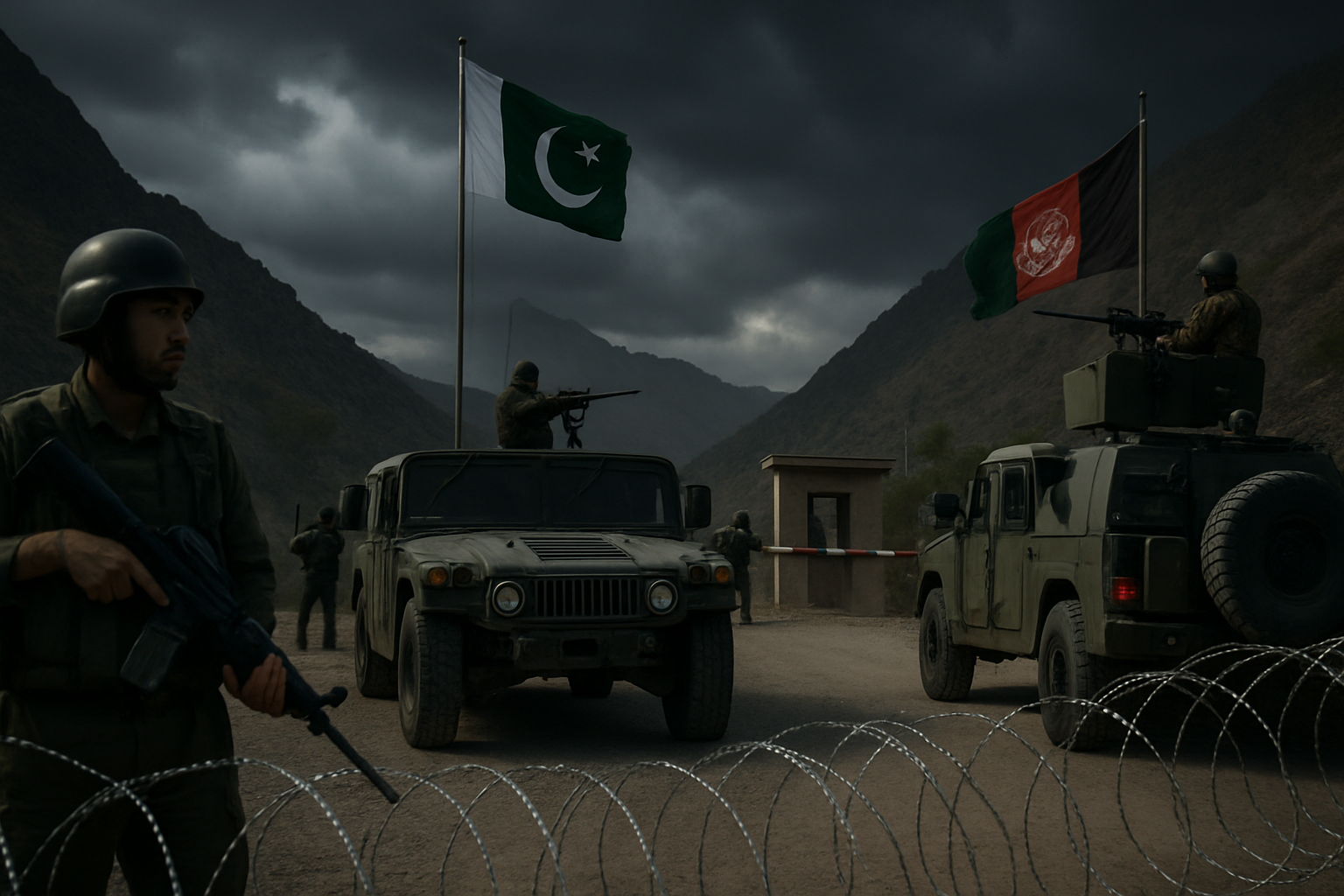
Pakistan's Defense Minister Khawaja Mohammad Asif has formally declared "open war" against Afghanistan's Taliban government, marking the most serious military confrontation between the neighboring nations since the Taliban's return to power in August 2021.
The declaration came after Pakistan launched Operation Ghazab-ul-Haq, conducting coordinated airstrikes across multiple Afghan provinces including Kabul, Kandahar, Paktia, and Nangarhar. Pakistani military sources claim the operation killed 274 Taliban officials and militants while losing 12 Pakistani soldiers in the escalating border conflict.
Military Operations Intensify
The latest escalation began with what Pakistani officials described as "unprovoked firing" by Afghan Taliban forces on Pakistani border positions, resulting in the deaths of two Pakistani soldiers and wounding three others. Pakistan responded with coordinated F-16 airstrikes and artillery bombardments targeting Taliban military facilities across Afghanistan.
Heavy fighting erupted at the strategic Torkham border crossing, forcing the evacuation of civilian returnee camps in Nangarhar province. Seven people were wounded, including a woman, when shelling hit displacement camps housing Afghan families.
"We have captured five Afghan checkposts and raised our flags at Shawal, Angoor Adda, and Zarmilan positions,"
— Pakistani Military Spokesman Ahmed Sharif Chaudhry
Taliban spokesman Zabihullah Mujahid confirmed extensive Pakistani bombing operations but disputed casualty figures. The Taliban retaliated with their own airstrikes targeting Pakistani military installations in Islamabad, Nowshera, Jamrud, and Abbottabad.
Escalation Timeline
The current crisis stems from a deadly pattern of cross-border attacks that began on February 16, when militants linked to the banned Tehrik-e-Taliban Pakistan (TTP) killed 11 Pakistani soldiers in a coordinated assault on a security checkpost in Bajaur district using a vehicle-borne improvised explosive device.
Pakistan responded on February 22 with airstrikes targeting seven terrorist camps in Afghanistan's Nangarhar and Paktika provinces, claiming to have eliminated over 80 militants. However, these strikes also resulted in significant civilian casualties, including 18 civilians and eight schoolchildren aged 5-15 in Behsud district, according to Afghan sources.
The civilian casualties prompted Taliban officials to warn of a "measured and appropriate response at suitable time," describing the protection of sovereignty and population as "religious obligations and national duties."
International Mediation Efforts
Despite the escalating violence, international mediators are scrambling to prevent further deterioration. Turkish Foreign Minister Hakan Fidan launched a mediation initiative, contacting Pakistani Foreign Minister Ishaq Dar and Afghan Foreign Minister Muttaqi, along with Qatari and Saudi counterparts.
Iran has also offered mediation services, warning of regional escalation risks. The crisis occurred despite a February 2026 Saudi-mediated prisoner exchange that saw the Taliban release three Pakistani soldiers captured during October 2025 border clashes.
UN Secretary-General António Guterres expressed "deep concern" about the situation, while international observers called for an immediate ceasefire and return to diplomatic dialogue.
Economic Devastation
The military confrontation has exacerbated an already dire economic situation between the two countries. Bilateral trade has collapsed by 59%, with Pakistan's exports to Afghanistan plummeting from $550 million to $228 million over seven months of the current fiscal year.
This economic devastation affects border communities dependent on cross-border commerce and compounds Afghanistan's humanitarian crisis, where 88% of female-headed households are unable to meet minimum living requirements according to UN data.
Root Causes and Strategic Context
Pakistan acknowledges that its traditional influence in Afghanistan has diminished significantly, with wealthier regional powers including Turkey, UAE, Qatar, Saudi Arabia, and China now wielding greater influence. This shift has forced Pakistan to rely increasingly on military solutions rather than diplomatic leverage.
The TTP operates "with impunity from Afghan soil" according to Pakistani officials, despite Taliban assurances about preventing territorial use for attacks against neighboring countries. Recent attacks include a devastating February 6 ISIS-K mosque bombing in Islamabad that killed 31 people and wounded 169 others during Friday prayers.
Pakistani forces eliminated over 400 militants in February 2026 during counter-terrorism operations in Balochistan alone, demonstrating the scale of security challenges facing the government.
The Durand Line Dispute
At the heart of the conflict lies the disputed 2,640-kilometer Durand Line, established by British colonial authorities in 1893. No Afghan government has formally recognized this boundary, viewing it as an artificial division of Pashtun tribal areas.
The porous mountainous border provides militant sanctuaries and complicates security operations. Limited government control on both sides, combined with difficult terrain and tribal dynamics, creates persistent challenges for border management.
International Security Implications
Chinese officials have warned the UN Security Council about the presence of ISIS-K, al-Qaeda, and ETIM terrorist groups in Afghanistan, contradicting Taliban claims to have "defeated terrorism." These warnings highlight the international dimension of the security challenges emanating from Afghan territory.
The conflict represents a critical test of the Taliban's governance capabilities and their commitment to controlling militant groups operating from Afghan soil. It also tests Pakistan's resolve to use military action to secure its borders when diplomatic solutions fail.
Humanitarian Concerns
The military escalation has raised serious international humanitarian law concerns, particularly regarding civilian casualties from airstrikes during the holy month of Ramadan. Medical facilities are overwhelmed treating the wounded, while rescue operations continue for civilians trapped in affected areas.
The targeting of civilian areas, including religious institutions and residential homes, has drawn international condemnation and raises questions about compliance with the Geneva Conventions.
Future Trajectory
The declaration of "open war" represents an unprecedented escalation that could reshape South Asian security architecture. The success or failure of diplomatic efforts to contain the conflict will influence regional stability and set precedents for how territorial sovereignty and transnational terrorism challenges are managed in the 21st century.
With Pakistan conducting sustained military operations and the Taliban vowing retaliation, the coming days will be critical in determining whether international mediation can prevent broader regional confrontation or if the situation will spiral into prolonged military conflict.
The crisis occurs against the backdrop of Afghanistan's worst humanitarian situation in 25 years, with international aid cuts forcing hundreds of health center closures and creating a healthcare vacuum affecting millions of civilians.
"This represents the most serious Pakistan-Afghanistan confrontation in decades, testing both nations' capacity for conflict resolution,"
— Regional Security Analyst
As military operations continue and civilian casualties mount, the international community faces mounting pressure to develop effective mechanisms for preventing broader regional confrontation while addressing the underlying security challenges that have brought two neighbors to the brink of sustained warfare.