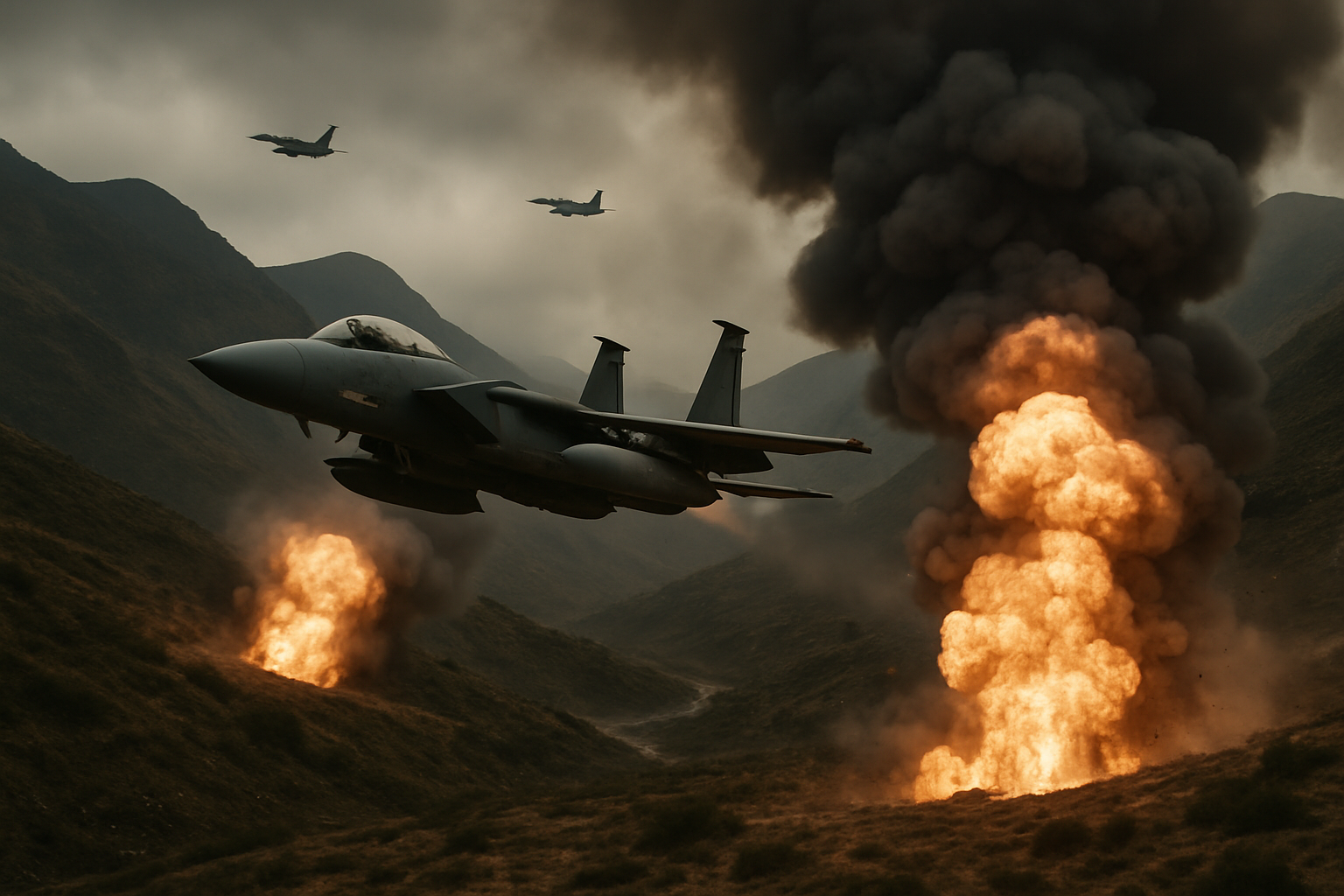
Pakistan conducted devastating airstrikes on multiple terrorist camps across Afghanistan's eastern provinces in February 2026, marking the most significant cross-border military escalation in recent months and triggering strong condemnation from the Taliban government.
The February 22 Airstrikes: A Coordinated Military Response
Pakistani forces launched precision strikes targeting seven terrorist camps in Afghanistan's Nangarhar and Paktika provinces during the early morning hours of February 22, 2026. The Ministry of Information described the operations as "intelligence-based selective targeting" against hideouts belonging to Tehreek-e-Taliban Pakistan (TTP), referred to by Pakistani military as "Fitna al-Khawarij," and ISIS-Khorasan Province.
The strikes occurred between 23:45 on February 21 and 00:15 on February 22, targeting multiple districts including Behsud and Khogyani in Nangarhar province, and Barmal and Urgun in Paktika. Pakistani officials claimed the operations eliminated over 80 militants, though casualty figures remain disputed.
Tragic Civilian Casualties
The airstrikes resulted in significant civilian casualties, with Taliban officials and international monitors confirming deaths of at least 18 people, including women and children. The United Nations Assistance Mission in Afghanistan (UNAMA) verified at least 13 civilians killed and 7 wounded in Nangarhar province alone.
"Eight schoolchildren - five boys and three girls - were killed in Behsud district, with additional seminary students injured in Paktika's Barmal district."
— UNAMA Officials, Casualty Report
The strikes hit residential areas, including a religious madrassa in Barmal's Marghai area and nearby mosques, raising serious questions about compliance with international humanitarian law principles of distinction, proportionality, and precaution during military operations.
Pakistan's Justification: Response to Escalating Terror Attacks
The airstrikes came as direct retaliation for a series of devastating terrorist attacks against Pakistani security forces and civilians. The immediate trigger was the February 16 Bajaur district assault that killed 11 Pakistani soldiers when TTP militants used a vehicle-borne improvised explosive device against a joint security checkpost.
Defence Minister Khawaja Asif had previously warned of military action if cross-border attacks continued from Afghan soil, arguing that TTP leadership operates "with impunity" from Afghanistan despite repeated Taliban assurances of territorial control.
The attacks were also linked to the February 6 ISIS-K bombing of an Islamabad mosque that killed 31 people and wounded 169 during Friday prayers, demonstrating the deadly spillover effects of Afghanistan-based militant activities.
Taliban's Strong Condemnation and Retaliation Threats
Afghanistan's Taliban government issued its strongest condemnation yet, with spokesman Zabihullah Mujahid warning of a "measured and appropriate response at a suitable time." The Taliban described the protection of Afghan sovereignty and population as "religious obligations and national duties."
The Taliban's Ministry of National Defense condemned the strikes as clear violations of Afghan airspace, sovereignty, international law, and Islamic principles. Former President Hamid Karzai called the operations a "clear violation of Afghanistan's sovereignty," urging civilized neighborly policies.
Afghanistan has now filed a formal complaint with the UN Security Council through acting permanent representative Naseer Ahmad Faiq, marking a significant diplomatic escalation in the bilateral crisis.
Failed Diplomatic Context
The military escalation occurred despite recent diplomatic efforts, including a February 2026 Saudi-mediated prisoner exchange that released three Pakistani soldiers captured during October 2025 border clashes. This confidence-building measure, facilitated as a Ramadan diplomatic gesture, proved insufficient to address underlying security challenges.
The timing during the holy month of Ramadan carried additional significance, as terrorists have repeatedly exploited religious periods for maximum psychological impact, while the strikes themselves drew criticism for occurring during this sacred time.
Regional and International Reactions
The airstrikes have drawn international attention and concern. Chinese officials at the UN Security Council have warned about the presence of ISIS-K, al-Qaeda, and ETIM in Afghanistan, contradicting Taliban claims of having "defeated" terrorism.
Pakistani Parliamentary Secretary Barrister Danyal Chaudhry defended the operations as necessary self-defense, stating "national security is non-negotiable" after Afghan territory was used for proxy attacks. However, the targeting of civilian areas including religious institutions has raised humanitarian law questions.
Broader Security Pattern and Context
The February 2026 strikes are part of a broader pattern of escalating violence. Pakistan has eliminated over 400 militants in Balochistan operations during February alone, demonstrating the multi-front nature of its counter-terrorism campaign.
The sophisticated nature of recent attacks, including coordinated assaults and vehicle-borne explosive devices, demonstrates that militant groups retain significant operational capabilities despite sustained military pressure from both sides of the border.
"Pakistan's diminished regional influence to wealthier powers including Turkey, UAE, Qatar, Saudi Arabia, and China has increased reliance on military solutions when diplomatic engagement fails."
— Defence Analysis, Regional Power Dynamics
Challenges to Regional Stability
The escalation represents a critical test of Taliban governance capabilities and their willingness to control militant groups operating from Afghan territory. It also tests Pakistan's resolve in balancing diplomatic engagement with security imperatives amid continued attacks on its forces.
The crisis occurs against a backdrop of complex regional dynamics where Afghanistan serves as a sanctuary for various militant groups, creating security challenges that extend beyond bilateral Pakistan-Afghanistan relations to affect broader regional stability.
Path Forward: Diplomatic Solutions vs Military Escalation
The success or failure of addressing this crisis through diplomatic means will likely influence future regional security approaches and set precedents for managing territorial sovereignty issues intersecting with transnational terrorism in the 21st century.
With Pakistan demanding "immediate, concrete and verifiable measures against all terror groups operating from Afghan soil," and the Taliban's capability and willingness to effectively control these groups remaining in question, the coming weeks will be crucial in determining whether diplomatic solutions can prevail over continued military escalation.
The February 2026 airstrikes represent the most serious Pakistan-Afghanistan border escalation in recent months, testing both countries' commitment to finding peaceful solutions while managing legitimate security concerns and territorial sovereignty rights in an increasingly complex regional security environment.