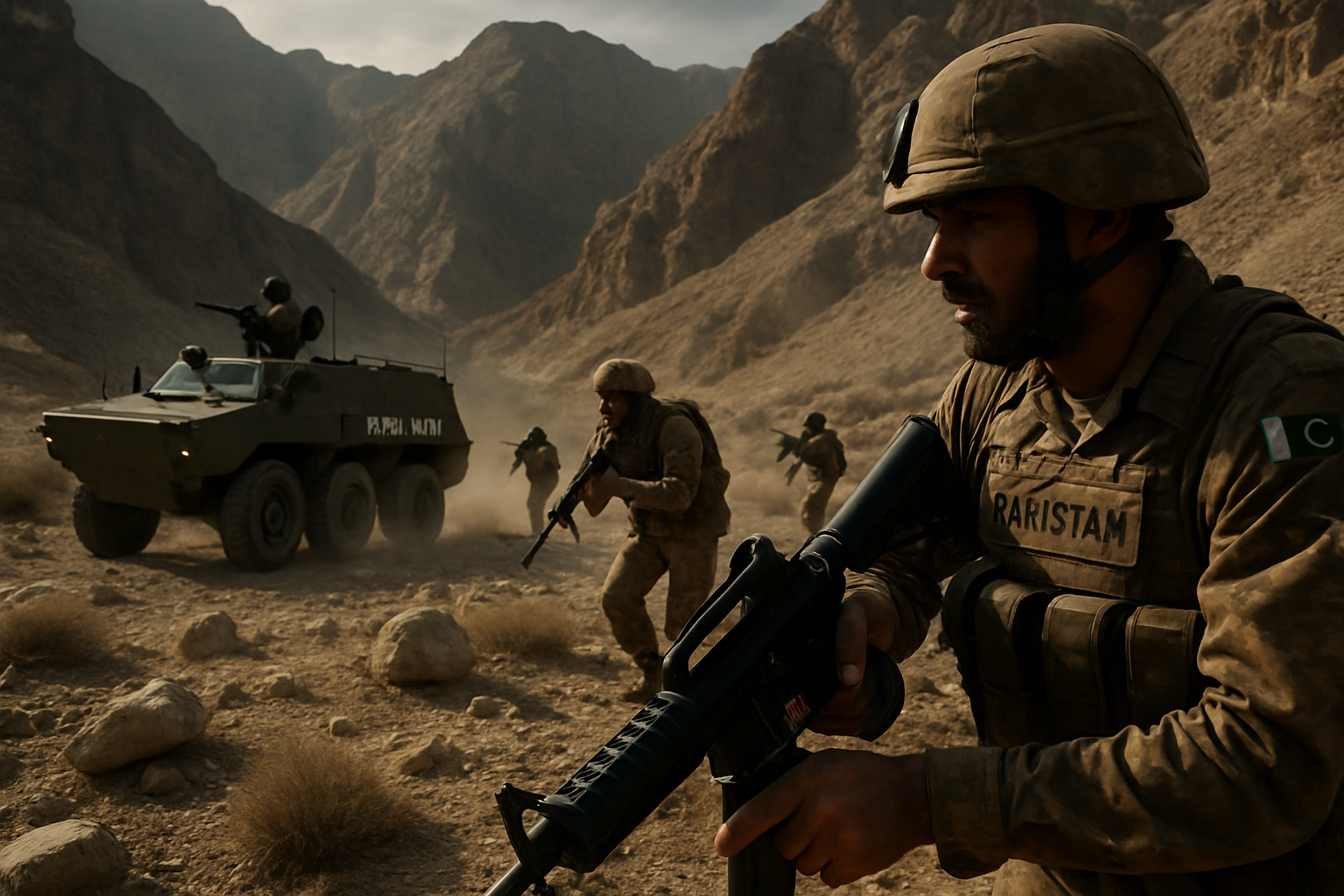
Pakistan's military announced the conclusion of a major week-long counter-terrorism operation in Balochistan province on February 5, 2026, claiming to have killed 216 militants in coordinated actions against armed groups threatening civilian populations and regional security infrastructure.
The operations, which began in late January, targeted militant networks across multiple districts in Pakistan's largest and most strategically important province. According to military sources, the counter-terrorism campaign was launched in response to escalating attacks on civilian infrastructure, including railway lines and bridges that serve as critical economic lifelines for the region.
Railway Services Restored After Security Concerns
Train services within Balochistan and to other provinces resumed on Thursday, February 5, after a five-day suspension due to deteriorating security conditions. Muhammad Kashif, spokesperson for Pakistan Railways' Quetta division, confirmed that both the Jaffar Express on the Quetta-Peshawar route and the Karachi-bound Bolan Mail had been suspended since January 31.
"Train services within Balochistan and to other provinces have been restored," Kashif told Dawn newspaper, marking a significant step toward normalizing transportation networks that are vital for the province's economic activity.
However, security challenges persist. On February 5, unknown armed assailants launched a rocket attack on a stationary freight train at the Ahmad Wal railway station in Noshki district, completely disabling the engine. The attack occurred while the train had been parked at the station for five days, highlighting the ongoing threats to infrastructure even as broader operations conclude.
Context of Escalating Violence
The recent military operation represents the culmination of weeks of intensifying violence in Balochistan. In early February 2026, the Baloch Liberation Army (BLA) conducted coordinated attacks across 12 towns including Quetta, Mastung, Nushki, Dalbandin, Kharan, Panjgur, Tump, Gwadar, and Pasni, resulting in significant casualties among both security personnel and civilians.
Historical context reveals this latest operation builds upon previous counter-terrorism efforts that killed 197 militants in early February following the BLA's "Operation Herof" (Black Storm), which targeted government buildings, police stations, banks, schools, and security installations across the province.
"Pakistan's military says operations in Balochistan ended after intense fighting, killing hundreds of militants and weakening networks threatening civilians and regional security."
— Military spokesperson
Strategic Importance of Balochistan
Balochistan holds immense strategic value for Pakistan, housing the deep-water port of Gwadar, which serves as a cornerstone of the China-Pakistan Economic Corridor (CPEC) – a flagship project under China's Belt and Road Initiative. The province is also rich in natural resources, including natural gas, coal, and minerals, making security in the region a national priority.
The ongoing insurgency by separatist groups like the BLA poses significant challenges to Pakistan's economic promises to China and international investors. These groups have consistently targeted Chinese workers and CPEC-related infrastructure, viewing the projects as exploitative of Baloch resources.
Communication Blackouts Continue
Despite the restoration of railway services, mobile data services remained suspended for the sixth consecutive day in Quetta and several other districts as of February 5. This communication blackout, implemented as a security measure during the operations, has affected daily life and business activities across the provincial capital and surrounding areas.
The suspension of telecommunications services is a common security protocol during major military operations, intended to disrupt militant coordination while protecting operational security. However, it also impacts civilian populations and economic activities in affected areas.
Historical Pattern of Violence
The recent operations continue a long-standing pattern of violence and counter-violence in Balochistan. The province has faced decades of insurgency from various Baloch nationalist and separatist groups who demand greater autonomy and a larger share of revenues from the province's natural resources.
Previous major operations in 2026 have resulted in significant militant casualties, with Pakistani forces using helicopters, drones, and ground operations to target insurgent positions in mountainous and desert terrain. The cumulative effect has been hundreds of militant deaths, though separatist groups continue to maintain operational capabilities.
Regional and International Implications
The security situation in Balochistan has broader regional implications, affecting trade routes, energy projects, and international investments. The attacks on railway infrastructure particularly impact the movement of goods between Pakistan's ports and inland destinations, as well as connections to neighboring countries.
China has previously expressed concerns about the security of its investments and workers in the region, while Pakistan has accused India of backing separatist groups under what officials term the "Fitna-al-Hindustan" designation. These allegations have added a geopolitical dimension to what is fundamentally a domestic security challenge.
Ongoing Security Measures
Security forces remain on high alert throughout Balochistan, with enhanced protection for railway tracks, key installations, and transportation networks. The military has emphasized that operations will continue as necessary to maintain security and protect civilian infrastructure.
The restoration of train services represents a return to some degree of normalcy, but the rocket attack on the freight train in Noshki demonstrates that militant groups retain the capability to strike at vulnerable infrastructure. Railway authorities have confirmed that efforts are underway to dispatch replacement equipment and restore full operations.
Looking Forward
The conclusion of this latest operation, with the claimed killing of 216 militants, represents a significant tactical success for Pakistani forces. However, the fundamental issues driving the Baloch insurgency – grievances over resource exploitation, political representation, and economic development – remain largely unaddressed.
As train services resume and the province attempts to return to normal operations, the challenge for Pakistani authorities will be maintaining security gains while addressing the underlying causes of instability that have plagued Balochistan for decades. The strategic importance of the province, both economically and geopolitically, ensures that security operations will continue to be a priority for the Pakistani military and government.