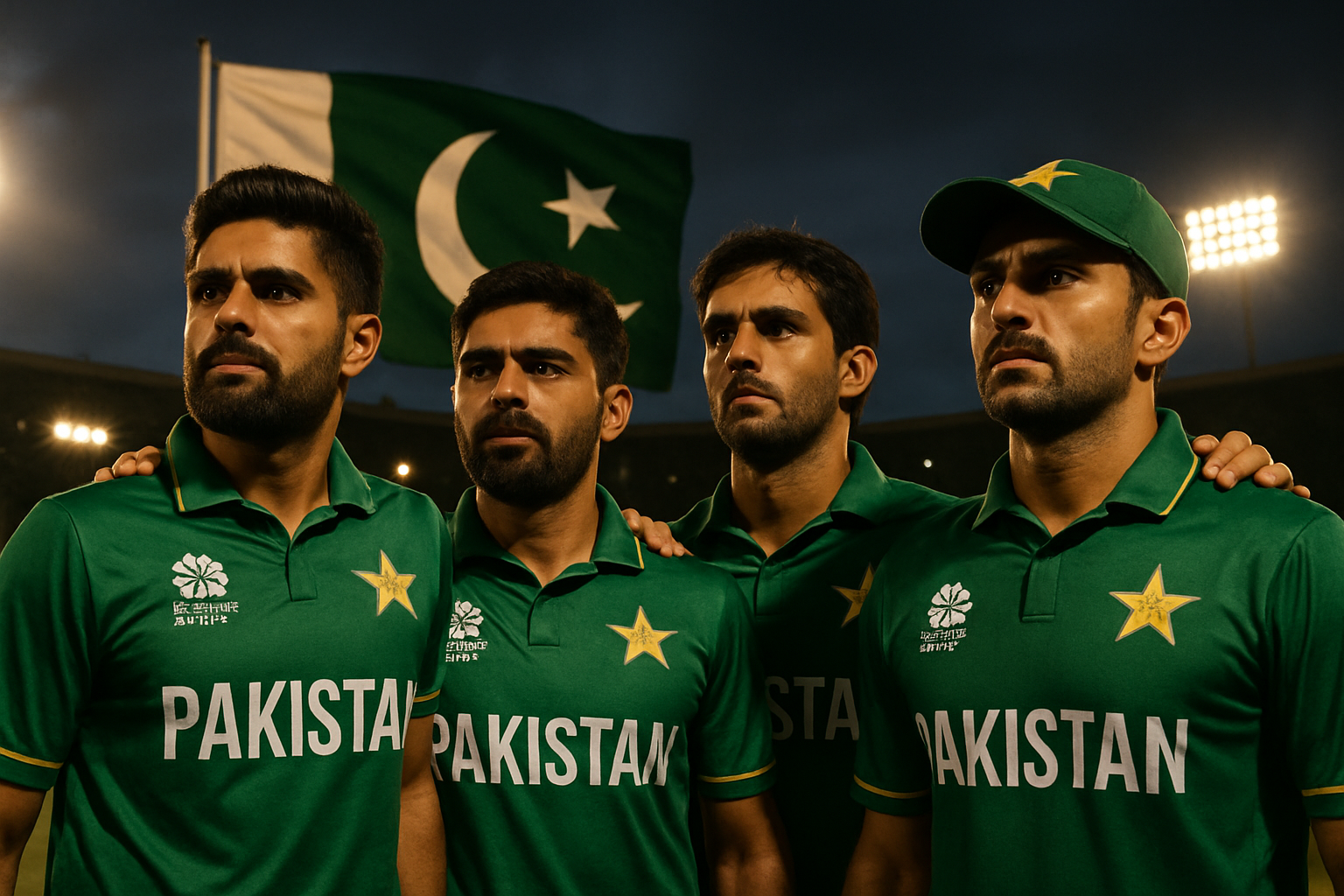
Pakistan has announced it will boycott its highly anticipated T20 World Cup group stage match against arch-rivals India scheduled for February 15, 2026, in Colombo, marking an unprecedented political intervention in cricket's biggest stage.
The Pakistan government made the bombshell announcement via its official X account on Sunday night, stating: "The government grants approval to the Pakistan cricket team to participate in the ICC World T20 2026, however, the Pakistan Cricket Team shall not take the field in the match scheduled on 15th February 2026 against India." The government provided no official explanation for the decision.
This marks the first time in cricket history that a team has officially announced a boycott of a World Cup match while continuing to participate in the rest of the tournament. Pakistan will forfeit two crucial points in Group A, significantly impacting their chances of advancing to the knockout stages.
Political Tensions Behind the Decision
Multiple sources indicate the boycott stems from escalating political tensions between the nuclear-armed neighbors, with Pakistan citing solidarity with Bangladesh as a primary motivation. The decision follows discussions between Pakistan Cricket Board (PCB) Chairman Mohsin Naqvi and Prime Minister Shehbaz Sharif.
The timing appears linked to recent violence in Pakistan's Balochistan province, where coordinated attacks by the Baloch Liberation Army (BLA) on February 1 resulted in 48 deaths - 31 civilians and 17 security personnel. Pakistani authorities launched a 40-hour counter-operation that killed 145 militants across 12 towns including Quetta, Mastung, and Gwadar.
Mohsin Naqvi, who serves as both Interior Minister and PCB Chairman, has directly blamed India for backing separatist groups in Balochistan, describing the attackers as highly organized with foreign backing. Pakistani officials have used the term "Fitna-al-Hindustan" to designate what they claim is Indian support for separatist movements.
Support for Bangladesh and ICC Criticism
Pakistan's decision explicitly mentions support for Bangladesh, referencing ongoing diplomatic disputes within the cricket world. The move comes as Pakistan has criticized what it perceives as ICC bias toward India in tournament arrangements and bilateral cricket relations.
Former Pakistan batsman Mohammad Yousuf backed the government's decision, calling it an "eye-for-an-eye" response to political interference in cricket. "This is justified retaliation against the politicization of the sport," Yousuf stated, referring to years of suspended bilateral cricket between the two nations.
The ICC has expressed serious concern over Pakistan's selective participation, warning that such moves violate tournament principles and could have long-term implications for Pakistan cricket. Sources within the ICC suggest Pakistan may face strict action, including potential exclusion from future tournaments if this precedent is allowed to stand.
Historical Context and Cricket Diplomacy
The Pakistan-India cricket rivalry extends far beyond sport, serving as a barometer for diplomatic relations between the two countries. Bilateral cricket series have been suspended since 2013, with the nations only meeting in ICC tournaments on neutral venues.
Pakistan has previously faced isolation in international cricket when teams like New Zealand, Australia, England, and Bangladesh refused to tour the country due to security concerns. The irony is not lost on observers that Pakistan, once declined by many nations including Bangladesh, is now taking a stand that could further isolate Pakistani cricket.
The scheduled February 15 match in Colombo was expected to be one of the tournament's most-watched fixtures, given the intense rivalry and limited opportunities for the teams to face each other. Cricket fans across both nations and globally have expressed disappointment at the political interference in sport.
Tournament Implications and Future Concerns
Pakistan's boycott creates significant complications for the tournament structure. The team will participate in all other Group A matches while forfeiting the India encounter, raising questions about what would happen if the teams meet in a potential knockout game.
The decision comes amid broader challenges facing the T20 World Cup 2026, including concerns about the Nipah virus outbreak affecting participation by multiple countries. Tournament organizers now face the unprecedented situation of managing a selective boycott while maintaining competitive integrity.
Cricket experts and former players from both countries have criticized the politicization of the sport. Many argue that cricket has historically served as a bridge between the two nations during political tensions, and this boycott represents a dangerous escalation that could permanently damage sporting relations.
Looking Ahead
The ramifications of Pakistan's decision extend beyond this single match. The ICC faces pressure to establish clear precedents for handling political interference in international tournaments, while both nations' cricket boards must navigate the complex relationship between sport and statecraft.
With bilateral cricket already suspended and now World Cup encounters under threat, the future of Pakistan-India cricket appears increasingly uncertain. The decision sets a concerning precedent where political disputes could override sporting commitments, potentially fragmenting international cricket's unified structure.
As the February 15 date approaches, all eyes will be on whether diplomatic efforts can resolve the crisis or if cricket will become another casualty of the enduring tensions between South Asia's two cricket powerhouses.