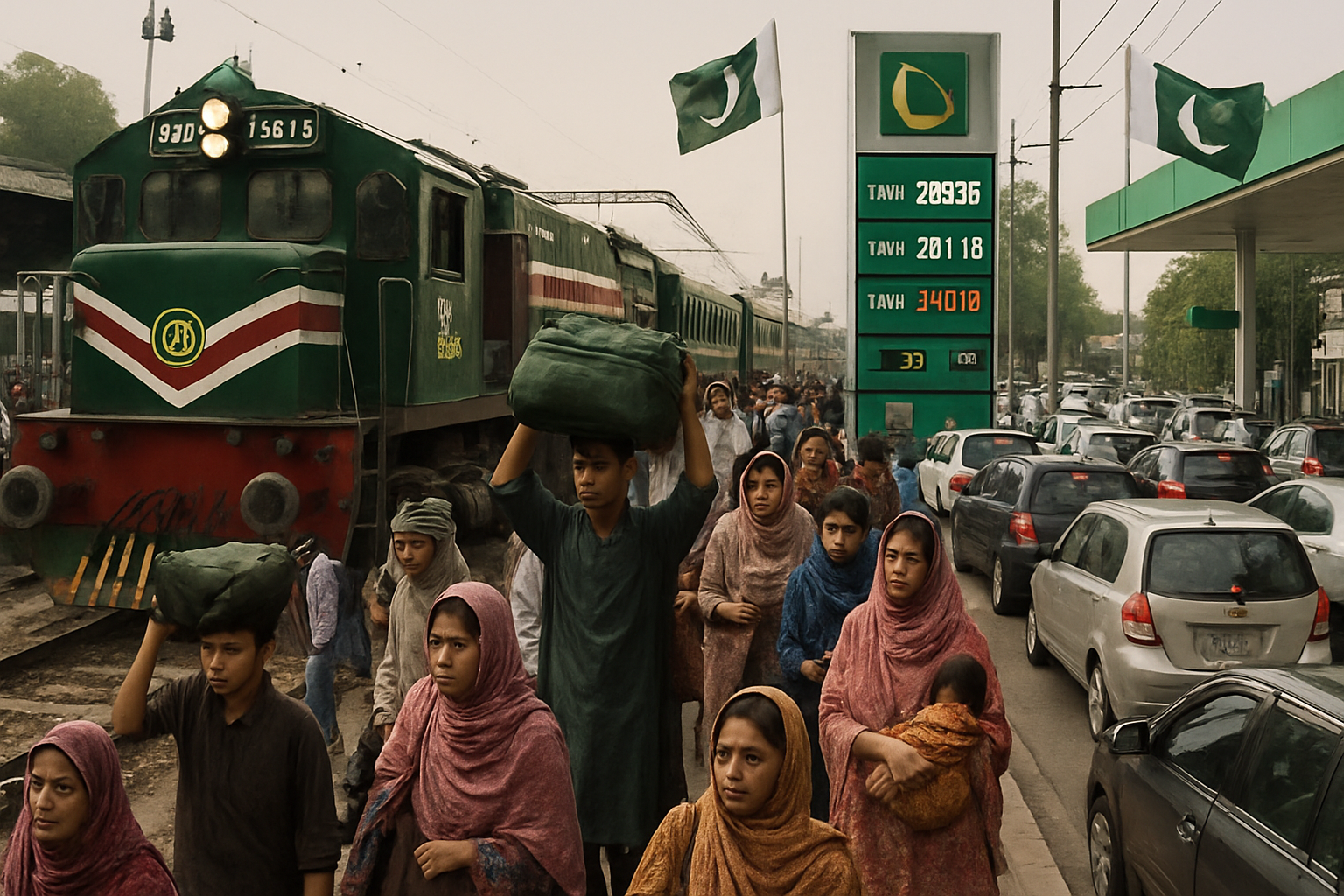
Pakistan is navigating a complex energy and transportation landscape as the government raises kerosene oil prices by Rs40 per liter while keeping petrol and diesel prices unchanged through subsidies, even as Pakistan Railways prepares special train services for Eid travelers and Karachi residents face severe gas supply disruptions.
The developments come as Pakistan continues to grapple with the global energy crisis that has seen oil prices breach $100 per barrel for the first time since 2022, with Brent crude peaking at $119.50 and Pakistan's fuel costs reaching Rs321.17 per liter—the highest in South Asia. The crisis stems from Iran's closure of the Strait of Hormuz, affecting 40% of global oil transit.
Government Implements Mixed Fuel Pricing Strategy
The petroleum division announced that Prime Minister Shehbaz Sharif approved keeping petrol (MS) and high-speed diesel (HSD) prices unchanged for the week ending March 20, while authorizing a significant Rs40 per liter increase in kerosene oil. The decision required government approval for Rs23 billion in price differential subsidies to oil marketing companies (OMCs).
Without these subsidies, petrol and HSD prices would have increased by more than Rs49 and Rs75 per liter respectively, effective March 14. However, kerosene oil—commonly described as "poor man's fuel"—has now become the most expensive consumer petroleum product at Rs358 per liter, representing a 12.6% increase on March 14 alone.
"The cumulative increase in kerosene prices has reached 90% from Rs188.87 earlier this month, severely impacting households that rely on this fuel for cooking and heating in rural areas."
— Government Petroleum Division Statement
The pricing strategy reflects the government's attempt to balance fiscal constraints with social protection, prioritizing subsidies for more widely used fuels while allowing market mechanisms to operate for kerosene, despite its importance for vulnerable populations.
Pakistan Railways Expands Eid Services
In a move to facilitate increased travel during the upcoming Eid celebrations, Pakistan Railways (PR) announced four special train services from major stations to various destinations. The initiative comes as the transportation sector faces significant fuel cost pressures from the global energy crisis.
According to PR spokesperson, the special services include:
- Lahore to Karachi via Okara, Sahiwal and Khanewal departing March 16
- Quetta to Rawalpindi via Sukkar, Rahimyar Khan, Khanewal and Lahore departing March 17
- Karachi to Peshawar departing March 17
- Karachi to Lahore departing March 18
"The special train operations will help railways to facilitate a number of passengers intending to reach their homes for Eid celebrations," a PR official told Dawn newspaper. Pakistan Railways typically operates additional services during peak travel periods such as Eid, when thousands of people travel across the country to visit family.
Karachi Gas Crisis Intensifies
Meanwhile, Karachi residents are experiencing severe gas supply disruptions that have worsened during Ramadan's peak demand period. The crisis has been exacerbated by the suspension of liquefied natural gas (LNG) supplies from Qatar due to Iran's blockade of the Strait of Hormuz, through which 40% of global oil and gas shipments normally transit.
Sui Southern Gas Company (SSGC) has introduced unannounced gas cuts that are disrupting crucial Sehri and Iftar cooking times for fasting residents. The situation has left many households struggling to prepare meals during the limited windows available during Ramadan.
The gas shortages are part of a broader regional energy crisis, as Qatar—which supplies approximately 20% of global LNG exports—has halted production at its Ras Laffan and Mesaid facilities due to ongoing regional conflicts. Energy Minister Saad Al Kaabi warned that Gulf states may declare force majeure "within weeks" if current conditions persist.
Context of Global Energy Emergency
Pakistan's energy challenges are unfolding against the backdrop of the most severe global energy crisis since the 1970s oil shocks. The International Energy Agency (IEA) has announced its largest strategic petroleum reserve release in 50-year history—400 million barrels from 32 countries—in response to the crisis.
The crisis has triggered widespread government emergency responses globally. Pakistan has implemented wartime austerity measures including four-day work weeks for government offices, while other nations have activated strategic reserves and emergency pricing controls.

Economic and Social Implications
The differential pricing strategy for petroleum products reflects Pakistan's complex balancing act between fiscal sustainability and social protection. While maintaining subsidies for petrol and diesel protects the broader transportation and logistics sectors, the sharp increase in kerosene prices disproportionately affects rural and low-income households who rely on this fuel for cooking and heating.
The Pakistan Stock Exchange (KSE-100) has experienced its worst single-day decline in history, falling 8.97% as energy costs and supply chain disruptions impact economic confidence. The broader economic effects include increased transportation costs, inflationary pressures on essential goods, and strain on government finances from fuel subsidies.
Pakistan Railways' decision to expand Eid services demonstrates the transportation sector's resilience despite fuel cost pressures. However, the railway system—traditionally more energy-efficient than road transport—faces its own challenges as electricity generation costs rise due to reduced gas supplies and higher fuel prices for backup power generation.
Regional Energy Security Challenges
The gas supply disruptions in Karachi highlight Pakistan's vulnerability to regional geopolitical developments. The country's energy mix relies heavily on imported oil and gas, making it particularly susceptible to supply chain disruptions in the Persian Gulf region.
Natural gas prices have surged 24% in Europe and 78% in the United States, while regional suppliers face unprecedented pressure. The situation in Pakistan mirrors challenges across South Asia, where countries dependent on energy imports are implementing various emergency measures to maintain supplies.
"The current energy crisis demonstrates the urgent need for Pakistan to diversify its energy sources and reduce dependence on volatile international markets."
— Energy Policy Analyst, speaking on condition of anonymity
Government Response and Policy Coordination
The Pakistani government's approach reflects lessons learned from previous energy crises, attempting to maintain essential services while managing fiscal pressures. The Rs23 billion subsidy commitment for petrol and diesel represents a significant fiscal intervention, while the decision to allow kerosene prices to reflect market conditions indicates selective targeting of support measures.
Transportation policy coordination between different modes—railways, road transport, and aviation—becomes crucial during energy crises. Pakistan Railways' expansion of services provides an alternative to more fuel-intensive road transport, while government fuel pricing policies influence modal choice and travel patterns.
Looking Forward: Energy Transition Imperatives
The current crisis underscores the vulnerability of Pakistan's energy infrastructure to external shocks and the need for comprehensive energy security planning. The sharp divergence in petroleum product pricing policies may signal a shift toward more targeted subsidies rather than blanket support measures.
The transportation sector's response, including expanded railway services and adapted fuel pricing, provides insights into crisis management strategies that balance economic efficiency with social protection. As the global energy crisis continues to evolve, Pakistan's policy responses will need to address both immediate supply security and longer-term energy transition objectives.
The government faces the challenge of maintaining energy access for essential services and vulnerable populations while managing fiscal constraints and encouraging efficient energy use. The differential treatment of petroleum products—subsidizing transport fuels while allowing kerosene prices to rise—reflects these competing priorities in real-time policy implementation.
As the situation develops, coordination between energy pricing policies, transportation planning, and social protection programs will be crucial for managing both the immediate crisis and laying groundwork for enhanced energy resilience in the future.