Pakistan has dramatically escalated the deportation of Afghan refugees through systematic police raids, detentions without warrants, and forced returns that have displaced more than 146,000 people in 2026 alone, according to a damning new Human Rights Watch report documenting widespread abuse and humanitarian law violations.
The human rights organization revealed that Pakistani authorities have intensified crackdowns following renewed border clashes with Afghanistan, conducting door-to-door searches, late-night raids, and arrests targeting both documented and undocumented migrants. The operations have created a "climate of fear" that has prevented many from seeking medical care or sending children to school.
Systematic Targeting and Abuse
Human Rights Watch documented a pattern of discriminatory enforcement that extends beyond undocumented migrants to include Afghans with valid visas. The organization found that many lack proper documentation after Pakistan stopped renewing refugee registration documents in 2023, leaving previously legal residents vulnerable to detention and deportation.
Refugees interviewed by the rights group described being arrested during routine daily activities, having money and phones confiscated, and facing demands for bribes from officials. The reports paint a picture of systematic abuse that violates fundamental principles of due process and international refugee law.
"These are not just policy failures but clear violations of international law that put some of the world's most vulnerable people at grave risk."
— Senior Human Rights Watch Researcher
The Pakistani deportation campaign occurs against the backdrop of one of the world's worst humanitarian crises in Afghanistan, where 88% of female-headed households cannot meet minimum living requirements according to UN data, and systematic restrictions on women and girls have created what experts call the most severe rollback of women's rights in modern history.
Border Crisis Context
The escalation of deportations coincides with the most serious military confrontation between Pakistan and Afghanistan since the Taliban's 2021 return to power. The crisis began in February 2026 following a Tehrik-e-Taliban Pakistan (TTP) attack in Bajaur district that killed 11 Pakistani soldiers, leading to Pakistani Defense Minister Khawaja Asif's unprecedented declaration of "open war" against the Taliban government.
This sustained military confrontation has resulted in 289 civilian casualties according to UN documentation, displaced over 16,000 families across ten Afghan provinces, and caused bilateral trade to collapse by 59% over seven months. Traditional border crossing routes at Chaman-Spin Boldak and Torkham have faced repeated closures, severely impacting communities dependent on cross-border commerce.
The deportations appear to represent a civilian dimension of the broader confrontation, with Pakistani authorities using migration enforcement as leverage in their dispute with Taliban authorities over alleged militant sanctuaries in Afghanistan.
Historical Context and Scale
Pakistan has historically hosted one of the world's largest refugee populations, with millions of Afghans having fled to the country during decades of conflict. However, the current deportation campaign represents a dramatic departure from previous policies and international obligations.
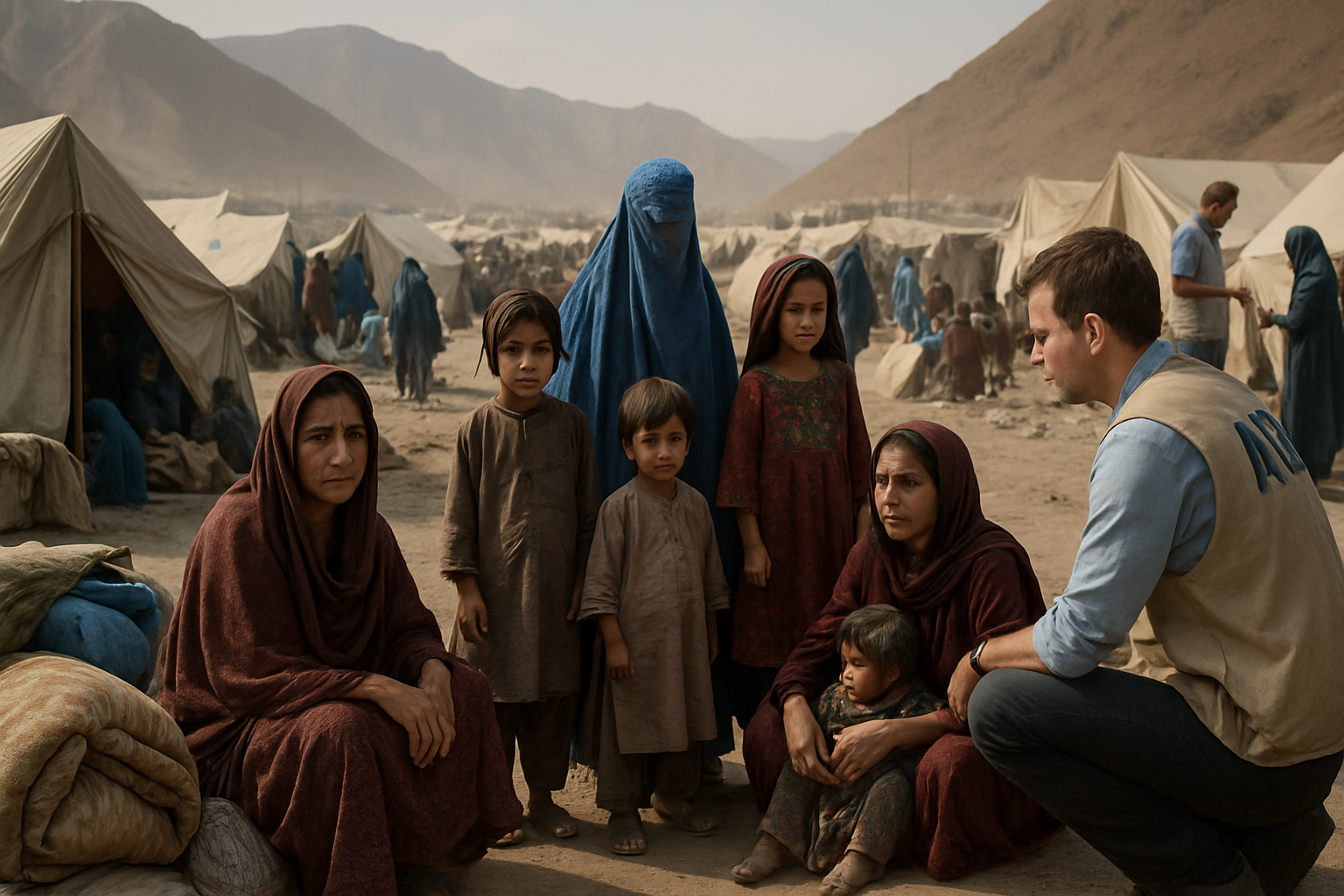
The current crisis builds upon Pakistan's "Illegal Foreigners' Repatriation Plan" launched in October 2023, which has resulted in the forced return of over one million Afghans since its inception. The 2026 figures of 146,000 deportees represent an acceleration of this policy, with numbers rising particularly sharply in April following the reopening of the Torkham border crossing on March 31.
International Legal Obligations
Legal experts emphasize that Pakistan's actions violate the principle of non-refoulement, a cornerstone of international refugee law that prohibits returning people to countries where they face persecution or serious harm. The systematic nature of the operations raises additional concerns about due process violations and discriminatory enforcement.
The forced returns are particularly troubling given conditions in Afghanistan, where the Taliban government has implemented comprehensive restrictions on women and girls, created an economic crisis affecting millions, and failed to address security threats from various militant groups operating in the region.
International organizations including Refugees International have called for Pakistan to immediately suspend the deportations, describing the policy as both unlawful and dangerous given the humanitarian emergency facing Afghanistan.
Regional Implications
The refugee crisis reflects broader challenges facing the region following the Taliban's 2021 return to power. Pakistan acknowledges having diminished influence in Afghanistan compared to wealthier powers including Turkey, the UAE, Qatar, Saudi Arabia, and China, contributing to Islamabad's increased reliance on military and enforcement solutions.
The 2,640-kilometer Durand Line border, established by British colonial authorities in 1893 and never recognized by Afghan governments, remains a source of fundamental disagreement between the neighbors. Pakistan maintains that the TTP operates "with impunity from Afghan soil," while Taliban authorities categorically deny providing sanctuary to militant groups.
Chinese officials have warned the UN Security Council about the continued presence of ISIS-K, al-Qaeda, and East Turkestan Islamic Movement (ETIM) operatives in Afghanistan, contradicting Taliban claims of having defeated terrorism within their borders.
Humanitarian Emergency
The deportations compound an already severe humanitarian crisis in Afghanistan, where the World Health Organization can deliver emergency medical oxygen to only 23 hospitals nationwide, and hundreds of health centers have closed due to funding cuts. The UN describes the situation as the worst humanitarian crisis in 25 years.
The systematic exclusion of women from the workforce affects approximately half of Afghanistan's potential labor force, creating structural economic damage that affects the entire population. The World Food Programme has been forced to turn away three out of four hungry and malnourished children due to budget shortfalls, representing what experts call a fundamental failure of the global humanitarian architecture.
The Norwegian Refugee Council has issued urgent appeals for aid for thousands of families displaced by the Pakistan-Taliban fighting in eastern Afghanistan, with Taliban police spokesman Sayed Tayeb Hamad reporting devastating conditions in Nangarhar province from cross-border military operations.
International Response
The international community faces a complex challenge in addressing the crisis while maintaining pressure for policy changes. The European Union has called for urgent de-escalation and emphasized that Afghan soil must not be used to threaten other countries, while demanding that Taliban authorities take concrete action against militant groups.
Multiple mediation efforts have been attempted, including initiatives by China, Turkey, Iran, Russia, and Saudi Arabia, but underlying security challenges persist. Chinese Foreign Minister Wang Yi has deployed special envoys shuttling between Kabul and Islamabad, reflecting Beijing's concerns about regional stability and the protection of China-Pakistan Economic Corridor investments.
The UN Security Council approved only a three-month extension for the UN Assistance Mission in Afghanistan versus the usual annual renewal, reflecting international frustration over the lack of human rights progress under Taliban rule.
Global Implications
The Afghanistan-Pakistan refugee crisis represents a critical test of 21st-century international humanitarian architecture. The convergence of natural disasters, economic collapse, systematic human rights violations, and regional military confrontation creates unprecedented challenges that traditional response mechanisms struggle to address effectively.
The situation demonstrates how rapidly humanitarian progress can be reversed without strong institutional protections and international engagement. The stakes extend far beyond the bilateral relationship, affecting global approaches to refugee protection, conflict prevention mechanisms, and regional stability frameworks worldwide.
Success or failure in managing this crisis will establish templates for similar challenges globally, where governments must balance security concerns with humanitarian obligations while managing complex flows driven by conflict, economic disparity, and increasingly frequent climate disasters.
"This crisis tests whether the international community can uphold fundamental humanitarian principles or will allow political and economic considerations to override protection obligations for the world's most vulnerable populations."
— International Legal Expert
As Pakistan continues its enforcement operations and Afghanistan faces mounting humanitarian challenges, the international community confronts an urgent need for innovative diplomatic frameworks that address root causes while preserving fundamental human rights protections. The resolution of this crisis will significantly influence global migration governance and humanitarian response mechanisms for years to come.