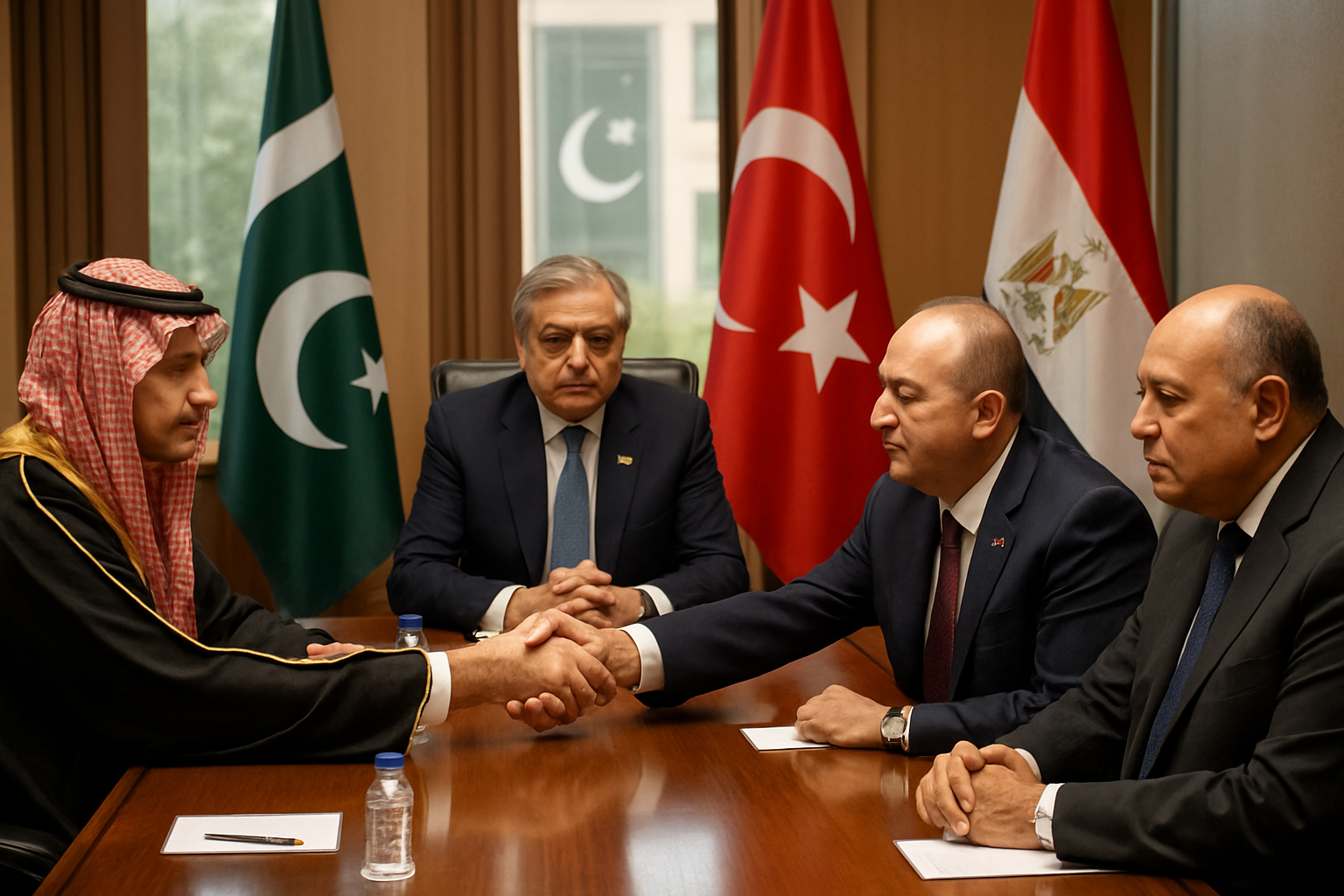
Pakistan has emerged as a critical diplomatic mediator in the Middle East crisis, hosting high-level talks with foreign ministers from Saudi Arabia, Turkey, and Egypt as regional tensions reach unprecedented levels amid the ongoing Iran war.
Deputy Prime Minister and Foreign Minister Ishaq Dar held separate productive meetings with his counterparts from Turkey and Egypt in Islamabad on Sunday, March 29, alongside a broader quadrilateral diplomatic summit. The meetings represent Pakistan's growing role as what European diplomatic sources describe as a "net regional stabilizer" in an increasingly volatile Middle East.
Pakistan's Mediation Role Officially Confirmed
In a significant diplomatic development, Foreign Minister Dar publicly acknowledged for the first time that Pakistan is facilitating indirect talks between the United States and Iran through a sophisticated message relay system. "US-Iran indirect talks are taking place through messages being relayed by Pakistan. The United States has shared 15 points, being deliberated upon by Iran," Dar confirmed in a statement that marks Pakistan's formal emergence as a key regional mediator.
The quadrilateral mechanism bringing together Pakistan, Saudi Arabia, Turkey, and Egypt is being viewed as a crucial diplomatic track in efforts to end the ongoing conflict, with a focus on consolidating regional backing for de-escalation and aligning positions ahead of any possible US-Iran negotiations.
Regional Powers Unite for Stability
The unprecedented cooperation between these four regional powers reflects the gravity of the current crisis. Turkish Foreign Minister Hakan Fidan, speaking before his departure for Islamabad, emphasized that the meeting would seek to establish a mechanism aimed at de-escalation. "We would discuss where the negotiations in this war are heading and how these four countries assess the situation and what can be done," Fidan told Turkish broadcaster A Haber.
"Both sides discussed bilateral relations, reaffirming their commitment to further strengthening ties, enhancing economic cooperation, and coordinating on regional and global issues of mutual interest."
— Pakistan Foreign Office Statement
Egyptian Foreign Minister Dr. Badr Abdelatty's participation in the talks underscores the Arab world's investment in diplomatic solutions. His meeting with Deputy Prime Minister Dar focused on strengthening Pakistan-Egypt bilateral relations while addressing the pressing regional challenges that threaten Middle Eastern stability.
Diplomatic Engagement Amid Military Tensions
The diplomatic initiative comes as Pakistan continues its established role in regional conflict mediation. Prime Minister Shehbaz Sharif has formally offered Pakistan as a host for "meaningful and conclusive talks" between the United States and Iran, positioning Islamabad as a potential venue for breakthrough negotiations in one of the world's most dangerous ongoing conflicts.
Pakistan's growing diplomatic influence reflects what regional analysts describe as a sophisticated approach to crisis management. The country has simultaneously maintained communication channels with Iran while coordinating closely with traditional allies Saudi Arabia and the UAE, as well as strategic partners Turkey and Egypt.
Iran Crisis Context
The talks occur against the backdrop of an escalating regional crisis that has seen Iran's uranium enrichment reach 60% purity, approaching weapons-grade levels, while diplomatic efforts to prevent broader military confrontation continue through multiple channels. Pakistan's role as a message relay between Washington and Tehran represents one of the few remaining diplomatic pathways for crisis resolution.
Iranian Foreign Minister Abbas Araghchi and Pakistani officials have maintained regular contact throughout the crisis, with Pakistan serving as a crucial communication bridge. The country's historical neutrality and diplomatic relationships with all major regional powers position it uniquely to facilitate dialogue when direct communication becomes impossible.
Economic and Strategic Implications
The quadrilateral talks also address broader regional economic cooperation and security coordination. Pakistan's energy needs and trade relationships with Gulf states create natural incentives for diplomatic engagement, while Turkey's NATO membership and Egypt's regional influence provide additional strategic dimensions to the partnership.
The collaboration between these four nations represents a departure from traditional Western-led mediation efforts, showcasing the emergence of what diplomats describe as innovative regional frameworks for crisis management. This approach reflects the changing dynamics of international relations in an increasingly multipolar world.
Path Forward for Regional Stability
As the talks continue, participants are focused on developing concrete mechanisms for conflict prevention and resolution. The discussions encompass not only the immediate Iran crisis but also broader regional security challenges, including counter-terrorism cooperation, energy security, and trade facilitation.
The success of Pakistan's diplomatic initiative could establish a new template for regional crisis management, demonstrating how middle powers can effectively bridge divides between major adversaries. The country's ability to maintain relationships across traditional alliance lines positions it as an increasingly valuable diplomatic asset in regional stability efforts.
The coming days will be crucial in determining whether this diplomatic momentum can translate into concrete progress toward de-escalation. With multiple regional powers now actively engaged in coordination efforts, the international community is watching closely to see if innovative diplomatic approaches can succeed where traditional frameworks have struggled.