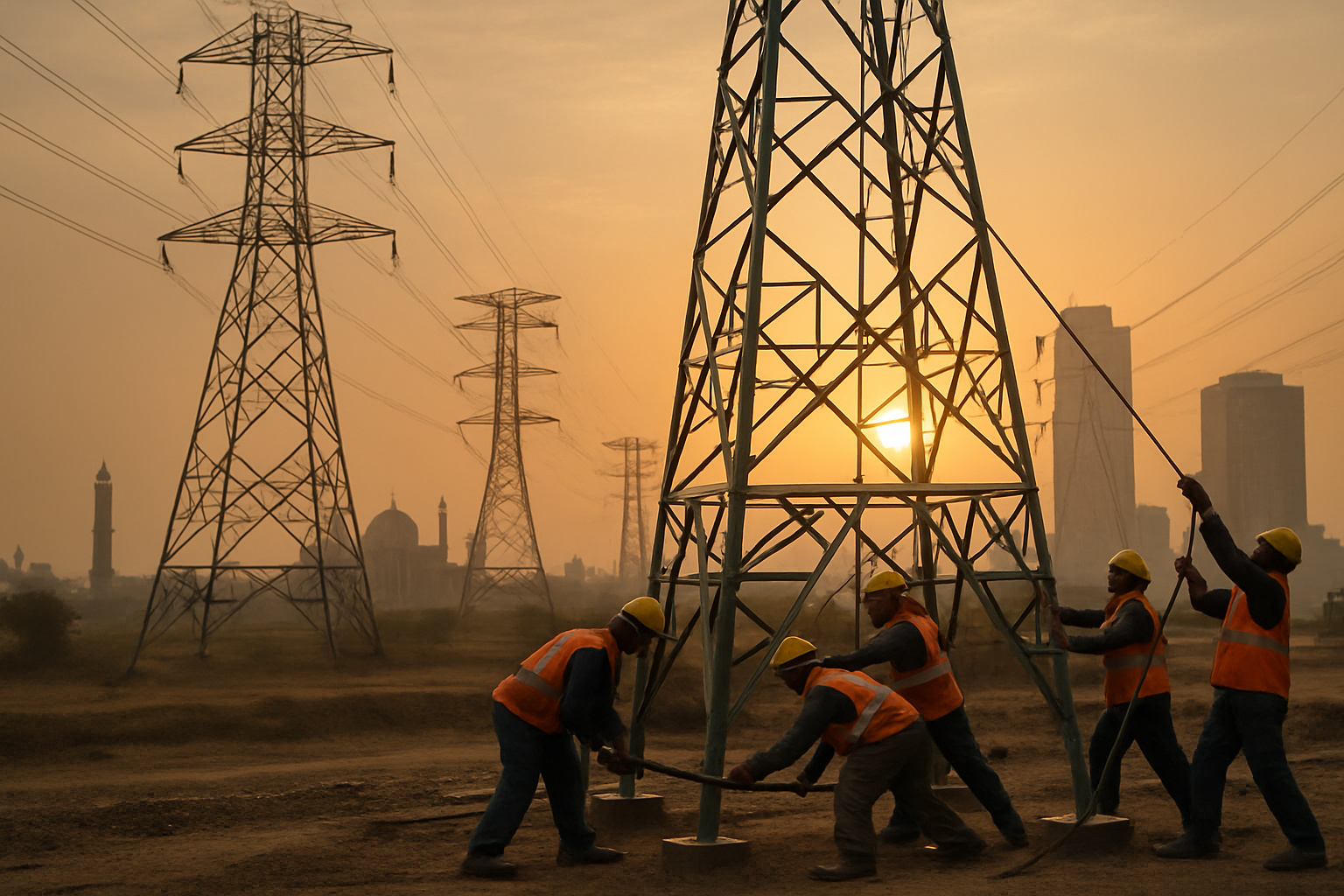
Pakistan achieved significant infrastructure milestones with the National Grid Company of Pakistan (NGC) completing power transmission network upgrades in major cities while Prime Minister Shehbaz Sharif ordered early salary disbursements for federal employees ahead of Eid ul-Fitr celebrations.
The dual announcements on March 16, 2026, highlight the government's commitment to both modernizing critical infrastructure and supporting public sector workers during important religious festivities, providing tangible benefits to millions of Pakistanis.
Major Transmission Network Upgrades Complete
The National Grid Company of Pakistan has achieved two significant infrastructure milestones designed to strengthen the country's power transmission capabilities and improve system reliability in Lahore and Hyderabad. The completion of these projects represents crucial progress in Pakistan's ongoing efforts to modernize its electrical grid amid growing energy demands.
The up-gradation work of the 220kV Transmission Line Sheikhupura–Bund Road Lahore CCT (I & II) has been completed from Tower No. 01 to Tower No. 55, finishing during the approved shutdown period from January 3 to March 14, 2026. The transmission line has been energized on load on an interim basis, marking an important milestone in the project's progress.
Under the comprehensive project scope, a total of 84 new towers are being installed along a 28-kilometer transmission line with Twin Bundle Rail conductor configuration. Current achievements include 83 foundations completed, 70 tower erections finished, 18 kilometers of conductor stringing installed, dismantling of 53 old towers, and removal of 18 kilometers of old conductor.
"This infrastructure upgrade represents our commitment to providing reliable electricity supply to major urban centers like Lahore."
— NGC Officials
During a recent site visit, Deputy Managing Director (Asset Development & Management) Engineer Rasheed A. Bhutto reviewed the project's progress, emphasizing the strategic importance of these upgrades for Pakistan's power sector resilience. The improvements are expected to significantly enhance electricity distribution capacity for Lahore's growing population and industrial base.
PM Orders Early Salary Relief for Federal Employees
In a move bringing relief to thousands of government workers, Prime Minister Shehbaz Sharif directed that all federal government employees receive their salaries before the Eid ul-Fitr 2026 holidays begin. The instructions have been sent to all federal departments, with the process to release salaries early already underway.
This decision affects hundreds of thousands of federal employees across Pakistan, enabling them to complete their Eid preparations without financial stress. The early disbursement covers all categories of federal government workers, from administrative staff to technical personnel across various ministries and departments.
The Prime Minister's directive emphasizes the government's recognition of Eid ul-Fitr's cultural and religious significance for Pakistani families. The early salary release allows employees to manage Eid shopping, household expenses, and family obligations that typically require increased financial resources during the festive period.
Infrastructure Development Amid Economic Challenges
These infrastructure achievements come during a period of significant economic pressures for Pakistan. The country has implemented various austerity measures in recent months, including fuel conservation initiatives and reduced government expenditures, making the completion of major infrastructure projects particularly noteworthy.
The power transmission upgrades align with Pakistan's broader infrastructure modernization efforts, including the recent successful conclusion of the historic $507 million 5G spectrum auction in March 2026. These developments demonstrate the government's commitment to maintaining critical infrastructure investments despite fiscal constraints.
Pakistan's infrastructure sector has shown resilience throughout 2026, with various projects advancing across telecommunications, energy, and transportation sectors. The National Grid Company's achievements in Lahore and Hyderabad represent part of this broader infrastructure renaissance occurring across the country.
Economic Impact and Employment Benefits
The infrastructure projects create multiple employment opportunities, from construction workers installing new transmission towers to technical personnel managing upgraded systems. The early salary disbursement for federal employees provides immediate economic stimulus as families prepare for Eid celebrations.
Federal employees represent a significant portion of Pakistan's formal economy, and their purchasing power during Eid festivals typically generates substantial economic activity across retail, hospitality, and service sectors. The early salary release ensures this economic boost occurs as planned despite any administrative challenges.
The combination of infrastructure advancement and employee support demonstrates the government's dual focus on long-term development and immediate citizen welfare. This approach aims to balance modernization requirements with social support needs during culturally important periods.
Regional Context and Future Outlook
Pakistan's infrastructure development occurs within a broader regional context of economic cooperation and modernization efforts. Recent agreements with countries like Kazakhstan have established frameworks for enhanced cooperation in energy and infrastructure sectors, potentially benefiting from such transmission network improvements.
The successful completion of major transmission projects positions Pakistan better for future energy cooperation agreements and regional connectivity initiatives. Modern grid infrastructure enables more efficient power distribution and potentially supports increased industrial activity in major urban centers.
Looking ahead, the National Grid Company's achievements in Lahore and Hyderabad provide templates for similar upgrades in other major Pakistani cities. The proven ability to complete complex transmission projects on schedule despite challenging economic conditions demonstrates institutional capacity for continued infrastructure development.
Significance for Pakistan's Development
The simultaneous announcement of infrastructure achievements and employee support measures reflects Pakistan's attempt to balance modernization with immediate social needs. This dual approach addresses both long-term economic competitiveness and short-term citizen welfare requirements.
The power transmission upgrades contribute to Pakistan's energy security and economic development capacity, while early salary disbursements support household consumption and festival economic activity. Together, these measures demonstrate governmental responsiveness to both infrastructure and social policy priorities.
As Pakistan continues navigating complex economic challenges while maintaining development momentum, such coordinated approaches to infrastructure advancement and employee support may become increasingly important for sustaining public confidence and economic stability during periods of transition and growth.