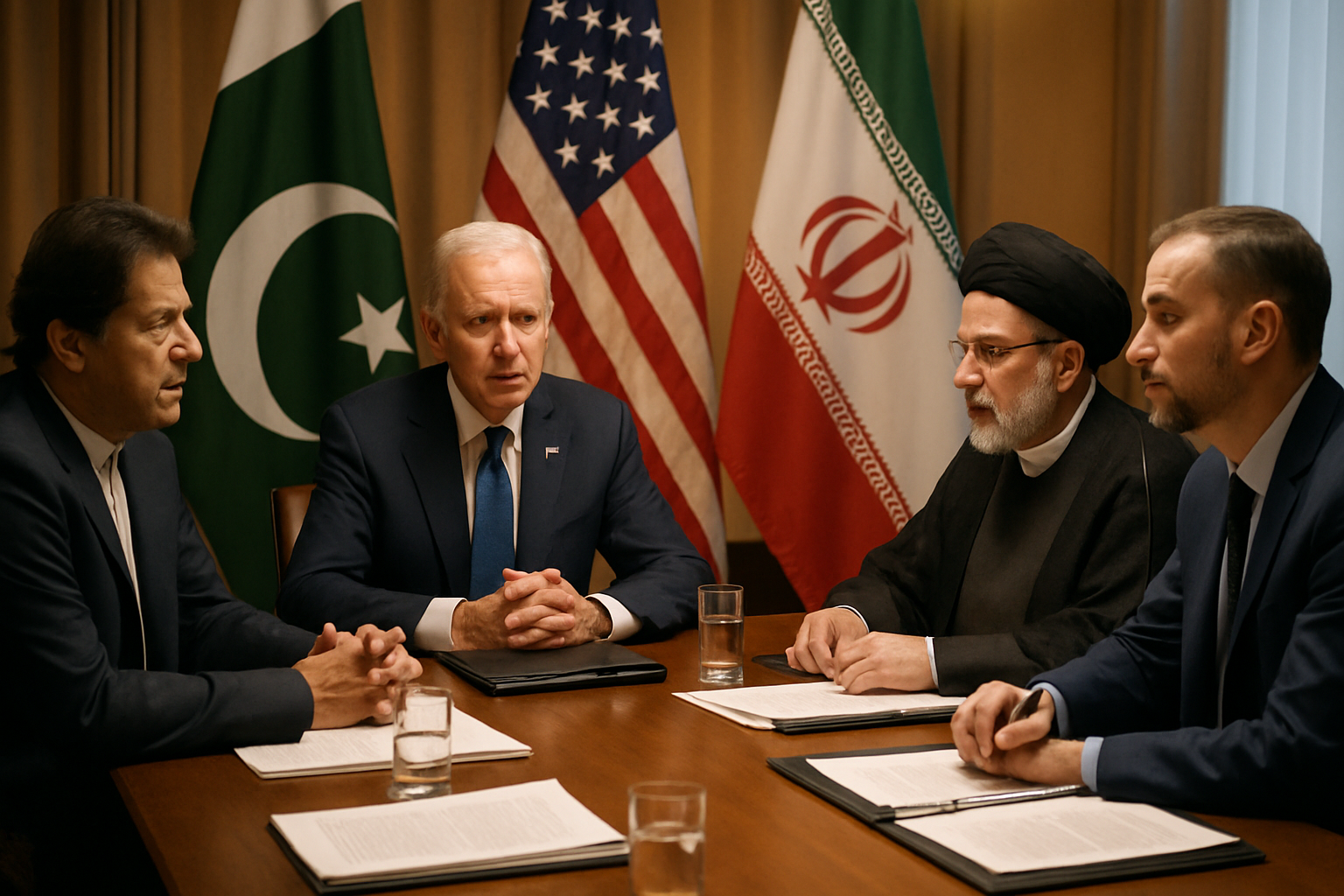
Pakistan has emerged as the critical mediator hosting historic US-Iran ceasefire talks in Islamabad, with Vice President JD Vance leading the American delegation in the most direct diplomatic engagement between the two nations in decades.
Prime Minister Shehbaz Sharif and Chief of Defence Forces Field Marshal Asim Munir successfully brokered the breakthrough ceasefire between the United States and Iran just 88 minutes before President Trump's "whole civilization will die tonight" deadline on April 8, 2026. The "Islamabad Accord" framework represents the most significant diplomatic achievement since the end of the Cold War.
High-Stakes Diplomatic Mission
The US Secret Service team has already arrived in Islamabad ahead of Vice President Vance's visit, with authorities declaring two sudden public holidays on Thursday and Friday to accommodate the unprecedented security measures. The talks mark the first direct US-Iran negotiations hosted by Pakistan, with Vance joined by Trump's special envoy Steve Witkoff and potentially Jared Kushner.
According to Pakistani sources, the negotiations will address Iran's comprehensive 10-point proposal covering Strait of Hormuz protocols, sanctions relief, regional conflicts, and security guarantees - the most detailed framework for US-Iran engagement since the 2015 nuclear deal.
"The dignitaries reviewed the progress of Pakistan's mediatory efforts to achieve sustainable peace in the region. The two leaders expressed satisfaction over the de-escalation achieved so far and stressed upon the need for maintaining peace and ceasefire by all parties."
— Prime Minister's Office Statement
Crisis Background: The World on the Brink
The talks come after the most dangerous international crisis since the Cold War, which saw oil prices crash 20% from $119.50 Brent to below $100 following the ceasefire agreement. The crisis had paralyzed global commerce with over 18,000 flights cancelled worldwide - the most severe disruption since COVID-19 - and the closure of Dubai International Airport due to missile damage.
Iran's mining of the Strait of Hormuz with 2,000-6,000 naval mines had effectively closed 40% of global oil transit, stranding over 150 tankers worth billions in cargo. The International Energy Agency deployed record strategic reserves of 400 million barrels - the largest release in 50-year history - to stabilize global markets.
Pakistan's Diplomatic Triumph
Pakistan's role as mediator emerged through sophisticated "message relay systems" maintained by PM Sharif and Field Marshal Munir, who sustained round-the-clock contact with both VP Vance and Iranian Foreign Minister Abbas Araghchi throughout the crisis. The diplomatic breakthrough came when Iran agreed to reopen the Strait of Hormuz for "safe passage" coordinated with Iranian forces during a critical two-week ceasefire period.
China's Foreign Minister Wang Yi expressed "full support" for Pakistan's initiative, while Germany noted "positive signs" for the direct talks. The success represents template-setting middle power diplomacy, demonstrating how regional states can bridge major adversaries when traditional mechanisms fail.

Global Economic Relief
The immediate market response to Pakistan's diplomatic success was extraordinary. Asian stock markets witnessed explosive rallies, with Pakistan's KSE-100 achieving a record 8.15% surge. Airlines began planning Middle East route resumptions, and shipping companies mobilized to free stranded vessels worth billions.
Consumer relief is anticipated globally, with Bangladesh reviewing fuel rationing for 170 million people and Pakistan considering reversing wartime austerity measures. European households expect reductions in electricity and gasoline costs, while Ireland anticipates normalization of heating oil prices from crisis peaks.
Regional Coalition Preserved
Despite severe testing during the crisis, the regional coalition of Saudi Arabia, UAE, Qatar, and Egypt maintained consensus supporting diplomatic solutions. Iranian retaliation during "Operation True Promise 4" had killed one civilian in Abu Dhabi, injured 32 in Kuwait, and wounded 8 in Qatar. Egyptian President Sisi's warnings about "comprehensive chaos" spreading across the region were ultimately heeded as the coalition backed Pakistani mediation throughout.
Nuclear Diplomacy Window
The crisis emerged from the complete collapse of Geneva nuclear talks despite achieving "broad agreement on guiding principles" - the most progress since the 2018 JCPOA breakdown. Iran's continued 60% uranium enrichment with over 400kg of weapons-grade material creates urgent timelines, especially given the New START treaty's expiration in February 2026 - the first time in 50+ years without US-Russia nuclear constraints.
The Islamabad talks represent a critical diplomatic opportunity to address nuclear concerns through the scheduled negotiations, with stakes affecting territorial sovereignty, energy security paradigms, and conflict resolution approaches for decades.
Template for 21st Century Diplomacy
UN Secretary-General António Guterres described the crisis as the "greatest test of multilateral cooperation and crisis management in the modern era." Pakistan's mediation success demonstrates that diplomatic innovation remains possible even in the "darkest hours" when maximum stakes affect global energy security, nuclear governance, and international law enforcement simultaneously.
The success provides a framework for 21st-century crisis resolution, showing multilateral cooperation effectiveness in an increasingly volatile and interconnected world. It demonstrates the continued preference for diplomatic credibility over military escalation, providing precedents for future international crises.
"Pakistan pledges highest support to expected delegations from the United States and Iran, as Islamabad prepares to host talks aimed at ending the conflict."
— Prime Minister Shehbaz Sharif
Critical Two-Week Window
The success or failure of the Islamabad talks will determine whether the temporary ceasefire becomes a lasting peace framework or merely provides a respite before renewed confrontation. The negotiations address the most comprehensive US-Iran framework since 2015, with implications extending far beyond the bilateral relationship.
Stakes include bridging decades-old disagreements, ensuring regional stability, maintaining nuclear governance credibility, and establishing international law enforcement mechanisms. The framework could provide a template for managing similar crises when the world faces catastrophic conflict potential.
Historical Significance
Pakistan's emergence as a crucial mediator demonstrates diplomatic innovation effectiveness in the most dangerous circumstances. The framework's success in converting a temporary pause into lasting stability will be critical in determining whether diplomatic solutions or military confrontation becomes the precedent for 21st-century international relations.
This represents the most significant diplomatic breakthrough preventing broader regional war with global consequences. The template-setting moment shows that when traditional mechanisms fail, innovative multilateral cooperation can still prevent conflicts with civilizational implications.
As delegations prepare for the historic talks in Islamabad, the world watches to see whether diplomatic innovation will triumph over military escalation in an increasingly volatile global system. The stakes could not be higher - not just for US-Iran relations, but for the future of international crisis management and the sustainability of the post-Cold War order.