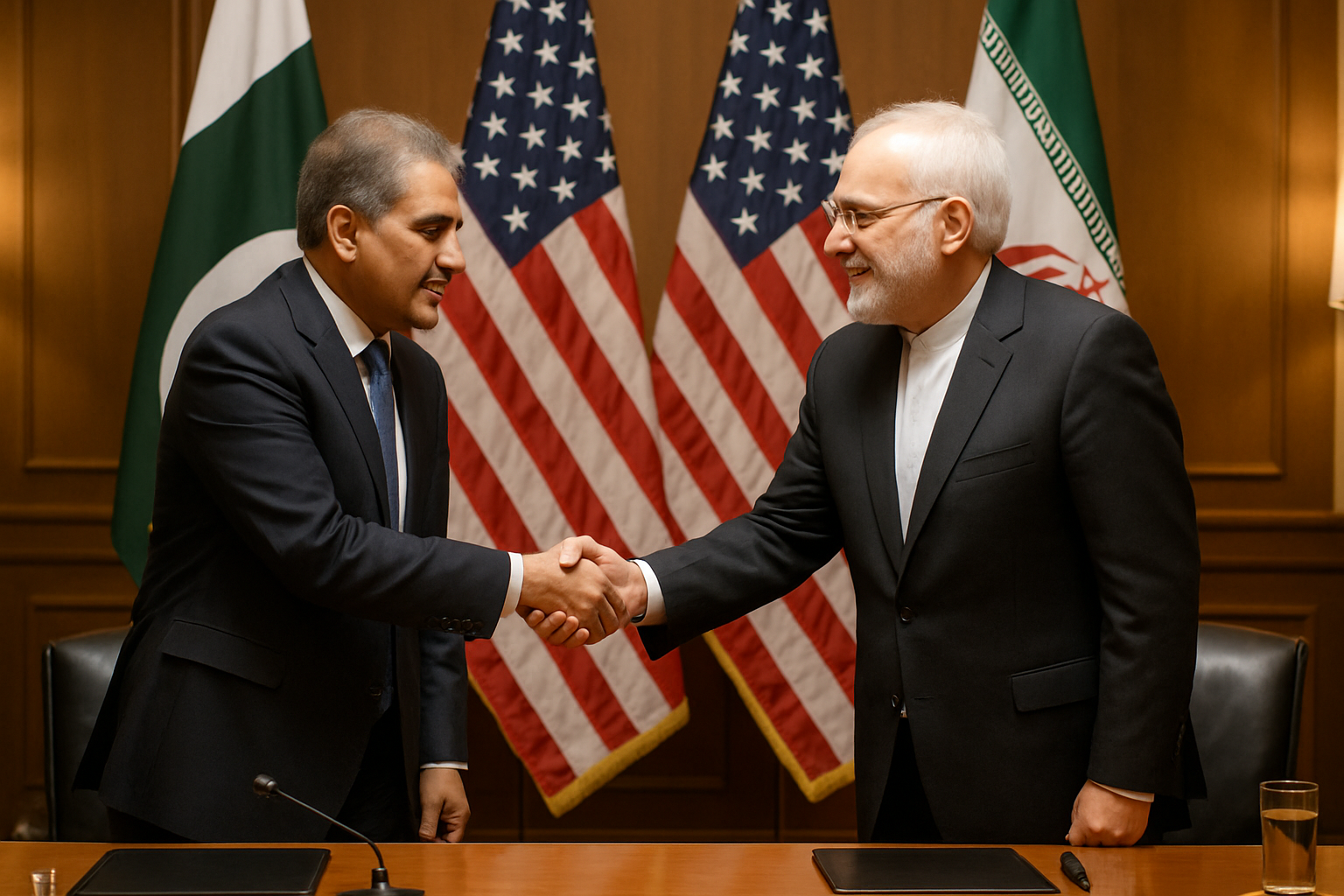
In a dramatic diplomatic triumph that averted what could have been the most catastrophic conflict since World War II, Pakistan successfully mediated a historic ceasefire agreement between the United States and Iran just 88 minutes before President Trump's apocalyptic midnight deadline on April 8, 2026.
The breakthrough came after weeks of the most dangerous international crisis since the Cold War, which had seen oil prices crash from $119.50 to below $100 per barrel overnight, global markets surge, and the world step back from the precipice of a conflict that threatened to destroy Iranian civilization.
The Eleventh-Hour Breakthrough
Pakistan Prime Minister Shehbaz Sharif emerged as the crucial diplomatic broker, announcing the ceasefire agreement at 10:43 PM Eastern Time via social media platforms. The announcement came after Field Marshal Asim Munir maintained round-the-clock contact with both US Vice President JD Vance and Iranian officials through what diplomatic sources describe as a "message relay system."
Iranian Foreign Minister Abbas Araghchi confirmed Tehran's agreement to reopen the strategically vital Strait of Hormuz for "safe passage" during the two-week ceasefire period, coordinated with Iranian armed forces. The waterway, which handles 40% of global oil transit, had been effectively closed by Iranian mining operations deploying an estimated 2,000-6,000 naval mines.
"Pakistan has successfully facilitated a breakthrough that demonstrates the power of middle-power diplomacy in our multipolar world," said PM Sharif in his announcement. "This ceasefire covers all fronts, including Lebanon, with immediate effect."
— Prime Minister Shehbaz Sharif
Trump's Dramatic Policy Reversal
The ceasefire represents the most dramatic presidential policy reversal in modern American history. Just hours earlier, President Trump had issued what observers called his most apocalyptic threat yet, declaring that "a whole civilization will die tonight, never to be brought back again" if Iran failed to meet his demands by the Tuesday 8 PM deadline.
Trump's acceptance of Iran's 10-point proposal, which he deemed a "workable basis for negotiations," marked a complete shift from his earlier infrastructure destruction ultimatum that included threats to "destroy every bridge and power plant" in Iran.
The proposed framework, dubbed the "Islamabad Accord," provides for formal negotiations scheduled for Friday, April 10, in Pakistan's capital. The US delegation may include Vice President JD Vance, special envoy Steve Witkoff, and senior advisor Jared Kushner, representing the most direct US-Iran diplomatic engagement in decades.
Iran Declares Victory
Iran's Supreme National Security Council declared the ceasefire a "historic victory," claiming to have "forced Trump to accept our 10-point plan." The Iranian position represents a major shift from earlier categorical rejection of any temporary measures, now accepting negotiations on broader regional arrangements while maintaining Revolutionary Guard control over Strait of Hormuz coordination mechanisms.
The agreement marks a significant evolution in Iran's diplomatic strategy under the new hereditary leadership of Mojtaba Khamenei, who became the first hereditary Supreme Leader in the Islamic Republic's 47-year history following his father Ali Khamenei's death on March 1.
Global Crisis Resolution
The ceasefire immediately resolved multiple global crises that had reached unprecedented levels during the five-week conflict. Asian stock markets experienced explosive rallies following the announcement, with Pakistan's KSE-100 registering a record 8.15% gain.
The aviation industry, which had suffered its worst disruption since COVID-19 with over 18,000 flights cancelled worldwide, began immediate recovery planning. Dubai International Airport, the world's busiest with 86 million annual passengers, announced preparations to reopen after being shuttered due to missile damage.
Energy Market Relief
Oil prices experienced their steepest decline in six years, with Brent crude crashing nearly 20% from $119.50 to below $100 per barrel in overnight trading. The International Energy Agency (IEA) announced it would reduce its record-setting 400 million barrel strategic reserve release, the largest intervention in the agency's 50-year history.
Natural gas prices, which had surged 24% in Europe and 78% in the United States, began retreating as Qatar announced plans to resume LNG production at facilities that provide approximately 20% of global exports.
Operation Epic Fury Concludes
The ceasefire effectively concludes Operation Epic Fury, the largest US military operation in the Middle East since the 2003 Iraq invasion. The operation, which cost $11.3 billion in its first week alone, had deployed approximately one-third of the US Navy's fleet through dual-carrier operations involving the USS Gerald R. Ford and USS Abraham Lincoln.
The conflict marked several historic firsts, including the first European territory attacked since World War II when Iranian drones struck RAF Akrotiri in Cyprus, and the first enemy vessel sunk by a US submarine since WWII when the USS Charlotte destroyed the Iranian frigate IRIS Dena near Sri Lanka.
Congressional and International Response
The ceasefire brought immediate relief to Congressional opposition that had reached historic levels, with only 25% of Americans supporting the military operation according to recent polling. Senator Richard Blumenthal, who had expressed being "more concerned than ever" about potential ground troop deployment, welcomed the diplomatic breakthrough.
International leaders hailed the agreement, with China's Wang Yi expressing "full support" for Pakistan's initiative. German officials noted "positive signs" that direct talks would begin soon, while France and Spain pushed for the ceasefire framework to also include Israel's ongoing conflict with Hezbollah.
Humanitarian Crisis Resolution
The agreement brings an end to a mounting humanitarian crisis that had claimed at least 787 civilian casualties in Iran according to the Iranian Red Crescent, including a Pentagon-confirmed elementary school strike that killed 165-185 students due to what officials called "outdated targeting data."
International evacuations, which had reached Arab Spring-level scale with 115,000 Australians trapped and 30,000 Germans stranded in the region, can now proceed safely. The European Union announced the deactivation of its ESTIA crisis mechanism, which had been activated for the first time in the bloc's history following the Cyprus attacks.
The Road Ahead
The two-week ceasefire window provides crucial breathing space for innovative diplomatic solutions to bridge disagreements that have persisted for decades between Washington and Tehran. The scheduled talks in Islamabad will address Iran's 10-point proposal, which includes protocols for Strait of Hormuz operations, sanctions relief, regional conflict resolution, and security guarantees.
However, fundamental challenges remain. The conflict emerged from the complete collapse of Geneva nuclear talks despite achieving "broad agreement on guiding principles" - the most diplomatic progress since the 2018 JCPOA breakdown. The core disagreement persists: Iran's insistence on nuclear-only negotiations versus US demands for comprehensive agreements including ballistic missiles and proxy groups.
Template-Setting Significance
UN Secretary-General António Guterres described the crisis resolution as representing "the greatest test of multilateral cooperation in crisis management in the modern era." The Pakistani mediation success provides a template for 21st-century conflict resolution when traditional diplomatic mechanisms fail.
The crisis had threatened to reshape the post-WWII international order, testing energy security frameworks, nuclear governance credibility, and international law enforcement simultaneously. Its peaceful resolution through middle-power diplomacy strengthens precedents for diplomatic solutions over military escalation in future international disputes.
The April 8, 2026 ceasefire agreement represents a watershed moment in international relations, demonstrating that even in the darkest hours of global crisis, innovative diplomatic intervention can prevent catastrophic conflict and preserve international stability for future generations.