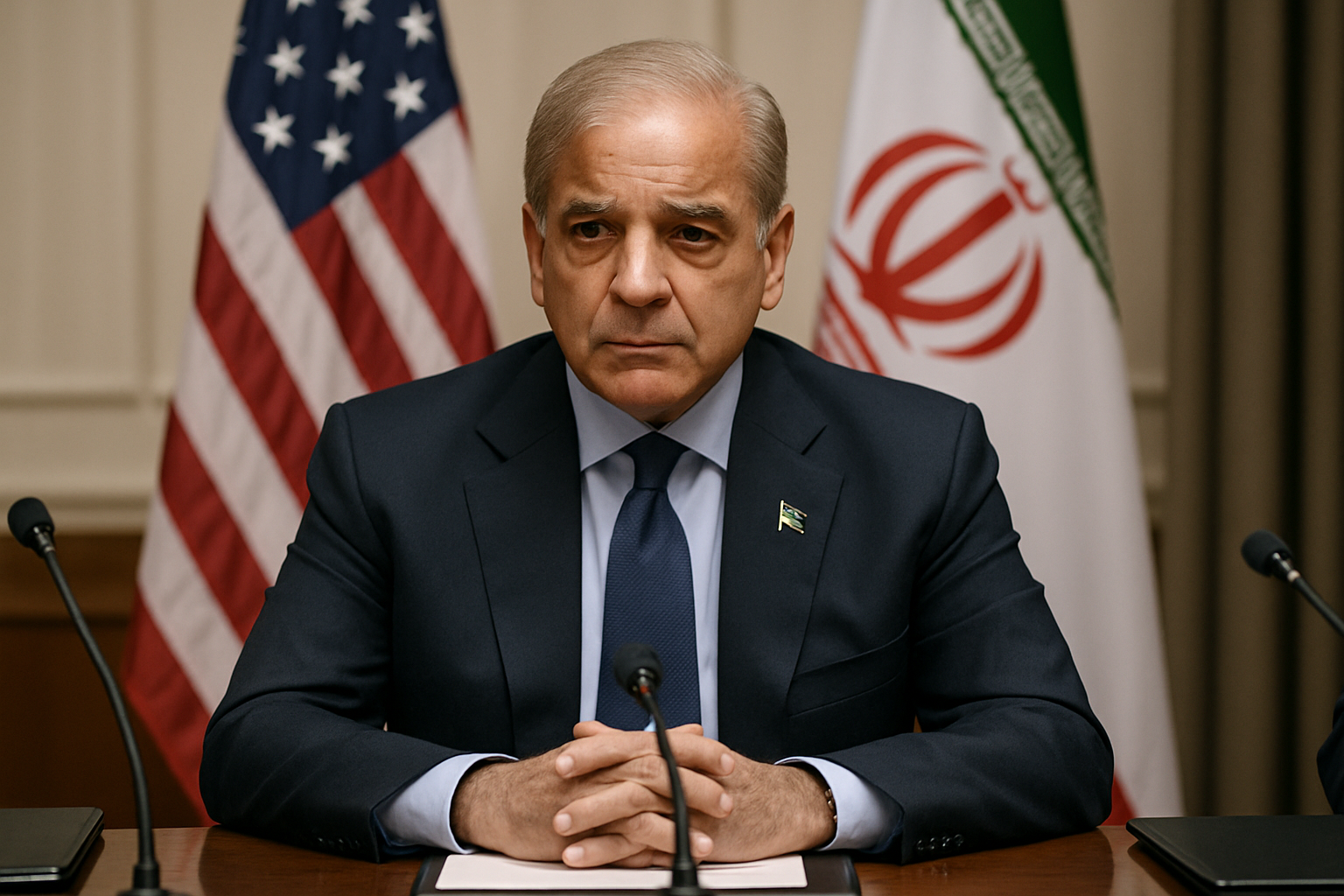
In a stunning diplomatic breakthrough that averted what many feared could become World War III, Pakistan Prime Minister Shehbaz Sharif has emerged as the unlikely hero who brokered a historic ceasefire between the United States and Iran, with high-level delegations now expected to arrive in Islamabad for comprehensive peace talks.
The breakthrough came just 88 minutes before President Trump's apocalyptic "whole civilization will die tonight" deadline on April 8, 2026, when Iran agreed to reopen the strategically vital Strait of Hormuz under what sources are calling the "Islamabad Accord" framework. The agreement immediately crashed oil prices by nearly 20% from their crisis peak of $119.50 per barrel, marking the steepest decline in six years and ending the most dangerous international crisis since the Cold War.
The Architects of Peace
At the center of this diplomatic miracle stand two Pakistani leaders whose behind-the-scenes efforts proved crucial: Prime Minister Shehbaz Sharif and Pakistan's Field Marshal Asim Munir, the country's first-ever chief of defense forces. Working through what diplomatic sources describe as a sophisticated "message relay system," the duo maintained round-the-clock contact with both US Vice President JD Vance and Iranian Foreign Minister Abbas Araghchi throughout the crisis.
According to multiple international sources, it was Sharif who proposed the formula that unlocked the deadlock: a two-week ceasefire, postponement of Trump's ultimatum, and the temporary reopening of the Strait of Hormuz as a gesture of good faith. The breakthrough came when Iran accepted this framework, viewing Pakistan as a neutral mediator capable of bridging the vast divide between Washington and Tehran.
"Pakistan has positioned itself as a net regional stabilizer alongside Turkey and Egypt, serving as a message relay between adversaries when direct communication becomes impossible."
— European Diplomatic Source
From Crisis to Breakthrough
The path to this diplomatic triumph was fraught with unprecedented dangers. The crisis had pushed the world to the brink of catastrophe, with over 18,000 flights cancelled worldwide, oil prices soaring toward $200 per barrel, and the Strait of Hormuz—through which 40% of global oil transits—effectively closed by Iranian naval mines. The global economy teetered on the edge of collapse as the International Energy Agency authorized its largest strategic reserve release in 50 years.
Operation Epic Fury, the largest US military operation in the Middle East since 2003, had already cost $11.3 billion in its first week alone, with 150 US troops wounded and three killed. The conflict had expanded beyond the Middle East when Iranian drones struck Cyprus—the first attack on European territory since World War II—prompting an unprecedented naval coalition response.
What made Pakistan's mediation particularly remarkable was its ability to maintain credibility with both sides during the most intense phase of the crisis. While the United States valued Pakistan's strategic partnership and military cooperation, Iran saw Pakistan as a fellow Islamic republic that understood regional dynamics and respected sovereignty.
The Diplomatic Framework
Foreign Minister Ishaq Dar's public acknowledgment of Pakistan's role marked a watershed moment in international diplomacy. "US-Iran indirect talks are taking place through messages being relayed by Pakistan," Dar confirmed, describing how the United States had shared a comprehensive 15-point peace proposal that Iran was deliberating.
The "Islamabad Accord" represents more than just a temporary ceasefire—it provides a two-phase framework beginning with an immediate halt to hostilities followed by comprehensive negotiations for a long-term settlement. All elements must be agreed upon simultaneously, with memoranda processed electronically through Pakistan as the sole communication channel.
China's Foreign Minister Wang Yi expressed "full support" for Pakistan's initiative, calling the peace talks "conducive to restoring normal navigation in the Strait of Hormuz." Germany noted "positive signs" that direct US-Iran talks might begin "very soon" with Pakistan as the venue, indicating growing international momentum behind Pakistani mediation.
Global Stakes and Implications
The successful mediation has far-reaching implications that extend well beyond the immediate crisis. UN Secretary-General António Guterres described the situation as "the greatest test of multilateral cooperation in the modern era," making Pakistan's breakthrough achievement all the more significant.
The crisis had threatened to fundamentally reshape the post-World War II international order, testing energy security, nuclear governance credibility, and international law enforcement mechanisms simultaneously. Iran's continued 60% uranium enrichment, combined with the February 2026 expiration of the New START treaty—the first time in 50+ years without US-Russia nuclear constraints—created a perfect storm of global instability.

Economic Relief and Recovery
The immediate impact of the ceasefire was felt across global markets. Asian stock exchanges experienced explosive rallies, with Pakistan's KSE-100 index surging a record 8.15% as investors celebrated the diplomatic breakthrough. Airlines began planning the resumption of Middle East routes after the aviation industry's most severe disruption since COVID-19.
Consumer relief is expected worldwide, from Bangladesh reviewing fuel rationing for 170 million people to European households anticipating reductions in electricity and gasoline costs. Qatar has resumed LNG production, representing 20% of global exports, while major shipping companies like Maersk and MSC are mobilizing over 150 stranded tankers worth billions in cargo.
The IEA began reducing its record 400-million-barrel strategic reserves release as supply concerns eased, though analysts warn that full recovery of shipping and aviation networks may take months rather than weeks.
The Road Ahead
Prime Minister Sharif announced that delegations from both the United States and Iran will arrive in Pakistan on Friday for what could become the most direct US-Iran diplomatic engagement in decades. The potential participation of Vice President JD Vance, Special Envoy Steve Witkoff, and even Jared Kushner underscores the high-level commitment to the process.
Iran's 10-point proposal, deemed a "workable basis for negotiations" by the Trump administration, addresses crucial issues including Strait of Hormuz protocols, sanctions relief, regional conflicts, and security guarantees. This represents the most comprehensive US-Iran framework since the 2015 nuclear deal.
The regional coalition of Saudi Arabia, UAE, Qatar, and Egypt—despite being severely strained by Iranian attacks on their territories during the crisis—has maintained its support for the diplomatic process, providing crucial backing for the Pakistani mediation effort.
A New Template for Diplomacy
Pakistan's successful mediation demonstrates the growing importance of middle powers in international crisis resolution. When traditional diplomatic mechanisms failed and major powers found themselves unable to communicate directly, Pakistan's unique position and diplomatic skill provided the bridge necessary for peace.
This achievement establishes a new template for 21st-century conflict resolution, showing that innovative multilateral cooperation can succeed even in the darkest hours of international crisis. The "Islamabad Accord" framework may well become a model for future crisis management in an increasingly multipolar world.
"This is a watershed moment in 21st-century diplomacy, demonstrating that diplomatic solutions are possible even when the stakes are at their maximum."
— UN Secretary-General António Guterres
Looking Forward
As the world watches the upcoming Islamabad talks, the success of Pakistan's mediation offers hope that diplomacy can triumph over military confrontation. The two-week ceasefire window provides breathing space for innovative solutions to bridge US-Iran disagreements that have persisted for decades.
The stakes remain enormous. Success in converting this temporary pause into a lasting framework could reshape approaches to territorial sovereignty, energy security, and nuclear governance for generations to come. Failure could accelerate military solutions and undermine diplomatic credibility worldwide.
Prime Minister Shehbaz Sharif's emergence as a key mediator in the world's most dangerous crisis since the Cold War has elevated Pakistan's global standing and demonstrated the vital role that middle powers can play in international peace and security. As delegations prepare to arrive in Islamabad, the world holds its breath for what could be a historic breakthrough in international diplomacy.
The ultimate test will be whether the innovative Pakistani mediation framework can transform temporary peace into lasting stability, providing a template for conflict resolution in our volatile, interconnected world.