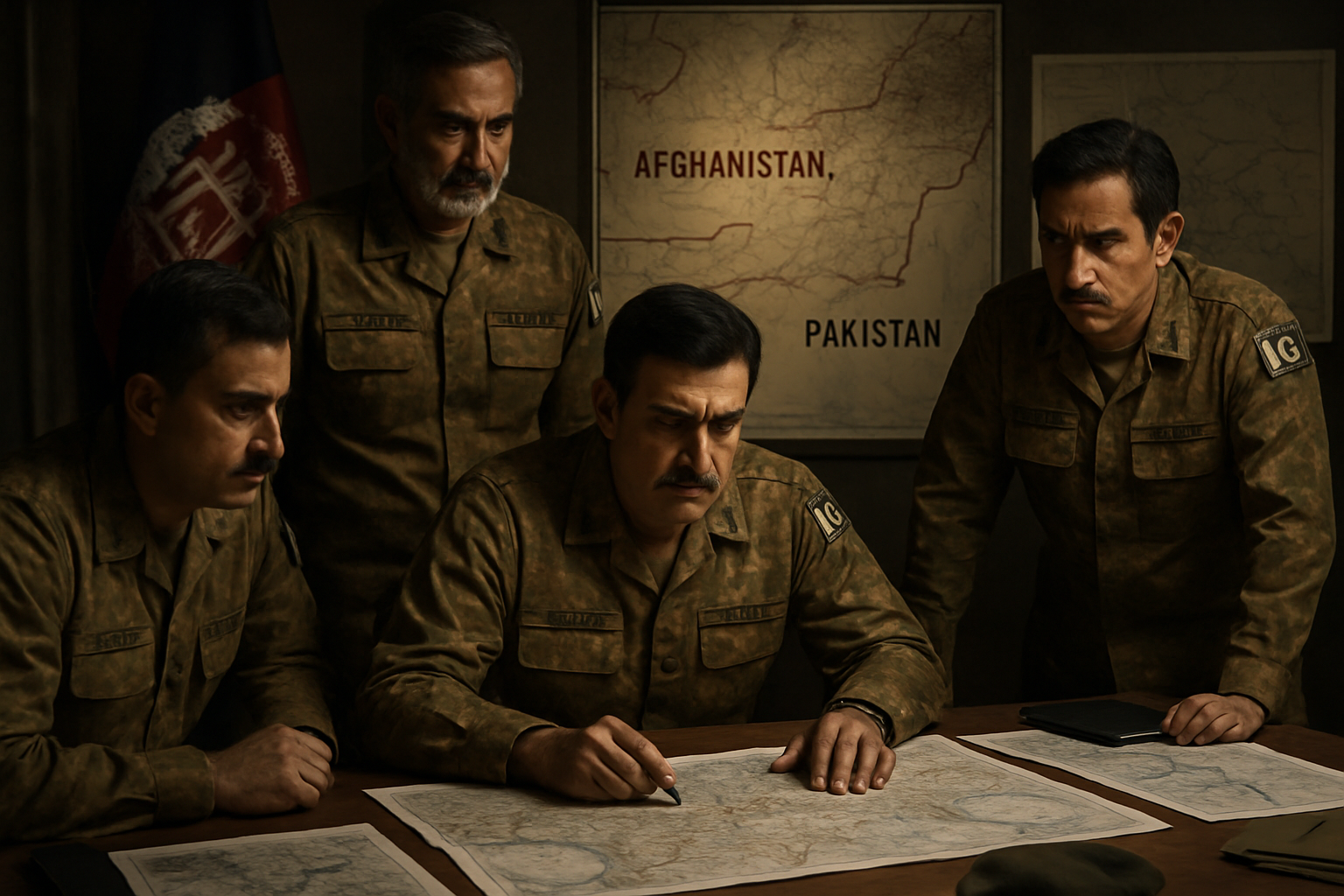
Pakistan continued its sustained military campaign against Afghanistan on Sunday, launching fresh airstrikes in southern Kandahar province as the unprecedented cross-border conflict entered its fourth week, marking the most serious confrontation between the neighboring nations since the Taliban's return to power in 2021.
Pakistani forces targeted what officials described as "terrorist hideouts" and military facilities in the Taliban's former stronghold of Kandahar, according to state-run Pakistan Television. The strikes represent the latest escalation in "Operation Ghazab-lil-Haq" (Righteous Fury), launched following Pakistan Defense Minister Khawaja Asif's historic "open war" declaration against the Taliban government on February 27.
The ongoing military confrontation has exacted a devastating humanitarian toll, with the UN Office for the Coordination of Humanitarian Affairs (OCHA) reporting that 16,370 families have been newly displaced across 10 Afghan provinces. The UN Mission in Afghanistan (UNAMA) has documented 185 civilian casualties since February 26, including 56 killed and 129 wounded, with the majority being women and children.
Escalation Timeline: From Border Incident to Open War
The current crisis began on February 16 when Tehrik-e-Taliban Pakistan (TTP) militants launched a coordinated assault on a Pakistani security checkpost in Bajaur district, killing 11 Pakistani soldiers using a vehicle-borne improvised explosive device. The attack, which Pakistani officials termed an act of terrorism by "Fitna al-Khawarij," prompted swift retaliation from Islamabad.
On February 22, Pakistan conducted airstrikes targeting seven alleged terrorist camps in Afghanistan's Nangarhar and Paktika provinces. While Pakistani sources claimed the elimination of over 80 TTP and ISIS-K militants, the strikes also killed at least 18 civilians, including eight schoolchildren in Nangarhar's Behsud district, according to Taliban officials and UN verification.
"Pakistan will continue targeted operations until Afghanistan addresses our core security concerns regarding terrorist sanctuaries,"
— Pakistani military spokesperson
The Taliban government responded with threats of "measured and appropriate response," describing the protection of Afghanistan's sovereignty as both "religious obligations and national duties." The situation further deteriorated when Defense Minister Asif formally declared "open war" against the Taliban administration, representing the first such declaration between the neighbors in decades.
Humanitarian Crisis Deepens
The sustained military operations have created a severe humanitarian emergency across Afghanistan's border regions. OCHA reports the highest displacement in Paktia province (7,000 families), followed by Kunar (3,500), and Khost and Nangarhar (2,500 each). These new displacements compound the existing crisis, adding to 7,000 families already displaced from an August 2025 earthquake.
The World Health Organization has been forced to deliver emergency medical oxygen to only 23 hospitals nationwide, while hundreds of health centers have closed due to funding cuts and security concerns. The targeting of civilian infrastructure during the Muslim holy month of Ramadan has raised serious concerns about violations of international humanitarian law.
Medical facilities in the affected regions are overwhelmed treating wounded civilians, with rescue operations continuing for those trapped under rubble from bombardment. The pattern of strikes on residential areas, educational institutions, and religious sites has drawn condemnation from international human rights organizations.
Economic Warfare: Trade Collapse Compounds Crisis
Beyond the immediate military confrontation, the crisis has devastated cross-border economic ties. Bilateral trade has collapsed by 59% over seven months, with Pakistan's exports to Afghanistan plummeting from $550 million to $228 million, according to State Bank data. This represents one of the steepest bilateral trade drops in recent regional history.
Traditional trade routes through Chaman-Spin Boldak and Torkham have faced repeated closures, severely affecting border communities dependent on cross-border commerce. The economic disruption compounds Afghanistan's existing humanitarian crisis, where 88% of female-headed households are unable to meet minimum living requirements, according to UN data.
The closure of these vital economic lifelines has particularly impacted merchants, transporters, and ordinary citizens who depend on cross-border trade for their livelihoods. Cultural and social connections across the colonial-era border have been severely disrupted, affecting families separated by the arbitrary demarcation.
The Durand Line: A Colonial Legacy at Crisis Center
At the heart of the current confrontation lies the disputed 2,640-kilometer Durand Line, drawn by British colonial authorities in 1893. This border has never been formally recognized by any Afghan government, which views it as an artificial division of Pashtun tribal territories.
Pakistan maintains that TTP militants operate "with impunity from Afghan soil," using the porous mountainous terrain to launch attacks before retreating to safe havens. The Taliban government categorically denies providing sanctuary to militant groups or allowing Afghan territory to be used against neighboring countries.
The border's difficult terrain, limited government control, and complex tribal dynamics have historically provided challenges for security operations on both sides. These geographical and political realities have enabled militant groups to exploit ungoverned spaces, complicating efforts to establish effective border management.
International Mediation Efforts Fall Short
Despite intensive diplomatic efforts from multiple regional and international actors, attempts to de-escalate the crisis have largely failed. Saudi Arabia facilitated a prisoner exchange in February 2026, releasing three Pakistani soldiers captured during October 2025 border clashes, but this confidence-building measure proved insufficient to address underlying security challenges.
Turkey, Iran, Russia, and China have all offered mediation services, with Turkish Foreign Minister Hakan Fidan launching shuttle diplomacy initiatives and Iranian officials warning of broader regional destabilization risks. Chinese Foreign Minister Wang Yi has engaged with both Pakistani and Afghan counterparts, emphasizing that disputes must be "resolved through consultation and negotiation."
However, the continuation of military operations despite religious appeals, including Islamic scholar fatwas calling for a Ramadan ceasefire, demonstrates the depth of the security challenges and the limitations of traditional diplomatic approaches in addressing the crisis.
Regional and Global Security Implications
The Pakistan-Afghanistan confrontation represents the most serious test of the post-2021 South Asian security architecture since the Taliban's return to power. Pakistan, a nuclear-armed state, has acknowledged its diminished regional influence regarding Afghanistan compared to wealthier powers including Turkey, the UAE, Qatar, Saudi Arabia, and China, leading to increased reliance on military solutions.
Chinese warnings at the UN Security Council about the presence of ISIS-K, al-Qaeda, and the East Turkestan Islamic Movement (ETIM) in Afghanistan contradict Taliban claims of having "defeated terrorism." This divergence highlights the complex international dimensions of the crisis and the challenges facing the Taliban's governance credibility.
The nuclear dimension adds a particularly dangerous element requiring careful international monitoring to prevent escalation beyond conventional military operations. The success or failure of diplomatic containment efforts will influence approaches to territorial sovereignty versus transnational terrorism challenges globally, potentially setting precedents for 21st-century conflict resolution.
Taliban's Balancing Act: Diplomacy Amid Military Pressure
Despite the military escalation, Taliban officials have maintained that "the path of talks remains open," seeking resolution through "mutual understanding and respect." This diplomatic messaging contrasts with Pakistan's hardened position, with officials stating there is "no rush" to end the military campaign until concrete anti-militant measures are implemented.
The Taliban's challenge lies in balancing its stated commitment to preventing Afghan territory from being used against neighboring countries with the practical difficulties of controlling all militant groups within Afghanistan's borders. The organization faces the complex task of demonstrating effective governance while managing relationships with various armed factions that may not fully align with official Taliban policy.
Looking Ahead: Critical Juncture for Regional Stability
As the crisis enters its fourth week, the coming days will be critical in determining whether innovative diplomatic frameworks can prevent broader regional confrontation or if the conflict will escalate into prolonged warfare with global implications for nuclear-armed neighbors.
The international community faces increasing pressure to develop effective conflict prevention mechanisms that can address the intersection of territorial sovereignty disputes, cross-border terrorism concerns, and humanitarian obligations. The success or failure of current mediation efforts will likely provide a template for managing similar challenges in other regions facing comparable security dilemmas.
The crisis represents a comprehensive challenge requiring balancing legitimate security concerns with respect for territorial integrity, civilian protection, and international law compliance. The stakes extend far beyond bilateral relations between Pakistan and Afghanistan, potentially influencing regional stability mechanisms and international approaches to conflict resolution for years to come.
As Pakistan continues "Operation Ghazab-lil-Haq" and the Taliban maintains its defensive posture, the urgent need for innovative diplomatic solutions becomes increasingly apparent. The alternative – a prolonged military confrontation between nuclear-armed neighbors – poses unacceptable risks to regional and global security that demand immediate international attention and sustained mediation efforts.