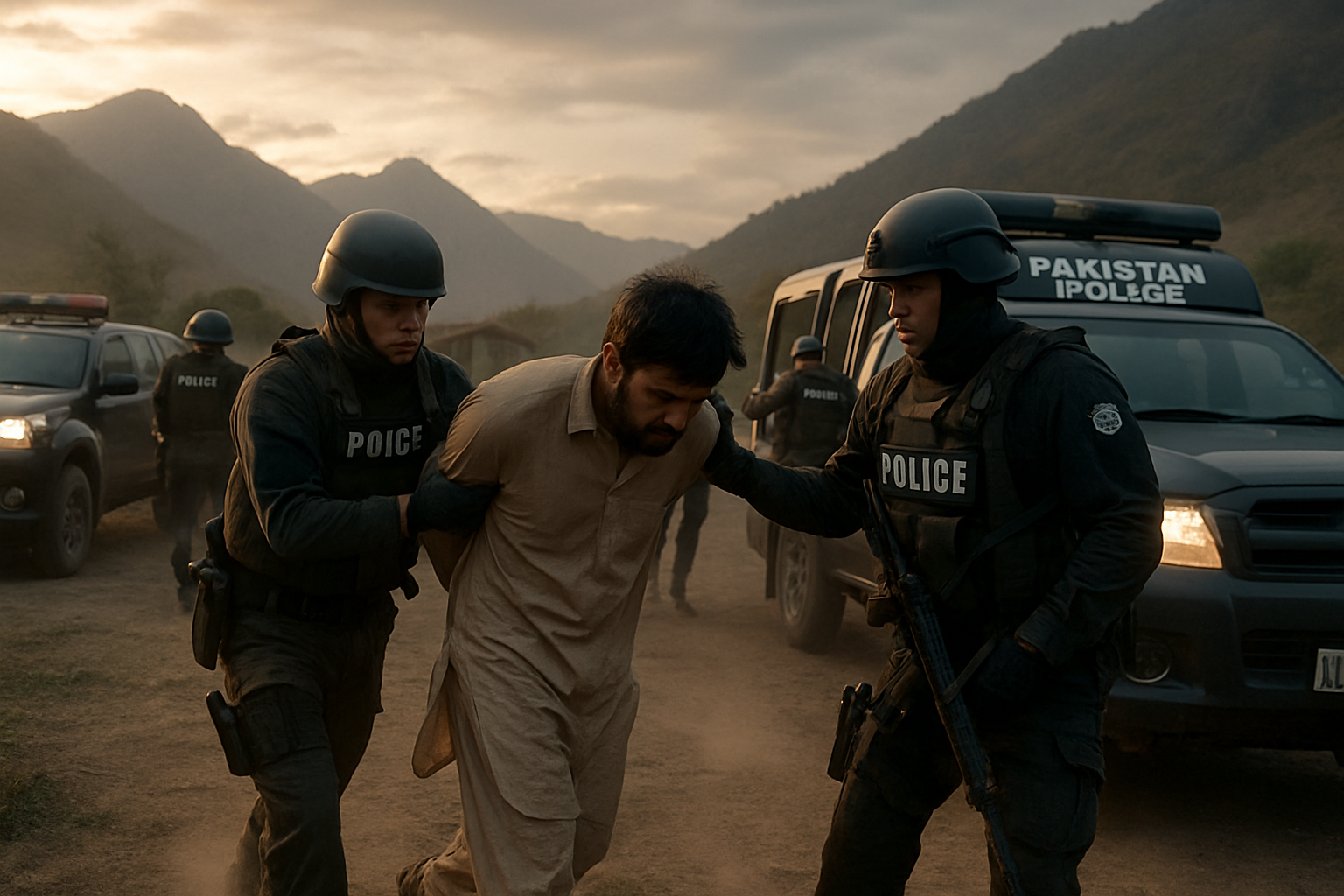
Pakistani security forces have arrested four key facilitators, including the alleged "main mastermind," of the deadly suicide bombing that struck a Shia Muslim mosque in Islamabad, killing at least 31 people and injuring 169 others during Friday prayers.
Interior Minister Mohsin Naqvi announced the arrests during a media briefing in Islamabad on Saturday, confirming that the suspects were apprehended during pre-dawn raids in Khyber Pakhtunkhwa province. The arrests represent a significant breakthrough in the investigation of what has become the deadliest attack in Pakistan's capital since the 2008 Marriott Hotel bombing.
Coordinated Security Operation Yields Major Arrests
The arrests came following intensive overnight operations by Pakistan's Counter-Terrorism Department (CTD) and provincial police forces. "All those people linked to this, and the mastermind, at around 3am, all of them were apprehended," Naqvi told reporters, praising the joint efforts of law enforcement agencies.
Security officials, speaking on condition of anonymity, confirmed that the four facilitators were captured in the Nowshera and Peshawar districts of Khyber Pakhtunkhwa during coordinated raids launched immediately after the Friday attack. The operation involved sophisticated intelligence work and coordination between federal and provincial security agencies.
The Devastating Attack That Shocked Pakistan
The suicide bombing occurred at Imambargah Khadijah-tul-Kubra in the Shehzad Town area on the outskirts of Islamabad during congregational Friday prayers. The bomber detonated explosives after being confronted by security personnel at the mosque entrance, causing devastating casualties among worshippers.
"This was a calculated attack on a peaceful religious gathering during one of the most sacred times in Islam,"
— A senior Pakistani security official
According to Pakistani authorities, over 400 worshippers were present at the time of the attack. The explosion occurred when the bomber was stopped by security guards but managed to detonate the device among congregants in what witnesses described as the "last row" of worshippers.
International Condemnation and ISIS Claim of Responsibility
The Islamic State terrorist organization claimed responsibility for the attack through its semi-official media agency Amaq, which published a statement on Telegram. The claim marks a significant escalation of ISIS operations within Pakistan's heavily protected capital city.
The attack specifically targeted Shia Muslims, who comprise approximately 15-20% of Pakistan's population and have frequently been targeted by Sunni extremist groups. This sectarian dimension underscores the calculated nature of the violence and its broader implications for Pakistan's religious minorities.
International leaders quickly condemned the attack, with the Maldives joining a chorus of nations expressing solidarity with Pakistan. The condemnation reflects global concern about the escalation of terrorist activities targeting religious communities.
Mass Funeral Proceedings Amid Heightened Security
Thousands of mourners, including federal ministers and senior government officials, attended mass funeral prayers on Saturday for the victims of the bombing. The funeral proceedings were conducted under extraordinary security measures, with authorities implementing comprehensive protection protocols for the large gathering.
Security arrangements for the funeral included rooftop snipers, extensive police presence, and multiple security cordons to prevent any potential follow-up attacks. The massive turnout demonstrated both the community's grief and resilience in the face of sectarian violence.
Historical Context of Terrorism in Pakistan's Capital
The Islamabad attack represents the deadliest incident to strike Pakistan's capital in nearly two decades, highlighting the significance of this security breach in what is considered one of the country's most protected cities. The last major attack in Islamabad occurred in November 2025 at the Judicial Complex, which killed 12 people.
The bombing occurred amid broader security challenges facing Pakistan, including ongoing counter-terrorism operations in Balochistan province where authorities killed over 400 militants in February 2026 operations. These concurrent security crises underscore the persistent terrorist threats facing the country despite extensive military efforts.
Government Response and Security Measures
Prime Minister Shehbaz Sharif strongly condemned the attack and directed the Health Minister to oversee medical treatment for the wounded. An emergency was declared across Islamabad, with enhanced security protocols implemented at religious sites and public facilities.
Punjab Chief Minister Maryam Nawaz canceled Basant festivities and declared three days of mourning in solidarity with the victims' families. The provincial response demonstrates the national impact of the attack and the unified governmental approach to addressing the tragedy.
Defence Minister Khawaja Asif provided detailed accounts of how security personnel confronted the bomber at the mosque entrance, preventing what could have been even more devastating casualties had the attacker reached the main prayer area.
Medical Response and Casualty Management
Victims were treated at PIMS (Pakistan Institute of Medical Sciences) and Polyclinic hospitals, with Dr. Aneeza Jalil, PIMS spokesperson, confirming the casualty figures. Medical teams worked through the night to treat the wounded, with several patients remaining in critical condition following the attack.
The medical response highlighted both the capabilities and limitations of Pakistan's emergency healthcare system when confronted with mass casualty incidents. Hospital authorities praised the rapid response of emergency services and the coordination between multiple medical facilities.
Investigation and Intelligence Failures
The investigation is being led by the Islamabad Capital Territory Police in coordination with federal intelligence agencies. Security analysts have raised questions about potential intelligence failures that allowed the attack to occur in such a heavily monitored area of the capital.
Federal Minister Talal Chaudhry suggested that the bomber may have been an Afghan national, raising concerns about cross-border terrorism and the effectiveness of border security measures. These allegations have prompted calls for enhanced international cooperation in counter-terrorism efforts.
Regional Security Implications
The attack occurs within the broader context of regional security challenges, including the ongoing situation in Afghanistan and concerns about terrorist spillover effects. Taliban spokesman Abdul Qahar Balkhi condemned the attack, highlighting the complex regional dynamics surrounding terrorism and counter-terrorism efforts.
Defence Minister Asif alleged potential involvement by Afghanistan and India, though both countries have firmly rejected these accusations. These diplomatic tensions underscore how terrorist attacks can complicate international relations and regional stability efforts.
Community Impact and Sectarian Concerns
The targeting of Shia Muslims during Friday prayers represents a calculated attempt to inflame sectarian tensions and intimidate religious minorities. Community leaders have called for enhanced protection for all religious sites and stronger measures to prevent sectarian violence.
The attack has raised serious concerns about the vulnerability of religious minorities to sectarian violence in Pakistan. Security experts emphasize the need for comprehensive approaches that address both immediate security threats and longer-term social cohesion challenges.
Path Forward: Security and Reconciliation
The successful arrests of the key facilitators mark an important step in the investigation, but broader questions remain about preventing future attacks and protecting vulnerable communities. The incident highlights the need for enhanced security measures, improved intelligence sharing, and comprehensive counter-radicalization efforts.
As Pakistan continues its investigation, the international community watches closely for developments that could provide insights into ISIS operational capabilities and the broader threat landscape in South Asia. The arrests represent a crucial moment in determining whether authorities can disrupt terrorist networks before they can carry out additional attacks.
The tragedy serves as a stark reminder of the persistent terrorist threats facing Pakistan and the courage of those working to protect religious freedom and community security in the face of extremist violence. The investigation's success will be measured not only by prosecutions but by the prevention of future attacks against all communities.