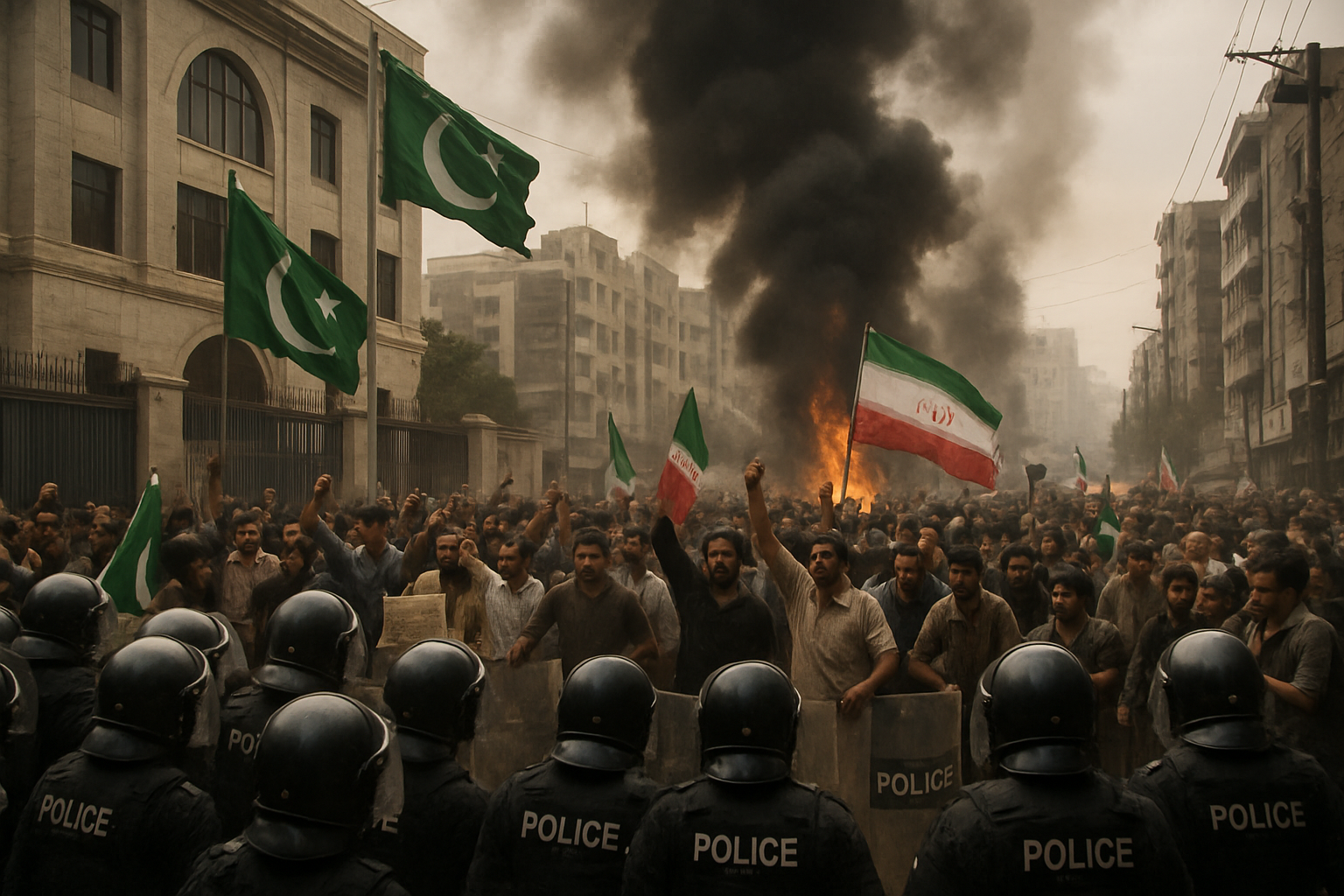
At least 10 people were killed and 31 others injured during violent protests across Pakistan on Sunday, as demonstrators clashed with security forces outside the US Consulate in Karachi following reports of Iran Supreme Leader Ali Khamenei's death in coordinated US-Israeli military strikes.
The deadly confrontations erupted hours after news broke of "Operation Epic Fury," the largest coordinated US-Israeli military operation since the 2003 Iraq invasion, which Iranian officials claim killed the 86-year-old Ayatollah during strikes on leadership compounds in Tehran.
Karachi Violence Escalates
Dr. Mohammad Sabir Memon, executive director of Civil Hospital Karachi's trauma centre, confirmed to Dawn newspaper that 10 people had died and 31 were injured in clashes near the heavily fortified US Consulate on Mai Kolachi Road. According to medical records shared with the publication, all casualties resulted from gunshot wounds.
Hundreds of protesters, predominantly Shia Muslims, attempted to storm the diplomatic compound after news of Khamenei's reported assassination. Security forces responded with tear gas, baton charges, and live ammunition as demonstrators pelted stones and chanted anti-American slogans.
"The protesters were enraged by news of the martyrdom of Ali Khamenei and gathered to express their anger against those responsible,"
— Local witness, speaking anonymously
The Edhi ambulance service initially reported transferring six bodies and 10 injured to Civil Hospital, with casualty numbers climbing throughout the day as violence intensified.
Nationwide Unrest Spreads
Beyond Karachi, protests erupted across multiple Pakistani cities and regions. In Skardu, Gilgit-Baltistan, demonstrators set fire to government buildings including the UN regional office, Army Public School, police headquarters, and the Aga Khan Rural Support Programme office.
The unrest reflects Pakistan's complex relationship with Iran, where the countries share a 900-kilometer border and significant Shia Muslim populations maintain strong religious and cultural ties with Iran's Islamic Republic.
International Context and Regional Implications
The protests occurred amid the most serious US-Iran crisis since 1979, following the breakdown of nuclear negotiations despite recent diplomatic progress. Iran had been enriching uranium at 60% purity - approaching weapons-grade levels - while excluding ballistic missiles and regional proxy activities from nuclear-only talks.
Regional coalition partners including Saudi Arabia, UAE, Qatar, and Egypt had been backing the diplomatic process, representing unprecedented Middle Eastern consensus for conflict prevention. However, the military escalation has severely strained these relationships.
Global Reactions and Escalating Crisis
Iranian officials declared "no red lines remain" following the reported killing of their Supreme Leader, launching retaliatory strikes across the Middle East that targeted US and Israeli assets in multiple countries. Iran's Islamic Revolutionary Guard Corps warned that all American and Israeli installations are now "legitimate targets."
The crisis has created massive disruptions to global aviation, with Iran, Iraq, Israel, UAE, and Qatar closing their airspace. Over 18,000 flights have been cancelled worldwide, affecting hundreds of thousands of passengers in what represents the most extensive regional disruption since the COVID-19 pandemic.
Energy Security Concerns
Oil prices have risen sharply on concerns over the Strait of Hormuz, through which 40% of global oil transits. Iran has warned that shipping through the strategic waterway will "not be allowed" as tensions escalate toward potential regional war.
The economic implications extend far beyond energy markets, with worldwide supply chains facing disruption and energy market destabilization threatening global economic stability.
Verification Challenges
While multiple Israeli sources claim Khamenei was killed in the strikes, Iranian Foreign Minister Abbas Araghchi has denied the reports, calling them "psychological warfare" and stating the Supreme Leader is "still alive as far as I know." The absence of official US or Israeli government confirmation has created an information vacuum filled by conflicting claims.
Iranian state media has imposed strict communications control in Tehran, with mobile services disrupted and roads blocked, making independent verification extremely difficult during the ongoing military operations.
Historical Significance
If confirmed, Khamenei's death would end his 37-year rule since 1989, during which he transformed Iran into a regional anti-US power with an extensive proxy network across the Middle East. The crisis represents a potential turning point in Middle Eastern geopolitics with implications extending far beyond the current confrontation.
The events mark the most dangerous moment since the Cold War's end, with regional war prevention, global energy security, nuclear governance credibility, and international law enforcement all at stake as the world faces an unprecedented Middle Eastern crisis with global implications.