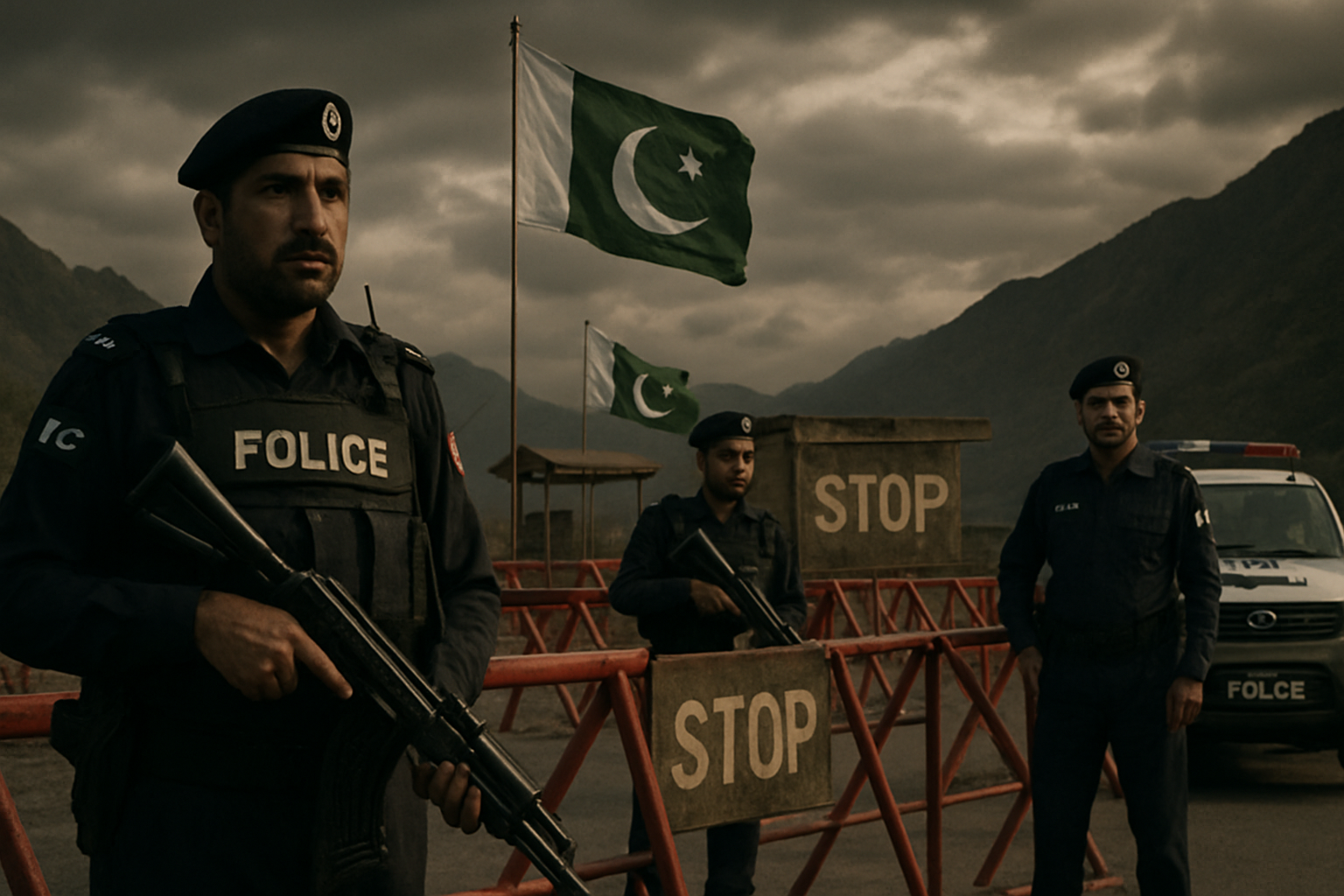
Pakistan's security forces are grappling with a surge of terrorist attacks across Khyber Pakhtunkhwa province, with multiple incidents in recent days claiming the lives of police officers and threatening regional stability amid ongoing counter-terrorism operations.
The latest wave of violence underscores the persistent security challenges facing Pakistan, particularly in the border regions adjacent to Afghanistan, where militant groups continue to operate despite extensive military campaigns and international cooperation efforts.
Deadly Assault in Dera Ismail Khan
In the most severe incident, four police officers, including Station House Officer (SHO) Faheem Mumtaz, were martyred in a terrorist attack in Dera Ismail Khan on Wednesday. The attack occurred as a police party was returning from a search operation in the Paniala's Wanda Budh area, within the jurisdiction of Shaheed Nawab police station.
According to official statements, the police team had conducted the operation following intelligence reports about militant presence in the area. As the officers were returning, militants hiding in nearby forests opened fire, prompting an intense firefight. The fallen officers included SHO Faheem Mumtaz, Constable Irfan Khan, Constable Ghulam Subhani, and Constable Wajid Ali.
Deputy Superintendent of Police (DSP) Paharpur Adnan was critically injured in the attack and remains hospitalized. Authorities immediately deployed heavy police reinforcements to the area to neutralize any remaining threats and secure the vicinity.
Bannu Police Post Under Siege
In a separate incident, three Tehrik-i-Taliban Pakistan (TTP) militants were killed and nine wounded during a midnight attack on the Khuniya Khel police post in Bannu district. The attackers, armed with heavy weapons, targeted the police facility but were successfully repelled by Pakistani security forces.
The coordinated nature of the assault, with militants attempting to overrun the police post using sophisticated weaponry, demonstrates the continued operational capability of terrorist groups in the region. The successful defense by police forces prevented what could have been a more devastating attack.
Islamabad Bombing Aftermath
These incidents come just days after Prime Minister Shehbaz Sharif announced compensation packages for victims of the February 6 suicide attack on Imambargah Qasr-i-Khadijatul Kubra on the outskirts of Islamabad. The bombing, which killed 38 people and wounded more than 150 others during Friday prayers, marked one of the deadliest attacks in Pakistan's capital in recent years.
The Prime Minister announced Rs 10 million for Oun Abbas, who courageously resisted the suicide attacker, Rs 5 million for each martyr, Rs 3 million for those critically injured and under hospital treatment, and Rs 1 million for those with minor injuries who had been discharged.
The Islamabad attack highlighted the vulnerability of religious minorities and the persistent threat posed by extremist groups targeting civilian populations, particularly during religious gatherings.
Historical Context of Regional Violence
The current security challenges build upon months of intensified militant activity across Pakistan's border provinces. Intelligence sources indicate these attacks are part of a broader pattern of terrorism that has persisted despite extensive counter-terrorism operations conducted by Pakistani forces.
The attacks occur against the backdrop of Pakistan's complex security environment, where multiple militant organizations continue to operate along the Afghanistan-Pakistan border. The rugged terrain and porous border have long provided sanctuaries for various terrorist groups, complicating security operations.
Government Response and Counter-Terrorism Efforts
Pakistani authorities have consistently emphasized their commitment to combating terrorism and protecting both security personnel and civilian populations. The recent incidents have prompted renewed calls for enhanced security protocols and improved intelligence sharing between different law enforcement agencies.
The attacks also underscore the sacrifices made by Pakistani security forces in their ongoing battle against extremism. The martyrdom of police officers like SHO Faheem Mumtaz represents the human cost of Pakistan's counter-terrorism efforts and the dedication of those serving on the front lines.
Regional Security Implications
These incidents occur amid broader regional security concerns, including Afghanistan's ongoing instability and the cross-border movement of militants. The persistence of terrorist attacks despite significant military operations raises questions about long-term security strategies and the need for comprehensive approaches addressing both immediate threats and underlying causes of extremism.
The targeting of police installations and personnel appears to be a deliberate strategy aimed at weakening law enforcement capabilities and creating security vacuums that militant groups can exploit. This pattern requires sustained attention from both national security agencies and international partners supporting Pakistan's counter-terrorism efforts.
Community Impact and Civilian Safety
Beyond the immediate casualties, these attacks have broader implications for civilian populations in affected areas. The persistent threat of terrorism disrupts normal life, affects economic activities, and creates psychological trauma within communities already struggling with security concerns.
The successful defense of the Bannu police post demonstrates the importance of well-trained and adequately equipped security forces. However, the continued occurrence of such attacks indicates that militant groups retain significant operational capabilities and continue to pose serious threats to public safety.
Moving Forward: Security Challenges and Solutions
The recent wave of attacks highlights the need for sustained, comprehensive counter-terrorism strategies that combine military operations with intelligence gathering, community engagement, and international cooperation. Pakistan's security agencies must continue adapting their approaches to address evolving terrorist tactics while protecting both personnel and civilian populations.
The martyrdom of security personnel in these incidents serves as a stark reminder of the ongoing sacrifices required in the fight against terrorism. As Pakistan continues its efforts to ensure regional stability and protect its citizens, the international community's support and cooperation remain crucial for achieving lasting security in this strategically important region.
The government's compensation announcements for attack victims, while providing some relief to affected families, also underscore the human cost of terrorism and the state's responsibility to support those who suffer from extremist violence. Moving forward, Pakistan's challenge will be maintaining security operations while addressing the root causes that allow militant groups to continue their deadly campaigns against the state and civilian populations.