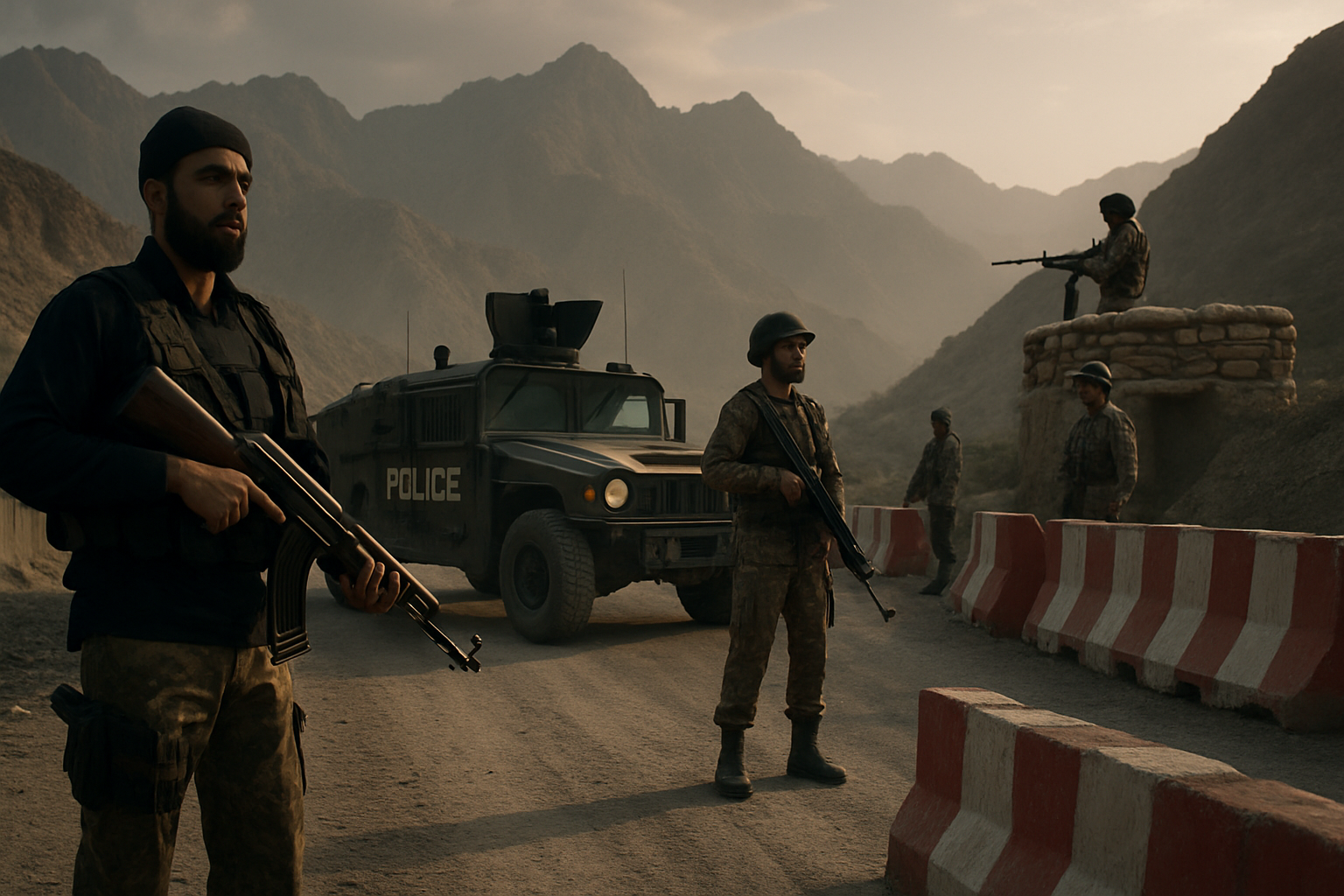
Pakistan faces mounting security challenges as fresh violence erupts along its borders with Afghanistan, with new suicide bombings and cross-border attacks underscoring the persistent threat of terrorism and regional instability that has gripped the region since early 2026.
The latest incidents include a deadly suicide bombing in Bannu district that killed at least five people and wounded 13 others, while cross-border fighting with Taliban forces has prompted the Norwegian Refugee Council to call for urgent humanitarian aid for thousands of displaced families in eastern Afghanistan.
Bannu Suicide Attack Claims Lives
A suicide bomber detonated an explosives-laden vehicle at the Domel police station in Bannu, Khyber Pakhtunkhwa province, according to Pakistani media reports and local officials. The blast occurred when the vehicle rammed into the perimeter wall of the police facility, causing significant casualties and destruction to nearby civilian infrastructure.
Pakistani authorities confirmed that the attack resulted in five deaths and 13 injuries, with the explosion causing severe damage to two adjacent residential buildings. The powerful blast trapped several civilians under debris, requiring extensive rescue operations to extract survivors.
"The explosion caused significant damage to the police station and surrounding civilian areas, highlighting the continued threat posed by militant groups operating in the region,"
— Pakistani security official
The attack bears the hallmarks of the Tehreek-i-Taliban Pakistan (TTP), which has been responsible for numerous similar incidents targeting law enforcement facilities across the region. Pakistani military sources refer to the group as "Fitna al-Khawarij" as part of their counter-terrorism operations.
Cross-Border Violence Displaces Thousands
Meanwhile, fighting between Pakistani forces and Taliban fighters along the disputed Durand Line has created a massive humanitarian crisis in eastern Afghanistan. The Norwegian Refugee Council reported that thousands of families have been forced from their homes due to the latest border violence.
According to Taliban police spokesman Sayed Tayeb Hamad, the situation in Nangarhar province has been particularly devastating, with civilian areas bearing the brunt of the cross-border military operations. The violence represents a continuation of the broader Pakistan-Afghanistan border crisis that began in February 2026.
The UN Office for the Coordination of Humanitarian Affairs (OCHA) has documented the displacement of 16,370 families across 10 Afghan provinces, with the majority concentrated in the border regions of Paktia, Kunar, and Khost provinces. The World Health Organization has been forced to deliver emergency medical supplies to only 23 hospitals, as hundreds of health centers have been forced to close due to security concerns and funding shortages.
Regional Security Deterioration
The current security incidents are part of a broader pattern of instability that has characterized the Pakistan-Afghanistan border region throughout 2026. The crisis began with a February 16 TTP attack in Bajaur district that killed 11 Pakistani soldiers, triggering a cycle of retaliation and counter-attacks that has persisted for months.
Pakistani Defense Minister Khawaja Mohammad Asif declared "open war" against the Taliban government in February 2026, launching Operation Ghazab-ul-Haq in response to what Pakistan characterizes as cross-border terrorism originating from Afghan soil. The Taliban administration has consistently denied providing sanctuary to militant groups and maintains that Afghanistan's territory is not being used for attacks against neighboring countries.
Economic and Humanitarian Impact
The ongoing conflict has had devastating economic consequences for both countries. Bilateral trade between Pakistan and Afghanistan has collapsed by 59%, with Pakistani exports dropping from $550 million to $228 million over a seven-month period. Traditional trade routes through Chaman-Spin Boldak and Torkham have faced repeated closures, severely affecting border communities dependent on cross-border commerce.
The humanitarian situation has deteriorated significantly, with the UN reporting that 88% of female-headed households in Afghanistan are unable to meet minimum living requirements. The combination of ongoing conflict, international sanctions, and reduced aid has created what humanitarian organizations describe as one of the worst crises in decades.
International Mediation Efforts
Multiple international actors have attempted to mediate the crisis, with mixed results. Saudi Arabia, Qatar, and Turkey achieved a temporary ceasefire during Eid al-Fitr in March 2026, demonstrating the potential effectiveness of faith-based diplomacy. However, the truce was immediately violated, highlighting the fragility of such arrangements.
Chinese Foreign Minister Wang Yi has been actively involved in mediation efforts, with China organizing trilateral talks in Urumqi between Taliban and Pakistani representatives. The Chinese involvement reflects Beijing's strategic interests in the region, particularly its Belt and Road Initiative investments that depend on regional stability.
"China hopes both sides maintain calm, conduct face-to-face talks as soon as possible, establish a ceasefire, and resolve disputes through dialogue,"
— Chinese Foreign Ministry statement
Nuclear Implications and Regional Stability
The confrontation between nuclear-armed Pakistan and Taliban-controlled Afghanistan represents one of the most serious security challenges in South Asia since the Taliban's return to power in 2021. The conflict tests the post-2021 regional security architecture and raises concerns about the potential for escalation.
Pakistan acknowledges that its traditional influence in Afghanistan has diminished compared to wealthier regional powers including Turkey, the UAE, Qatar, Saudi Arabia, and China. This shift has led to an increased reliance on military solutions rather than diplomatic engagement.
Durand Line Disputes at the Core
At the heart of the current crisis lies the disputed status of the Durand Line, the 2,640-kilometer border established by British colonial authorities in 1893. The border has never been formally recognized by any Afghan government, which views it as an artificial division of Pashtun tribal territories.
The porous and mountainous terrain along the border provides opportunities for militant groups to operate with relative impunity, complicating efforts by both governments to control cross-border movement and prevent terrorist activities. Pakistan maintains that TTP operates "with impunity from Afghan soil," while the Taliban categorically denies providing sanctuary to militant organizations.
Path Forward Remains Uncertain
Despite multiple diplomatic initiatives, the underlying issues fueling the conflict remain unresolved. The Taliban maintains that "the path of talks remains open" and seeks "mutual understanding and respect" with Pakistan. However, Pakistani officials indicate there is "no rush" to end military operations until concrete anti-militant measures are implemented by the Taliban administration.
The success or failure of current mediation efforts will have implications far beyond the bilateral relationship between Pakistan and Afghanistan. The crisis serves as a template for managing 21st-century challenges where territorial sovereignty intersects with transnational terrorism, requiring innovative diplomatic frameworks that balance legitimate security concerns with respect for international law and civilian protection.
As the humanitarian crisis deepens and security incidents continue, the international community faces pressure to develop effective conflict prevention mechanisms before the situation escalates into a broader regional confrontation with potentially devastating consequences for South Asian stability.