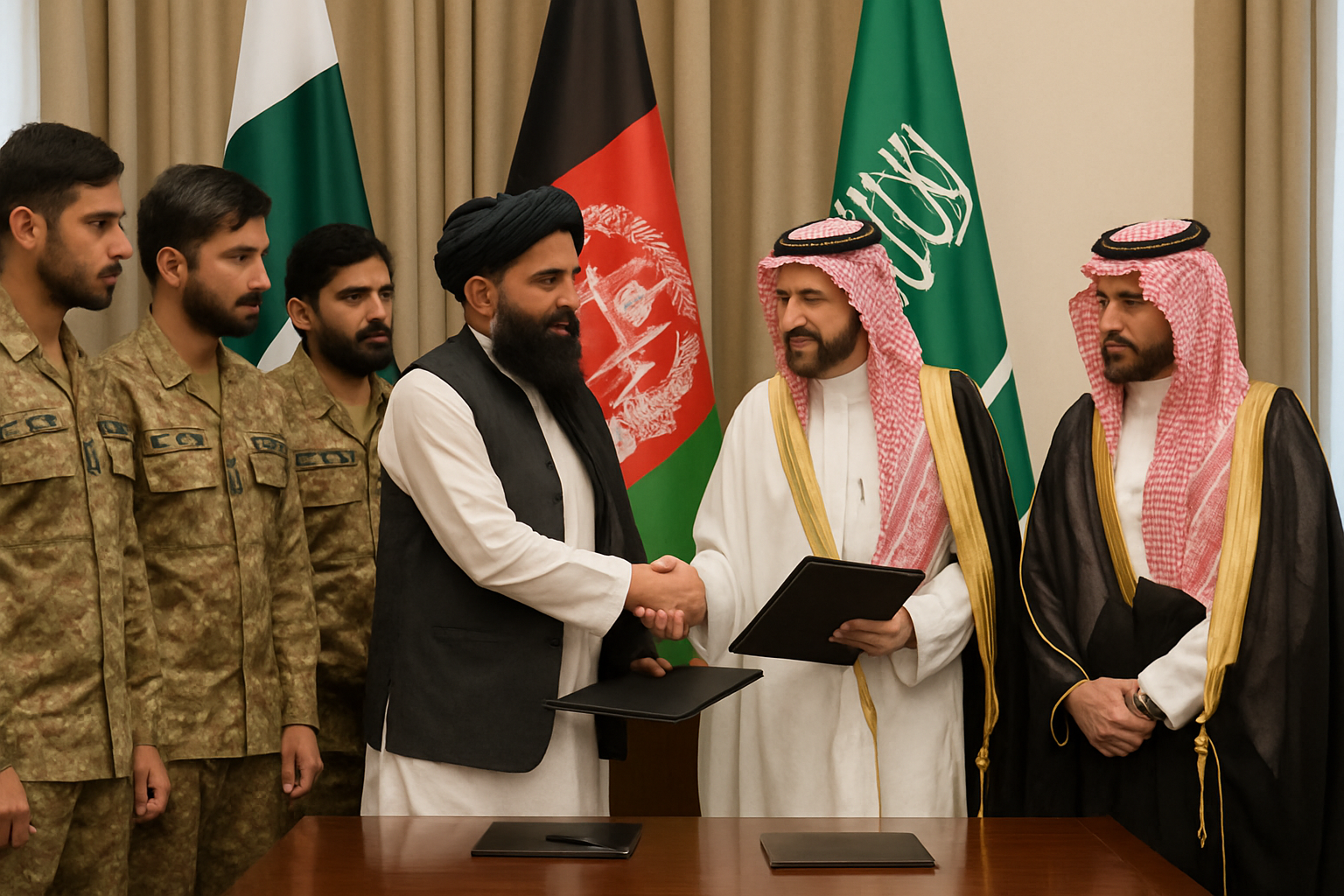
Afghanistan's Taliban government released three Pakistani soldiers captured during border clashes in October 2025, handing them over to a Saudi Arabian delegation in what officials described as a diplomatic gesture to mark the holy month of Ramadan.
Taliban spokesman Zabihullah Mujahid announced Tuesday that the soldiers were released following a request from Saudi Arabia, emphasizing the Islamic Emirate's policy of maintaining positive relations with neighboring countries. The prisoners were captured on October 12, 2025, during violent clashes between Afghan and Pakistani forces along the contested border.
"The soldiers were released and handed over to the respected delegation that came from the brotherly country of Saudi Arabia," Mujahid stated in a post on social media platform X, formerly Twitter. The announcement comes as nearly two billion Muslims worldwide prepare to observe Ramadan 2026, which began February 17 following crescent moon sightings.
Saudi Mediation Role
The release demonstrates Saudi Arabia's growing influence as a regional mediator, with the Kingdom's delegation arriving in Kabul on Monday specifically to facilitate the prisoner handover. According to Taliban officials, the decision was taken "in line with Afghanistan's policy of maintaining positive relations with all countries" and out of respect for the Islamic holy month.
The Islamic Emirate emphasized that the release was conducted "on the occasion of hosting the negotiating delegation that arrived in Kabul last Monday," highlighting the diplomatic coordination involved in securing the soldiers' freedom.
This prisoner release follows a broader pattern of humanitarian diplomacy between Afghanistan and regional partners. In recent months, the Taliban government has facilitated the release of hundreds of Afghan nationals from various countries through embassy negotiations, including 105 Afghan citizens repatriated from Pakistan in February and 14 Afghan nationals released by Azerbaijan following diplomatic efforts.
Border Tensions Context
The October 2025 border incident that led to the soldiers' capture reflects ongoing tensions between Afghanistan and Pakistan along their shared frontier. Relations between the two neighbors deteriorated significantly in 2025 following a series of deadly clashes, with both sides accusing each other of failing to control cross-border militant activities.
Pakistan has been conducting major counter-terrorism operations in Balochistan province throughout February 2026, with security forces eliminating over 400 militants according to government reports. Meanwhile, Afghanistan continues to face allegations from Pakistan and other regional powers about the presence of terrorist groups on its territory, claims the Taliban categorically rejects.
The prisoner release comes amid heightened security concerns across the region. Just days before the announcement, Pakistani security forces suffered casualties in multiple attacks across Khyber Pakhtunkhwa province, including an assault on a joint checkpost in Bajaur district that resulted in 11 Pakistani soldiers martyred and 12 TTP militants eliminated.
Regional Diplomatic Dynamics
The successful mediation by Saudi Arabia underscores the Kingdom's strategic role in regional diplomacy, particularly during the holy month of Ramadan. Saudi Crown Prince Mohammed bin Salman has been actively engaged in diplomatic outreach across the Middle East and South Asia, with recent high-level meetings focusing on conflict resolution and regional stability.
Pakistani Prime Minister Shehbaz Sharif has held discussions with regional leaders, including Kazakhstan President Kassym-Jomart Tokayev, about Afghanistan's security situation and its impact on regional development. The consensus among neighboring countries is that spillover effects from Afghanistan's internal challenges cannot be contained within its borders.
Mohammad Sadiq, Pakistan's Special Representative for Afghanistan, recently met with Russian Ambassador Albert P. Khorev to discuss regional security dynamics and terrorism threats from Afghanistan-based groups, emphasizing the need for coordinated diplomatic responses.
Humanitarian Diplomacy Success
The prisoner exchange represents a significant success for humanitarian diplomacy in a region marked by conflict and mistrust. Unlike traditional government-to-government negotiations, this release was facilitated through religious and cultural channels, with the timing coinciding with Ramadan adding special significance to the gesture.
International observers note that such prisoner exchanges can serve as confidence-building measures that lay groundwork for broader diplomatic engagement. The Taliban's willingness to work through Saudi mediation suggests a pragmatic approach to international relations despite the government's limited global recognition.
The release also demonstrates functional bilateral relationships despite Afghanistan's complex international status. Similar diplomatic successes include the UAE's release of 108 Afghan prisoners on National Day in February 2026, showing how humanitarian issues can transcend broader political disagreements.
Ramadan Diplomatic Significance
The timing of the release during Ramadan adds profound symbolic weight to the diplomatic gesture. The holy month, observed by nearly two billion Muslims worldwide, emphasizes themes of mercy, forgiveness, and community solidarity that align with prisoner releases and humanitarian actions.
Saudi Arabia has been coordinating massive international Ramadan programs, including the distribution of 2.2 million Quran copies to 120 countries, 1,000 tons of dates, and the deployment of 91 imams to 49 countries. This global religious diplomacy creates a framework for humanitarian initiatives like the Pakistani soldiers' release.
The gesture resonates particularly strongly during a month when Muslims are encouraged to perform acts of charity, seek forgiveness, and strengthen bonds within the ummah (global Muslim community). The Taliban's decision to frame the release as a Ramadan observance demonstrates sophisticated understanding of Islamic diplomatic traditions.
Regional Security Implications
While the prisoner release represents positive diplomatic momentum, underlying security challenges persist along the Afghanistan-Pakistan border. Cross-border militant movements continue to complicate regional security operations, with both countries facing threats from various terrorist organizations.
The release of the Pakistani soldiers may help reduce immediate tensions, but broader issues around border management, militant sanctuaries, and intelligence sharing require sustained diplomatic engagement. Recent attacks on Pakistani security forces demonstrate the ongoing nature of the terrorist threat despite counter-terrorism successes.
China has warned the UN Security Council about severe terrorist threats emanating from Afghanistan, citing the presence of ISIS-K, al-Qaeda, and ETIM. These concerns are shared by regional neighbors who fear spillover effects from Afghanistan's security challenges.
Future Diplomatic Opportunities
The successful Saudi mediation in this prisoner release could serve as a model for future diplomatic initiatives in the region. The Kingdom's neutral position and religious authority provide unique advantages for facilitating dialogue between conflicted parties.
Building on this success, regional powers may explore additional confidence-building measures addressing border security, trade relations, and humanitarian cooperation. The Taliban's demonstrated willingness to engage in prisoner diplomacy suggests openings for broader diplomatic engagement.
However, sustainable improvement in Afghanistan-Pakistan relations will require addressing root causes of border tensions, including militant sanctuaries, intelligence cooperation, and economic integration. The prisoner release, while symbolically important, represents just one step in a much larger diplomatic process.
As Ramadan 2026 continues, the international community will be watching for additional diplomatic initiatives that leverage the holy month's emphasis on peace, reconciliation, and humanitarian action. The successful release of the Pakistani soldiers demonstrates that even amid regional tensions, diplomatic solutions remain possible through patient mediation and cultural sensitivity.