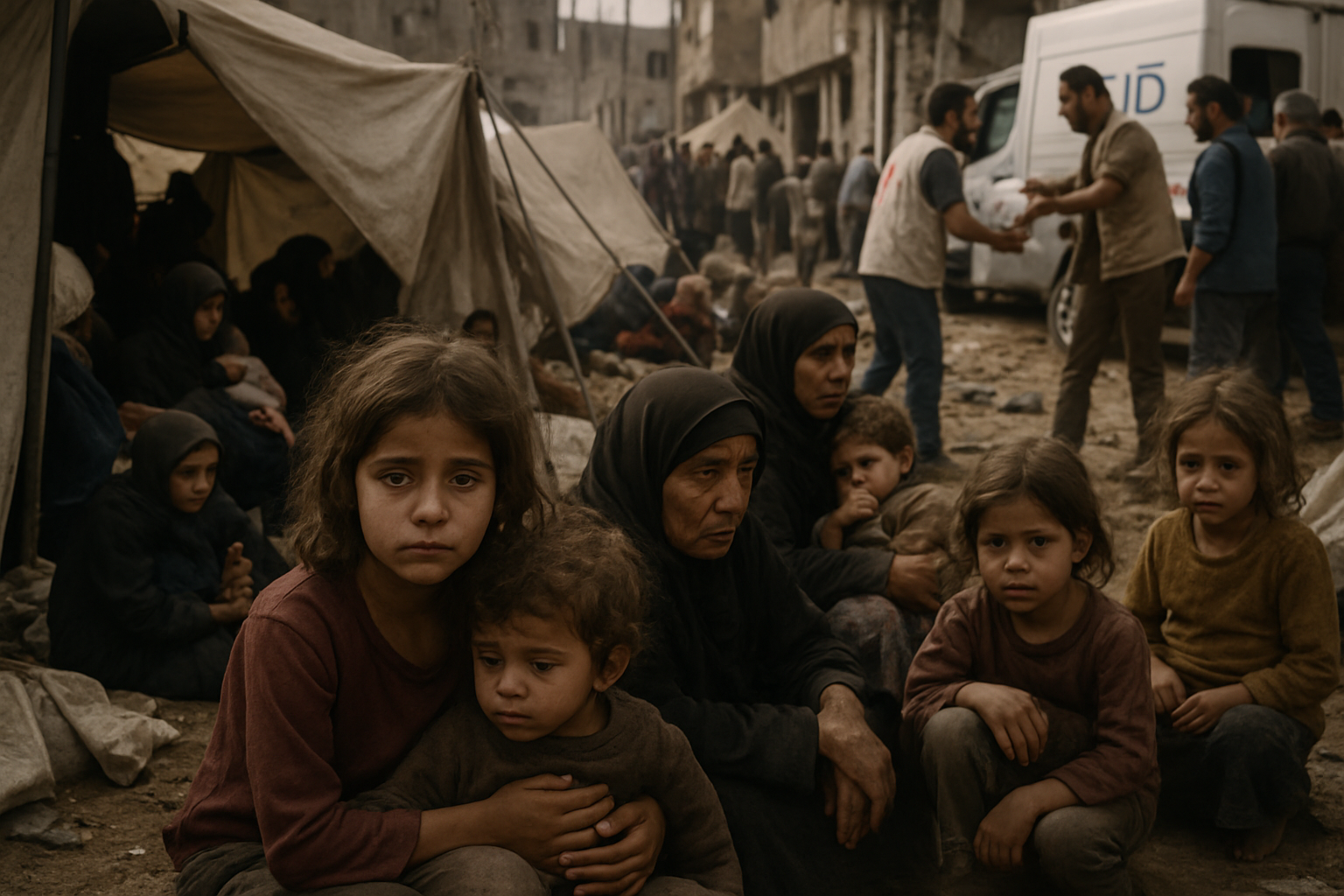
The Euro-Mediterranean Human Rights Observatory has accused Israel of exploiting international preoccupation with the Iran war to intensify its policy of starving Palestinian civilians in Gaza, while a sharp decline in humanitarian aid deliveries threatens to trigger renewed famine conditions affecting over 2.3 million residents.
According to reports from Palestinian media sources, the Observatory stated that Israeli occupation forces have systematically closed border crossings leading to Gaza, leveraging global attention on the broader regional conflict to tighten restrictions on essential supplies. This development comes as humanitarian organizations warn of catastrophic consequences from the suspension of cooking gas supplies affecting more than 2 million Gaza residents.
Critical Infrastructure Collapse Accelerates
The crisis has reached unprecedented levels with the complete shutdown of Gaza's Civil Defense system due to fuel shortages, crippling emergency response capabilities during a period when civilian protection services are most desperately needed. The Rafah crossing, Gaza's primary gateway to the outside world, remains severely restricted with only 27 Palestinians crossing daily versus the agreed quota of 200, in what Hamas condemns as "systematic harassment" by Israeli security forces.
Amjad al-Shawa, Executive Director of the Palestinian NGO Network in Gaza, warned that the deteriorating humanitarian conditions, combined with the sharp decline in aid deliveries in recent weeks, could lead to the return of famine conditions. Al-Shawa emphasized that the humanitarian situation in Gaza is becoming "significantly more complex" at a time when the territory has not yet recovered from the devastating impacts of previous conflicts.
Systematic Aid Reduction Threatens Recovery
The Palestinian official highlighted how continued restrictions on the entry of basic supplies could precipitate a humanitarian catastrophe. This assessment comes as over 20,000 Palestinians await medical evacuation, with healthcare services already compromised by ongoing fuel shortages that have forced the suspension of critical medical procedures and threatened the operation of essential medical equipment.
"The situation is becoming significantly more complex while the territory has not recovered from previous devastation. Continued restrictions on basic supply entry could lead to famine's return."
— Amjad al-Shawa, Executive Director, Palestinian NGO Network Gaza
The warnings come against the backdrop of what humanitarian experts describe as systematic ceasefire violations. Over 1,600 documented violations have occurred since the October 2025 ceasefire agreement, resulting in more than 600 Palestinian deaths during what was supposed to be a period of peace and reconstruction.
International Community Faces Critical Test
The Euro-Mediterranean Observatory's allegations suggest Israel is strategically timing its intensified restrictions to coincide with global focus on the Iran crisis, potentially calculating that international attention and diplomatic resources are stretched too thin to effectively respond to Gaza's deteriorating situation.
Recent studies, including research published in The Lancet Global Health, have revealed that Gaza's actual death toll may be significantly underestimated, with findings suggesting casualties exceed 75,000 people—representing approximately 3-4% of Gaza's entire population. This peer-reviewed research has added urgency to international calls for enhanced humanitarian protection and accountability mechanisms.
Regional Context Complicates Response
The timing of these developments is particularly significant given the broader Middle Eastern context. With international diplomatic and military resources heavily focused on the Iran crisis and associated regional tensions, humanitarian advocates warn that Gaza's plight risks being overshadowed by competing global emergencies.
The Palestinian Authority has consistently raised concerns about obstacles blocking the implementation of ceasefire agreements, while international organizations struggle with funding shortfalls that have forced difficult decisions about aid prioritization. The World Food Programme has been forced to turn away three out of four hungry and malnourished children due to budget constraints—a reality that humanitarian experts describe as a fundamental failure of the global aid architecture.
Long-term Implications for Palestinian Statehood
The current crisis unfolds as Israel continues what critics describe as systematic territorial expansion in the West Bank, with the most comprehensive land registration since 1967. This dual approach—territorial seizure combined with humanitarian pressure in Gaza—has prompted unprecedented international condemnation from 85 UN member states, including eight Arab nations that have characterized Israeli actions as violations of international law.
The convergence of these factors represents what experts describe as a critical test for international humanitarian law enforcement and the viability of two-state solution frameworks. As civilian suffering intensifies and aid systems break down, the international community faces mounting pressure to develop effective responses to what humanitarian organizations describe as systematic violations affecting millions of vulnerable civilians.
Urgent International Action Required
With Gaza's healthcare system compromised, infrastructure collapsing, and basic services suspended, humanitarian experts emphasize that immediate international intervention is required to prevent a complete humanitarian collapse. The situation represents a template-setting moment for how the international community responds to systematic civilian targeting during broader regional conflicts.
The crisis in Palestine highlights the vulnerable position of civilian populations when geopolitical tensions overshadow humanitarian obligations, demonstrating how regional conflicts can be exploited to advance territorial and political objectives at the expense of fundamental human rights and international law.