Palestinian armed groups have significantly expanded resistance operations across the West Bank as Israeli forces mobilize 100,000 reserve troops and accelerate the most comprehensive settlement expansion since 1967, creating a volatile escalation that threatens regional stability.
The intensification comes as Israeli occupation forces conducted simultaneous raids across multiple West Bank cities including Nablus, Jenin, Hebron, Bethlehem, and Salfit on Monday, March 2, 2026, transforming Palestinian homes into military barracks and leaving dozens wounded in what Palestinian officials describe as systematic military escalation.
In Nablus, two young Palestinians were shot with live ammunition in the thigh during pre-dawn raids on the Askar refugee camp east of the city, requiring hospital treatment. Additional injuries resulted from direct physical assaults by occupation forces, according to the Palestinian Information Center.
100,000 Reserve Troops Mobilized
Israeli military intelligence units have begun mobilizing 100,000 reserve soldiers as part of preparations to expand current military operations beyond Iran and Lebanon, according to Hebrew media reports. The massive call-up represents one of the largest reserve mobilizations in recent years, indicating potential for broader regional conflict.
"Military intelligence units have begun mobilizing reserve soldiers as part of preparations for expanding the scope of the current aggression," reported the Hebrew news site Walla on Monday, describing the mobilization as preparation for operations extending across multiple fronts.
The reserve deployment coincides with systematic raids across the occupied West Bank, where Israeli forces have converted Palestinian civilian homes into military positions, fundamentally altering the character of the occupation.
Resistance Operations Intensify
Palestinian armed factions have responded with expanded operations across the territories. The Islamic Jihad movement announced Monday that Israeli forces assassinated one of its senior commanders, Adham al-Othman, in an airstrike on the southern suburbs of Beirut, Lebanon.
The assassination represents a qualitative escalation, with Palestinian groups warning of comprehensive retaliation for targeting senior leadership outside the occupied territories. The killing of al-Othman in Lebanon indicates Israeli operations have expanded beyond traditional boundaries of the conflict.
Sources within the Al-Quds Brigades, the military wing of Islamic Jihad, confirmed the commander's death in what they described as a "treacherous assassination" that violates Lebanese sovereignty and international law.
Systematic Settlement Expansion
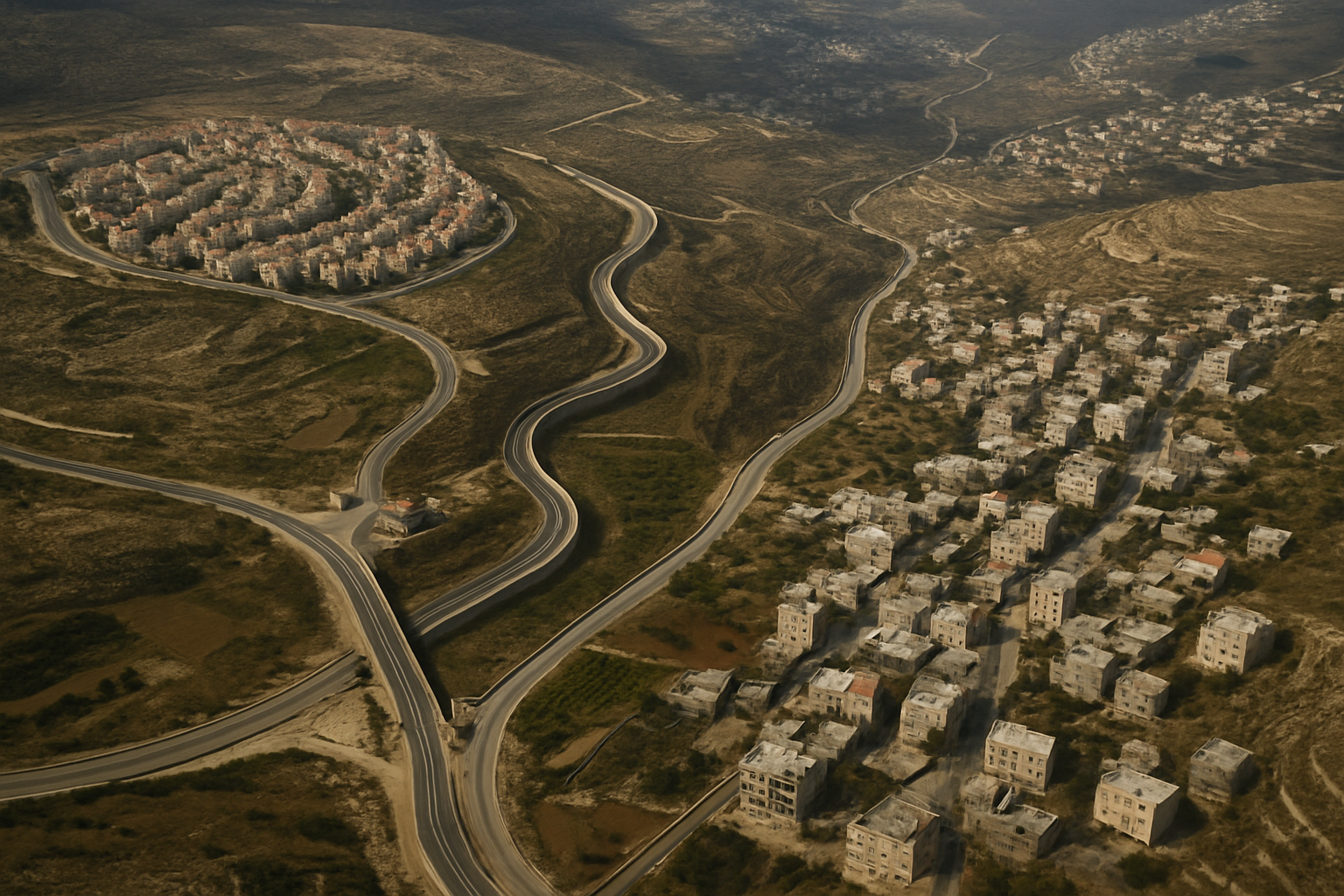
The military escalation occurs alongside Israel's implementation of the most comprehensive West Bank settlement expansion since the 1967 occupation began. Jerusalem authorities announced 20 new settlement projects during February alone, according to the Palestinian governorate.
"Israeli authorities are racing to impose new facts on the ground in Jerusalem, expanding settlements and escalating settler attacks," the Jerusalem governorate stated Monday. The projects represent a "systematic political approach to reshape the city demographically and geographically."
Finance Minister Bezalel Smotrich's policies, designed to "kill the Palestinian state idea," have received implementation through systematic land registration targeting hundreds of thousands of dunams in the strategically vital Jordan Valley. Energy Minister Eli Cohen acknowledged the measures constitute "factual sovereignty" aimed at establishing "reality on the ground that there will be no Palestinian state."
Humanitarian Crisis in Prisons
The escalation has intensified conditions for Palestinian prisoners, with new testimonies revealing systematic torture and starvation policies in Israeli detention facilities. During Ramadan, Palestinian detainees face what rights groups describe as organized campaigns of abuse.
"In the dark cells, prisoners do not wait for the crescent moon of Ramadan, nor do they hang calendars on walls. There, hunger becomes a daily ritual, and fasting becomes a permanent fate, not a passing season," according to testimonies from recently released Palestinian prisoners.
The testimonies expose what human rights organizations characterize as systematic violations of international humanitarian law, with prisoners subjected to deliberate starvation and psychological torture designed to break their will.
International Response
The escalation has prompted unprecedented international condemnation, with 85 UN member states issuing joint statements condemning Israeli policies as violations of international law. Eight Arab nations, including countries that normalized relations with Israel such as the UAE and Saudi Arabia, have condemned the systematic expansion as threatening regional peace.
"These measures represent violations of international law aimed at imposing unlawful Israeli sovereignty and undermining the two-state solution."
— Joint statement from Saudi Arabia, Jordan, Egypt, UAE, Qatar, Indonesia, Pakistan, and Turkey
UN Secretary-General António Guterres expressed "grave concern" about the "dangerous escalation," warning that Israeli measures threaten the viability of a two-state solution through systematic demographic and geographic alteration of the occupied territories.
Over 400 European Union diplomats have demanded increased pressure on Israeli authorities, while a European Left Coalition petition against EU-Israel partnerships has exceeded 400,000 signatures, indicating growing European opposition to current policies.
Regional Security Implications
The simultaneous mobilization of 100,000 reservists and expansion of settlement activities creates what security analysts describe as the most volatile situation in the occupied territories since the Second Intifada. The combination of massive military deployment with systematic territorial seizure represents a qualitative shift in the nature of the occupation.
Palestinian Authority President Mahmoud Abbas condemned what he termed "dangerous decisions" that systematically violate international law and undermine prospects for a viable Palestinian state. The systematic approach to territorial control differs markedly from previous settlement policies focused on individual areas, representing comprehensive territorial annexation.
Hamas described Israeli policies as "null and void" from an "illegitimate occupation authority," while Islamic Jihad warned that the measures represent a "clear attempt to re-engineer the West Bank" to facilitate Palestinian displacement.
Gaza Context
The West Bank escalation occurs against the backdrop of systematic ceasefire violations in Gaza, where over 1,600 documented violations since October 2025 have resulted in more than 600 Palestinian deaths during the supposed truce period. The pattern of violations has undermined international mediation efforts and reconstruction initiatives.
The systematic nature of violations across both Gaza and the West Bank suggests coordinated Israeli policies aimed at preventing Palestinian statehood while expanding territorial control. The mobilization of 100,000 reservists indicates preparation for sustained military operations across multiple fronts.
Legal Framework Violations
International legal experts cite systematic violations of UN Security Council resolutions and Geneva Conventions on occupied territories. The extension of Israeli civilian law and administration into occupied territory meets international legal definitions of annexation regardless of formal declarations.
The systematic approach effectively erodes the Oslo Accords framework that has governed Israeli-Palestinian relations since the 1990s, potentially making a two-state solution technically unfeasible through demographic and geographic landscape alteration.
European legal scholars warn that current policies could establish dangerous precedents for territorial control assertions in other occupied territories globally, affecting international law enforcement and conflict resolution mechanisms for the 21st century.
Coming Phase
The expansion of Palestinian resistance operations amid the largest Israeli reserve mobilization in years creates an exceptionally volatile dynamic. The systematic nature of settlement expansion combined with military escalation suggests a fundamental shift from previous approaches focused on maintaining status quo toward aggressive territorial annexation.
Success or failure of international opposition to these systematic violations will influence territorial sovereignty disputes globally and set precedents for conflict resolution mechanisms worldwide. The current escalation represents a critical test of international law enforcement and the global community's capacity to prevent systematic violations of occupied territory governance.
With 100,000 Israeli reservists mobilized and Palestinian resistance operations expanding, the coming weeks will prove decisive in determining whether diplomatic pressure can achieve policy reversals or whether continued deterioration will make Palestinian statehood practically unfeasible through systematic facts on the ground.