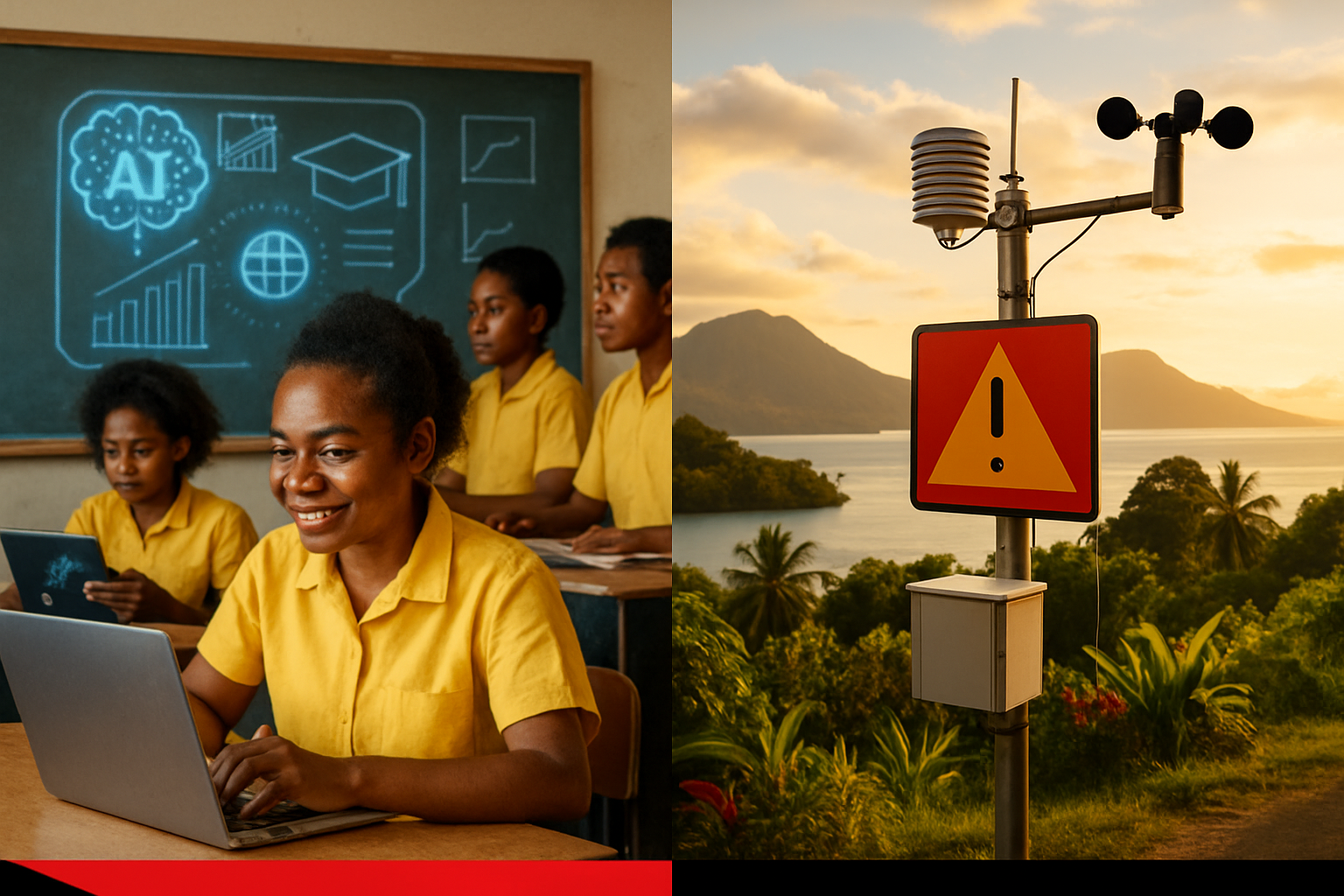
Papua New Guinea is simultaneously advancing on multiple fronts of national development, participating in India's historic AI Impact Summit while implementing groundbreaking educational reforms and strengthening its weather warning systems, demonstrating the Pacific nation's commitment to comprehensive modernization.
The convergence of these initiatives represents Papua New Guinea's strategic approach to 21st-century challenges, positioning itself as a leader in the Pacific region's educational and technological transformation. As the nation grapples with unique geographic challenges spanning 800+ languages across remote mountain valleys and scattered islands, these developments signal a coordinated effort to bridge traditional knowledge with modern innovation.
Global AI Summit Participation
Papua New Guinea's participation in India's AI Impact Summit from February 16-20, 2026, marked a significant milestone in the nation's technological diplomacy. The summit, held in New Delhi, represented the first major AI conference hosted in the Global South, attracting over 250,000 delegates from 100+ countries including Google's Sundar Pichai and OpenAI's Sam Altman.
Under Prime Minister Narendra Modi's "People, Planet, Progress" framework, the summit positioned India as a bridge between advanced and developing economies, with Papua New Guinea among 88 countries signing the Delhi Declaration—the largest AI diplomatic agreement in history. This participation underscores PNG's commitment to being an active participant in global technology governance rather than a passive recipient.
"This summit represents a civilizational inflection point where developing nations assert themselves as equal partners in determining AI's future impact on humanity."
— Prime Minister Narendra Modi, AI Impact Summit 2026
Educational Renaissance Through Learning Improvement Plans
Concurrently, Papua New Guinea is implementing comprehensive school learning improvement plans that align with the global "2026 Educational Technology Renaissance." These initiatives build upon the nation's $12 million international educational partnership announced earlier this year, representing the most ambitious educational reform in PNG's recent history.
Redscar High School's launch of its School Learning Improvement Plan exemplifies this transformation, demonstrating how local institutions are embracing systematic approaches to educational quality enhancement. The program integrates modern pedagogical methods with culturally sensitive approaches that respect Papua New Guinea's diverse linguistic heritage.
The educational reforms occur within a broader context of international cooperation, including partnerships with Australian institutions through the TOGETHER program launched by Kate Fuller and Michael Coffey. These collaborative workshops have brought together academics from five PNG higher education institutions in Port Moresby for intensive training programs.
International Educational Cooperation Models
Papua New Guinea's approach reflects successful international models from the 2026 educational transformation. Malaysia operates the world's first AI-integrated Islamic school, combining artificial intelligence with traditional learning approaches. Canada has implemented university AI teaching assistants while maintaining critical thinking standards, and Singapore's WonderBot 2.0 demonstrates successful heritage education through conversational AI.
These examples provide templates for Papua New Guinea's own integration of technology with traditional knowledge systems, ensuring that modernization enhances rather than replaces fundamental educational relationships within communities.
Weather Service Modernization
The Papua New Guinea National Weather Service's issuance of gale force wind warnings represents more than routine meteorological updates—it demonstrates the nation's upgraded capacity for climate monitoring and disaster preparedness. This enhanced capability is particularly crucial given that January 2026 was recorded as the hottest month in history, marking the 18th consecutive month exceeding 1.5°C above pre-industrial levels.
The weather service improvements are part of broader infrastructure modernization efforts, including the ongoing Civil Aviation Development Investment Program (CADIP) Phase 3. These initiatives address PNG's unique geographic challenges while building resilience against climate change impacts that disproportionately affect Pacific island nations.
Infrastructure Challenges and Opportunities
Despite these advances, Papua New Guinea continues to face significant infrastructure challenges. Works Secretary Gibson Holemba has highlighted that the Connect PNG program remains severely underfunded despite its vital importance for national integration. This program is designed to enhance connectivity between remote communities and urban centers, crucial for a nation where geographic isolation has historically limited access to education and essential services.
The funding disparities between urban centers and remote communities reflect a common challenge in developing nations, particularly those with complex geography. However, PNG's strategic Pacific location positions it as a potential regional connectivity hub supporting broader Asia-Pacific integration initiatives.
Technology as an Equalizer
The convergence of educational reform and technological advancement offers potential solutions to geographic barriers. Satellite internet, mobile telecommunications, and innovative power generation systems provide leapfrog opportunities for communities previously isolated from modern infrastructure.
These technological solutions must be implemented with cultural sensitivity, ensuring that modernization enhances rather than disrupts traditional community structures and knowledge systems that have sustained PNG's diverse populations for generations.
Regional Leadership in the Pacific
Papua New Guinea's multifaceted development approach positions it as a potential leader in Pacific regional development. The nation's participation in global AI governance discussions, combined with practical improvements in education and weather services, demonstrates a sophisticated understanding of 21st-century development challenges.
This leadership role is particularly significant given the broader context of Pacific nations asserting greater agency in international affairs. The region's increasing focus on climate adaptation, sustainable development, and technological sovereignty reflects a shift toward proactive rather than reactive approaches to global challenges.
Global Context and Future Implications
Papua New Guinea's initiatives occur within a broader global transformation where educational systems are evolving to address AI integration, climate adaptation, and international cooperation. The success of PNG's approach could provide templates for other Pacific island nations and developing countries facing similar challenges.
The global memory crisis affecting semiconductor production has created infrastructure bottlenecks until 2027, forcing nations to develop efficient, sustainable technology integration approaches. This constraint paradoxically favors countries like PNG that can implement thoughtful, human-centered approaches to technology adoption.
Success factors identified across international educational reforms include sustained political commitment, comprehensive stakeholder engagement, cultural sensitivity, and adequate resource allocation for long-term sustainability. Papua New Guinea's comprehensive approach addresses all these elements while maintaining focus on community ownership and international cooperation.
Sustainable Development Through Innovation
The integration of AI summit participation, educational reform, and weather service improvement represents a holistic approach to sustainable development. Rather than pursuing isolated initiatives, Papua New Guinea is creating synergies between technological advancement, educational capacity building, and climate resilience.
This approach aligns with successful international models that demonstrate prevention-first strategies generate superior economic outcomes through reduced crisis costs, improved workforce productivity, and enhanced international competitiveness. Educational investments create multiplier effects including community resilience, reduced social service demands, and improved positioning in the global knowledge economy.
February 2026 represents a critical juncture in global educational policy development, with successful approaches likely to influence international discussions and provide templates for other nations. Papua New Guinea's participation in this transformation, despite infrastructure challenges, demonstrates that geographic isolation need not prevent participation in global innovation networks.
The nation's commitment to balancing technological advancement with cultural preservation offers valuable insights for other developing countries navigating similar transitions. As the world moves toward increasingly AI-integrated systems, Papua New Guinea's emphasis on human-centered approaches and community ownership provides an important alternative to purely technology-driven development models.