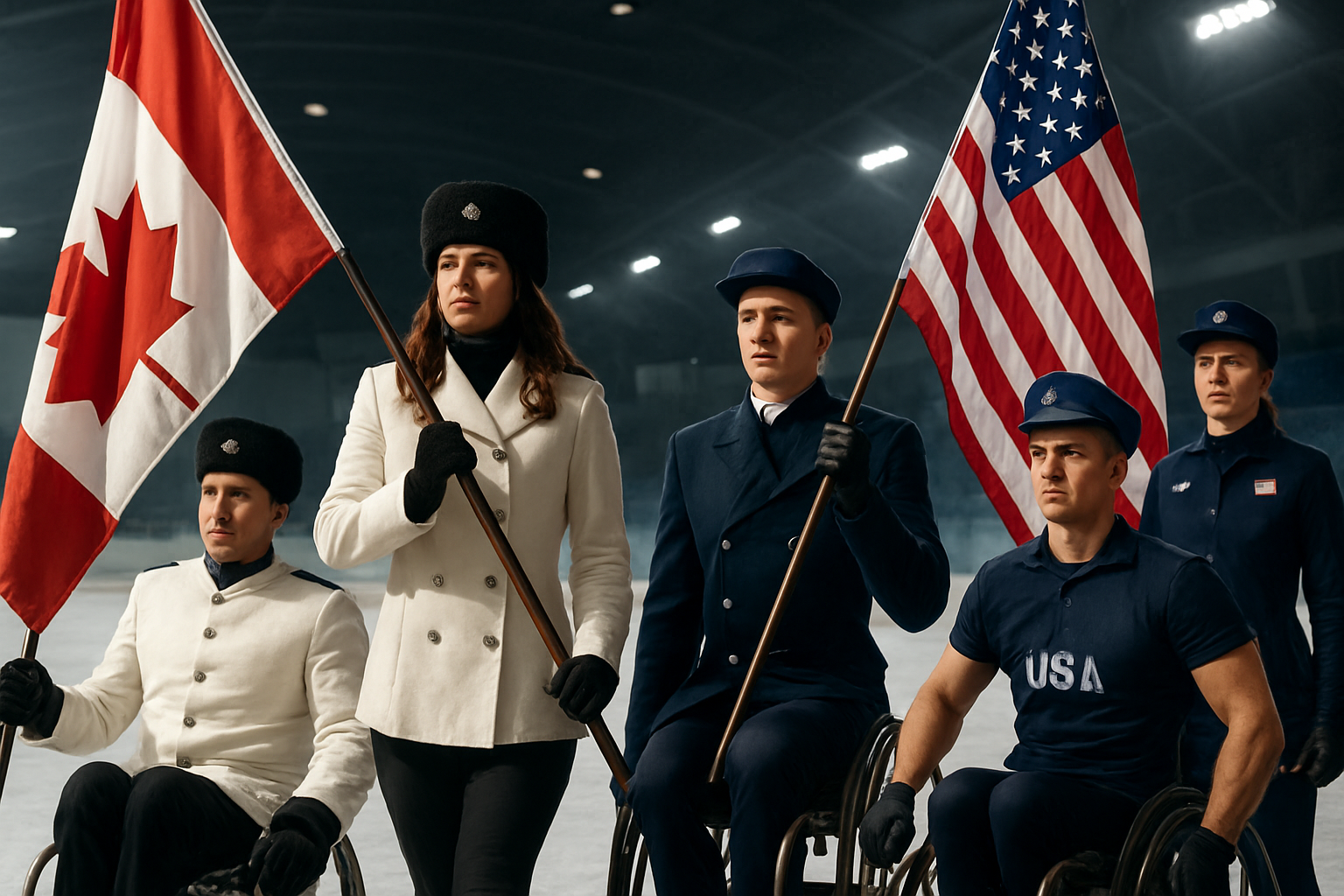
As the Milano-Cortina 2026 Winter Paralympics approach their March 6 opening ceremony, nations are making final preparations with flag bearer announcements and athlete readiness taking center stage, building on the revolutionary hosting model established by the recently concluded Winter Olympics.
The Canadian Paralympic Committee announced Friday morning that Para hockey captain Tyler McGregor and Para nordic skier Natalie Wilkie will serve as Canada's flag bearers for the opening ceremony at San Siro stadium in Milan. The selection represents Canada's commitment to showcasing excellence across both team and individual Paralympic sports.
McGregor, a veteran leader of Canada's Para hockey program, brings extensive international experience to his ceremonial role. His selection highlights the growing prominence of Para ice hockey within Canada's winter Paralympic delegation. Alongside him, Natalie Wilkie's designation as co-flag bearer underscores her achievements in Para nordic skiing, a discipline where Canada has historically demonstrated strong competitive depth.
Estonian Paralympic Delegation Ready for Historic Participation
Meanwhile, Estonia's wheelchair mixed curling duo Ain Villau and Kätlin Riidebach are finalizing their preparations for next week's Paralympic competition. The pair's readiness for Milano-Cortina 2026 represents Estonia's continued commitment to Paralympic sport development, building on the nation's impressive showing during the recent Winter Olympics where Estonia achieved notable breakthrough performances.
Estonia's Paralympic participation comes on the heels of their remarkable Winter Olympic campaign, where the nation secured multiple top finishes and demonstrated the global democratization of winter sports. Henry Sildaru's historic freeski halfpipe silver medal during the Olympics exemplified Estonia's emerging winter sports prowess, setting high expectations for Paralympic success.
Building on Olympic Legacy and Revolutionary Hosting Model
The Paralympic preparations unfold against the backdrop of Milano-Cortina 2026's unprecedented success as the most geographically dispersed Winter Olympics in history. The revolutionary dual-city hosting model, spanning over 400 kilometers across northern Italy, proved that sustainable, distributed Olympic hosting could maintain competitive excellence while addressing 21st-century environmental concerns.
The Paralympics will utilize the same innovative infrastructure that made the Olympics successful, including the bilingual Alto Adige/South Tyrol place names, sustainable Olympic villages with greenhouse spaces, and the proven logistical coordination across seven venues from Milan to Cortina d'Ampezzo. This continuity ensures that Paralympic athletes will benefit from the refined operational systems established during the Olympic period.
"The preparations for Milano-Cortina 2026 have been bumpy, but these will be unforgettable Games."
— IOC President Kirsty Coventry
The technological innovations that enhanced the Olympic experience, including the first-ever Olympic AI integration through Alibaba's Qwen system and OMEGA's AI-powered figure skating analysis, will be adapted for Paralympic broadcasting and performance analysis. These advances promise to provide unprecedented insights into Paralympic athletic achievement.
Global Paralympic Movement Strengthened
The Paralympic preparations occur within a context of remarkable global expansion in winter sports participation. The recent Olympics demonstrated unprecedented competitiveness from six continents, with breakthrough performances from Australia, Brazil, Kazakhstan, Saudi Arabia, and Caribbean nations challenging traditional winter sports hierarchies.
This democratization extends to Paralympic sport, where nations traditionally outside winter sports are increasingly developing adaptive athletics programs. The Milano-Cortina model's emphasis on existing venue utilization and environmental sustainability provides a template that smaller Paralympic programs can aspire to replicate in future hosting bids.
Canada's delegation builds on their strong Olympic performance, where the nation secured multiple medals across diverse disciplines including Mikaël Kingsbury's men's dual moguls gold and significant achievements in short track speed skating. The Paralympic team aims to continue this momentum in adaptive winter sports.
Ceremonial Traditions and Cultural Innovation
The March 6 opening ceremony will blend Paralympic tradition with the cultural innovations that distinguished Milano-Cortina 2026. The ceremony will feature the same multi-site approach that made the Olympic opening historic, connecting Milan's San Siro stadium with Paralympic venues across the Italian Alps.
The selection of flag bearers like McGregor and Wilkie represents the careful balance between veteran leadership and emerging talent that characterizes successful Paralympic delegations. Their roles extend beyond ceremonial duties to serving as mentors and ambassadors for Paralympic values throughout the competition period.

Estonia's participation, while smaller in scale, exemplifies the Paralympic movement's commitment to inclusive competition. The wheelchair mixed curling program represents strategic development in Paralympic sports that can be sustained by smaller nations through focused resource allocation and international cooperation.
Environmental and Technological Legacy
The Paralympic competition will benefit from the environmental conditions that made the Olympics exceptional. Europe's harshest winter in decades provided ideal natural snow conditions, reducing the artificial snow production that had raised environmental concerns during planning phases. These natural conditions continue to support Paralympic alpine and Nordic events.
The sustainable hosting model established during the Olympics—featuring greenhouse-integrated Olympic villages, renewable energy systems, and minimal new venue construction—will provide Paralympic athletes with environmentally responsible competition facilities that set new standards for mega-event hosting.
The success of the dual-city model during the Olympics validated the concept of distributed hosting as a viable alternative to traditional centralized approaches. This paradigm shift has implications for future Paralympic bids, potentially enabling more nations to host by utilizing existing infrastructure across broader geographic areas.
Competitive Expectations and Athletic Excellence
Paralympic competition is expected to match the exceptional competitive standards established during the Olympics, where traditional powerhouses faced unprecedented challenges from emerging winter sports nations. The democratic nature of modern Paralympic sport means medal predictions remain fluid across disciplines.
Canada's delegation, led by flag bearers McGregor and Wilkie, enters with realistic medal expectations across multiple sports. Their Para hockey program has historically demonstrated consistent international competitiveness, while Nordic skiing offers opportunities for breakthrough performances in individual events.
Estonia's curling team represents the nation's strategic approach to Paralympic development—focusing resources on sports where small nations can achieve competitive parity through technical excellence and strategic preparation rather than resource-intensive programs requiring extensive infrastructure.
Looking Toward Paralympic Competition
As March 6 approaches, the final preparation phase emphasizes athlete readiness and ceremonial planning that honors Paralympic traditions while embracing the innovations that distinguished Milano-Cortina 2026. The Games promise to continue the pattern established during the Olympics of combining athletic excellence with environmental responsibility and cultural authenticity.
The Paralympic competition will span the same venues that hosted Olympic events, ensuring that Paralympic athletes compete on courses and facilities that met the highest international standards. This continuity guarantees that Paralympic performances will be conducted under optimal competitive conditions.
The success of flag bearer selections like Canada's McGregor and Wilkie, combined with the readiness of delegations like Estonia's curling duo, indicates that the Paralympic movement has successfully adapted to the innovative hosting model while maintaining focus on athletic achievement and inclusive competition values.
Milano-Cortina 2026's Paralympic competition promises to build upon the Olympic legacy while advancing the Paralympic movement's core mission of demonstrating that athletic excellence transcends physical differences, geographic boundaries, and traditional sporting hierarchies through the power of adaptive athletics and international cooperation.