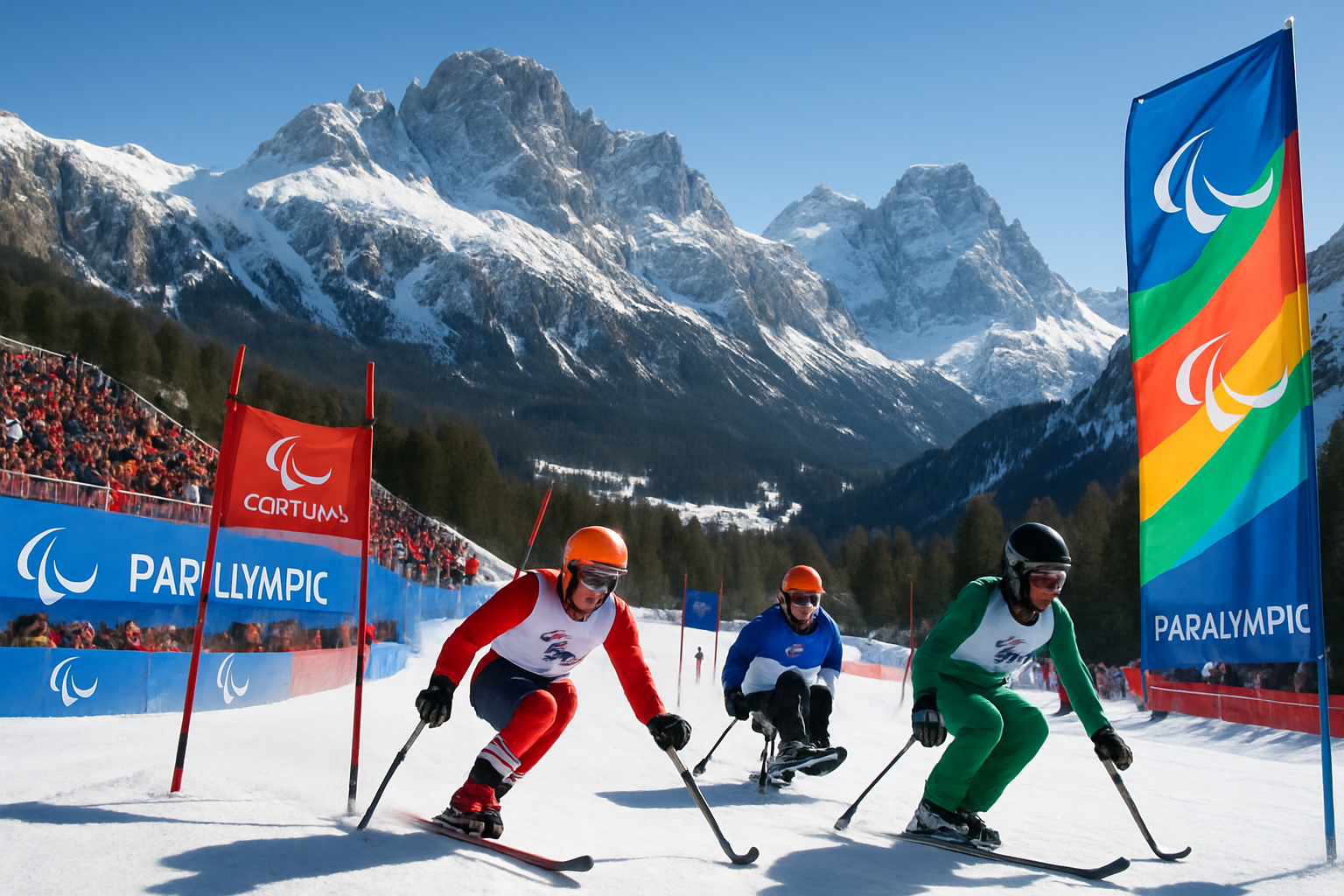
The Milano-Cortina 2026 Winter Paralympics delivered spectacular athletic performances and historic breakthrough medals across multiple disciplines, as para-athletes from around the world competed against the dramatic backdrop of the Italian Dolomites from March 6-15.
Despite being overshadowed by the most significant political boycott in Paralympic history over Russian participation, the Games showcased the extraordinary determination and skill that defines Paralympic sport, with nations celebrating their first-ever Paralympic medals and established champions adding to their legacies.
Alpine Skiing Delivers Paralympic Drama
Alpine skiing provided some of the most thrilling moments of the Games, with several countries achieving historic firsts on the slopes of Cortina d'Ampezzo. Canada's Kalle Eriksson and his guide Sierra Smith claimed silver in the men's downhill vision impaired category, securing Canada's first medal of the Milano-Cortina Paralympics in emotional scenes at the Tofane Alpine Skiing Centre.
The victory marked a significant achievement for Canadian Paralympic alpine skiing, with the pair's celebration captured in touching images showing the deep bond between athlete and guide that defines Paralympic sport at its finest.
Germany's Anna-Lena Forster dominated the women's monoski downhill, securing gold with a razor-thin margin that demonstrated the incredibly competitive nature of Paralympic alpine skiing. Her victory provided Germany with a perfect start to their Paralympic campaign.
France's Paralympic powerhouse Arthur Bauchet added to his impressive collection with silver in the downhill, finishing behind Switzerland's Robin Cuche. The 25-year-old three-time Beijing 2022 Paralympic champion expressed hopes of claiming multiple podium finishes throughout the Milano-Cortina Games.
"This silver medal is just the beginning. I came here targeting five medals in alpine skiing, and this gives me confidence for the races ahead."
— Arthur Bauchet, French Paralympic Alpine Skier
Historic Breakthrough Performances
Slovakia achieved a momentous milestone with 20-year-old Alexandra Rexová and her guide Sophia Polák delivering the nation's first podium finish at a Winter Paralympics. Their bronze medal in the downhill represented years of dedication and development in Slovak Paralympic sport.
Italy celebrated on home soil as Chiara Mazzel, guided by Nicola Cotti Cottini, claimed silver in the women's vision impaired downhill, finishing behind Austria's winner. The achievement provided emotional scenes for the home crowd and demonstrated Italy's growing strength in Paralympic alpine skiing.
Russia secured their first Paralympic medal in 12 years through Varvara Voronchikhina, who won bronze in the women's downhill. Competing in the LW6/8-2 standing category, she recorded a time of 1 minute 24.47 seconds despite the ongoing controversy surrounding Russian participation under national flags.
Nordic Excellence on Display
Beyond alpine skiing, the Paralympics showcased excellence across all winter disciplines. Norway's Paralympic veteran Jesper Saltvik Pedersen captured his sixth Paralympic gold medal in the men's sitting downhill, finally claiming the one title that had eluded him throughout his illustrious career.
The 26-year-old's emotional victory demonstrated the perseverance that defines Paralympic sport, with his achievement coming after years of near-misses in this particular event.
Ukraine's Taras Rad provided a powerful moment by securing his nation's first gold medal at Milano-Cortina 2026 in biathlon, competing with remarkable focus despite the ongoing conflict in his homeland and the controversial decision to allow Russian athletes to compete under their national flag.
Sweden's Ebba Årsjö delivered a career-defining performance by winning gold in the women's downhill. The 25-year-old's victory came after a last-minute decision to compete, having only confirmed her participation on Friday afternoon before Saturday's race.
Emerging Paralympic Nations
The Games highlighted the global expansion of Paralympic winter sport, with Lithuania's sole representative Rapolas Micevičius successfully advancing through snowboard cross qualifications to reach the final. His achievement represented the culmination of years of development for Paralympic sport in the Baltic nation.
Estonia's strong Paralympic showing continued with wheelchair curling duo Ain Villau and Kätlin Riidebach competing competitively despite a narrow 9-6 loss to Latvia. Their performance reflected Estonia's growing investment in Paralympic sport infrastructure.
Geopolitical Shadow Over Paralympic Excellence
The sporting achievements unfolded against the backdrop of the most significant political protest in Paralympic history, with multiple European nations boycotting the opening ceremony at San Siro stadium over the International Paralympic Committee's decision to allow Russian and Belarusian athletes to compete under national flags.
Estonia, Germany, Lithuania, and other nations joined Ukraine in protesting the IPC's September 2025 reversal of neutral status requirements, with some broadcasters refusing to cover the opening ceremony entirely.
Despite these tensions, the athletes themselves delivered performances that transcended political divisions, embodying the Paralympic values of determination, inspiration, courage, and equality.
Revolutionary Hosting Model Success
The Milano-Cortina 2026 Paralympics utilized the same revolutionary dual-city hosting model that proved successful during the Winter Olympics, spanning 400+ kilometers across northern Italy. The distributed venue approach, combined with AI technology integration and sustainable practices, demonstrated new possibilities for Paralympic hosting.
Natural snow conditions provided by Europe's harsh winter created ideal racing conditions across all venues, while the technological innovations including Alibaba Qwen AI systems enhanced the spectator experience both in person and through global broadcasts.
The Games featured the same cultural authenticity that distinguished the Olympics, with bilingual place names in Alto Adige/South Tyrol honoring the German-speaking population and sustainable venue practices setting new standards for Paralympic environmental responsibility.
Legacy of Determination
As the Milano-Cortina Paralympics concluded, the lasting image was not of political controversy but of Paralympic athletes achieving the extraordinary. From first-time Paralympic medalists to veterans adding to their legacies, the Games demonstrated the power of adaptive sport to inspire and unite.
Norway's 59-year-old Jostein Stordahl competing in his 10th Paralympics nearly 40 years after the train accident that crushed his legs epitomized the Paralympic spirit that no political dispute could diminish.
The successful hosting of both the Olympics and Paralympics across the innovative dual-city model established new paradigms for future Games, proving that geographic distribution and environmental sustainability can coexist with world-class competition and unforgettable Paralympic moments.