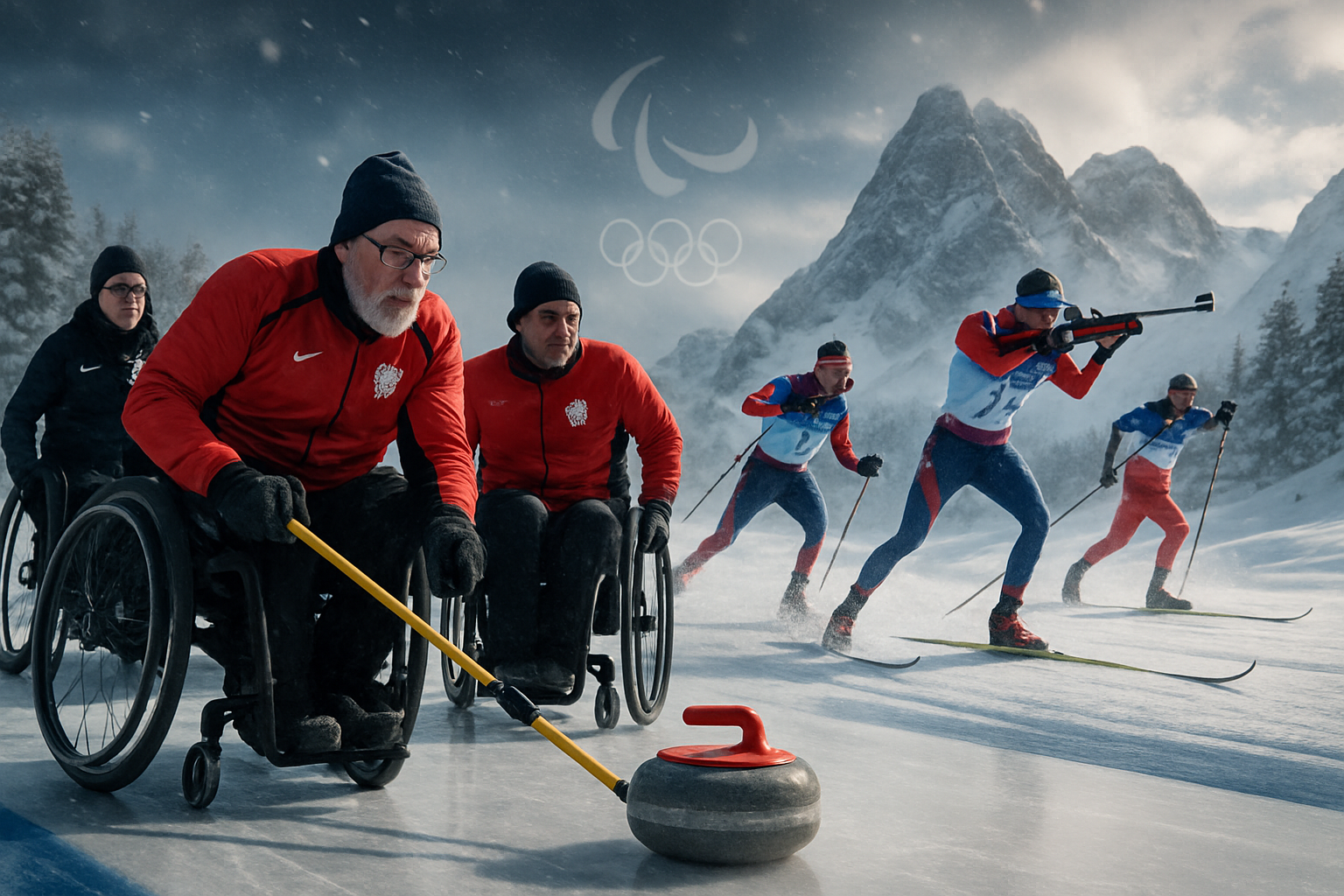
The Milano-Cortina 2026 Winter Paralympics opened amid unprecedented controversy, with 16 countries boycotting the opening ceremony to protest Russian and Belarusian athletes competing under national flags, while Estonia's Jakob Kulbin and Finland's rising freestyle skiing talents delivered standout performances across winter sports competitions.
The Paralympic Games, running from March 6-15 across the same revolutionary dual-city hosting model that proved successful during the Winter Olympics, face the most significant political protest in Paralympic history as nations including Ukraine, Estonia, Germany, and Lithuania stage a coordinated boycott of Friday's opening ceremony at San Siro stadium in Milan.
Russian Flag Controversy Overshadows Adaptive Athletics
The International Paralympic Committee's September 2025 decision to allow approximately 10 athletes—six Russians and four Belarusians—to compete under their national flags has sparked international outrage. The decision reversed sanctions imposed after Russia's February 2022 invasion of Ukraine, moving away from the neutral athlete status that had been enforced.
Ukrainian President Volodymyr Zelensky condemned the IPC decision as "dirty" and "scandalous," while the Ukrainian Paralympic Committee demanded that Ukrainian flags not be displayed during the opening ceremony if Russian national symbols are permitted. Over 20 Ukrainian athletes and coaches have been documented as casualties of the ongoing war.
"Ukraine said boycotting the Paralympic Winter Games' opening ceremony was a principled decision."
— Ukrainian Paralympic Committee Statement
Estonian MEP Urmas Paet has called for Ukrainian symbol reinstatement, while Lithuanian broadcaster LRT refused to televise the opening ceremony. The boycott movement reflects deeper tensions about international sports governance during active military conflicts, with nations having experienced Soviet occupation leading the protest.
Estonian Biathlon Excellence Emerges
Despite the political tensions, sporting excellence continues to shine through. Estonian biathlete Jakob Kulbin captured silver at the ongoing Biathlon Junior World Championships 2026 in Arber, Germany, marking a significant achievement for Estonia's winter sports development program.
Kulbin's success builds on Estonia's broader winter sports breakthrough at the Milano-Cortina Olympics, where the nation achieved notable performances including Henry Sildaru's silver in men's freeski halfpipe and Niina Petrõkina's advancement in figure skating. Estonian wheelchair curling pair Kätlin Riidebach and Ain Villau continue competing strongly in the Paralympics, demonstrating the nation's commitment to both Olympic and Paralympic excellence.

Finnish Freestyle Skiing Breakthrough
Estonian freestyle skier Grete-Mia Meentalo's bronze medal in slopestyle at the Junior World Championships in Calgary highlights the Nordic region's emerging strength in freestyle skiing disciplines. This achievement comes as Finland continues developing its winter sports programs beyond traditional cross-country skiing and ski jumping.
The success reflects broader European investment in diversified winter sports programs, moving beyond historical specializations to embrace disciplines like freestyle skiing, snowboarding, and biathlon that have gained global popularity.
Paralympics Operational Success Despite Tensions
The Paralympics are utilizing the same technological innovations that made the Winter Olympics successful, including Alibaba Qwen AI integration and sustainable venue operations across the 400-kilometer span from Milan to Cortina d'Ampezzo. The dual-city hosting model continues proving viable for major international sporting events.
France brought an experienced 13-athlete delegation to the Paralympics, with nearly half being previous Paralympic medalists, including four defending champions competing across four of the six Paralympic disciplines. Norway's remarkable Jostein Stordahl, competing in his 10th Paralympics at age 59 after an accident at 17, exemplifies the Paralympic spirit of determination and perseverance.
"Estonia joins boycott of opening ceremony March 6 at San Siro Milan, following Germany, Lithuania announcements."
— European Union Officials
Broader Implications for International Sport
The Paralympics controversy represents a watershed moment for international sporting governance. Sports law experts note the complex challenge of balancing political neutrality with moral obligations during humanitarian crises. The situation mirrors earlier Olympic tensions, including the ban on Ukrainian skeleton racer Vladyslav Heraskevych's memorial helmet honoring war victims.
The coordinated international response, led by nations with historical experience of Soviet occupation, demonstrates how sporting decisions resonate with generational memories of resistance and occupation beyond the immediate Ukraine conflict.
Athletic Excellence Transcends Politics
Despite the geopolitical tensions, Paralympic competition maintains the highest standards of adaptive athletics. Wheelchair curling matches demonstrate tactical sophistication, while alpine skiing and biathlon events showcase the technical mastery that defines Paralympic sport.
Latvia's participation in curling against Korea exemplifies the global reach of Paralympic competition, while Iran's forced withdrawal due to security concerns highlights the tragic human cost when geopolitical tensions interrupt sporting participation.
Future of Paralympic Movement
The Milano-Cortina Paralympics will likely influence future international sporting body policies regarding athlete participation during conflicts. The precedent set by this coordinated boycott may establish new frameworks for how democratic nations engage with sporting events during humanitarian crises.
The resolution of these tensions could determine whether international sport serves as a bridge for cooperation or becomes another arena for geopolitical competition. The Paralympic values of determination, inspiration, courage, and equality face their greatest test as athletes compete to transcend the political divisions that threaten to overshadow their remarkable achievements.
As competition continues through March 15, the Paralympics demonstrate both the power of adaptive sport to inspire and the complex realities of international relations in the 21st century. The games serve as a reminder that even in times of global tension, human athletic achievement and the Paralympic spirit of overcoming adversity remain sources of hope and inspiration.