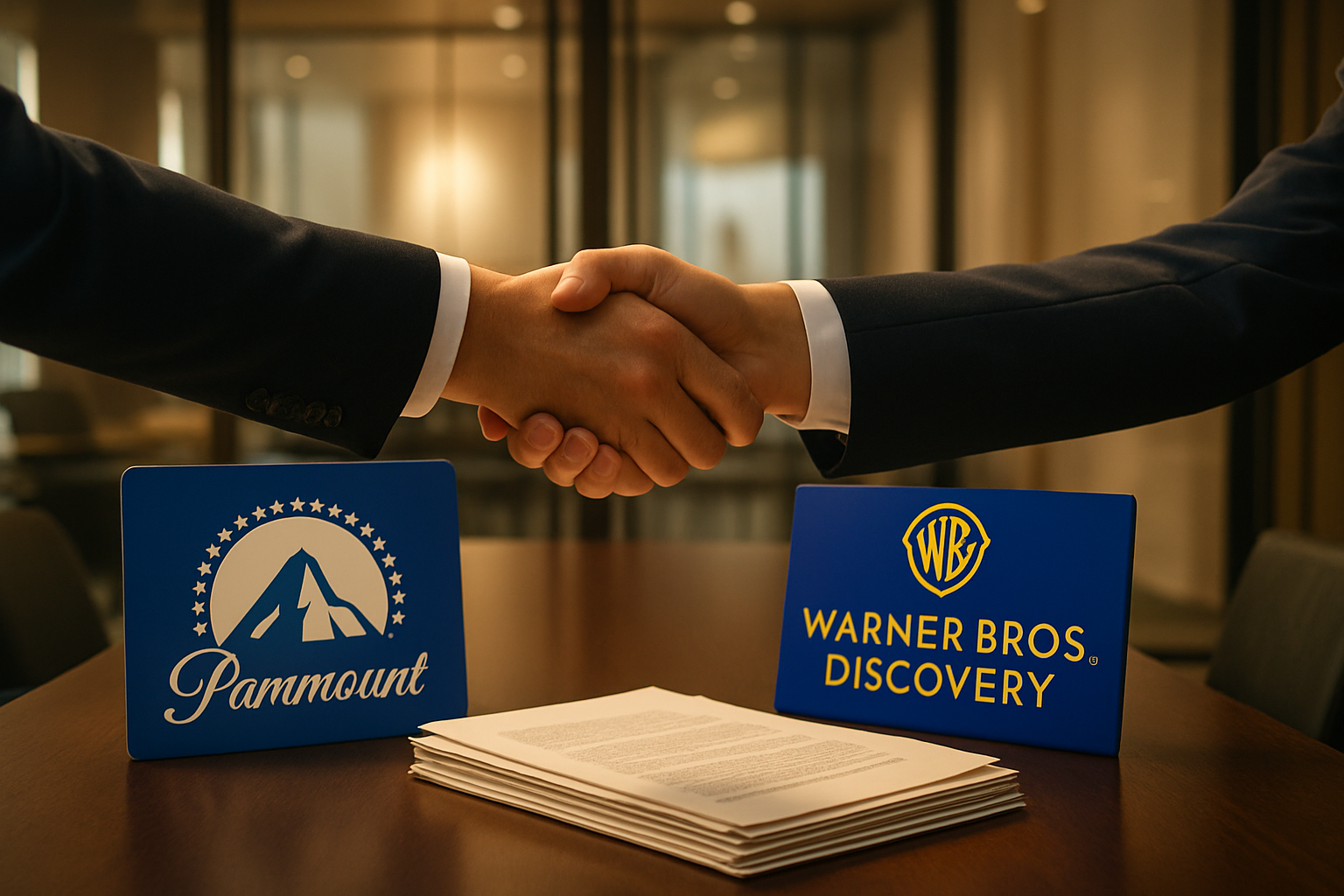
Paramount Skydance has secured a historic $111 billion merger with Warner Bros Discovery, creating one of Hollywood's most powerful entertainment conglomerates after Netflix withdrew from the bidding war on February 26, 2026.
The deal, valued at approximately 93 billion euros, represents one of the largest media mergers in entertainment history and marks the end of a months-long corporate battle that captivated the global entertainment industry. The transaction brings together Paramount's film studios and streaming capabilities with Warner Bros Discovery's extensive content library, including HBO, CNN, and the Warner Bros film studio.
Netflix's Strategic Withdrawal Opens Door for Paramount
Netflix's decision to abandon its competing bid proved to be the decisive moment in this corporate takeover battle. The streaming giant, which had been pursuing Warner Bros Discovery since December 2025, announced it would not match Paramount's enhanced offer, describing the deal as "no longer financially attractive" at the required price point.
"We have always been disciplined and, at the price necessary to match Paramount's latest proposal, the transaction is no longer financially attractive"
— Netflix Statement
Netflix's withdrawal came after Paramount increased its all-cash offer, positioning David Ellison's Skydance Media to create a major entertainment conglomerate combining production capabilities with an extensive content library. The decision represents a strategic setback for Netflix in the ongoing streaming wars, forcing the platform to rely more heavily on its original programming strategy.
Regulatory Approval Expected Despite Scale
European Union antitrust regulators are expected to approve the merger with minimal obstacles, according to sources with direct knowledge of the regulatory process. Unlike Netflix's aborted bid, Paramount's offer faces fewer regulatory hurdles because the combined entity would have a market share below 20% across all European markets.
The European Commission typically takes a tougher stance when market share exceeds 30%, suggesting smooth regulatory approval for the Paramount-Warner Bros combination. The deal will also require approval under the EU's foreign subsidies regulation due to backing from Saudi Arabia's Public Investment Fund, Abu Dhabi's L'imad Holding Company, and the Qatar Investment Authority.
Creating a Media Empire Under the Ellison Family
The nearly $111 billion marriage unites Paramount and Warner film studios, streaming services, and television properties under the control of the wealthy Ellison family. This consolidation brings together some of entertainment's most valuable assets, including the studios behind Batman and HBO, under a single corporate umbrella.
The merger represents a significant shift in Hollywood's power structure, creating a vertically integrated media conglomerate capable of competing with streaming giants and traditional media companies alike. David Ellison, who has been building Skydance Media into a production powerhouse, now commands one of the industry's most formidable content creation and distribution networks.
International Reactions and Political Implications
The merger has drawn international attention and some political controversy. French media outlets have characterized the deal as potentially creating a "pro-Trump giant" in Hollywood, referencing the Ellison family's political connections and the implications for media influence during a critical period in American politics.
Industry analysts across multiple countries have confirmed the global significance of this entertainment industry power shift, with coverage spanning from Azerbaijan to Slovakia highlighting the international implications of Hollywood consolidation.
Financial Structure and Market Impact
The all-cash transaction structure demonstrates Paramount's financial strength and commitment to completing the acquisition. Finnish media reported the purchase price as 110 billion dollars (approximately 93 billion euros), representing a significant premium that ultimately convinced Warner Bros Discovery shareholders of the deal's superiority over Netflix's competing offer.
The transaction is expected to create substantial synergies through combined content libraries, shared distribution networks, and integrated production capabilities. Wall Street has responded with cautious optimism, viewing the deal as a logical consolidation move in an increasingly competitive entertainment landscape.
Strategic Implications for the Streaming Wars
This merger fundamentally alters the competitive dynamics in the global streaming and entertainment market. The combined entity will possess one of the industry's most comprehensive content libraries, spanning decades of film and television production across multiple genres and demographics.
The consolidation demonstrates that traditional media companies can still compete effectively against technology-driven streaming platforms through strategic mergers and content aggregation. This approach contrasts sharply with Netflix's focus on original content production and international expansion.
What This Means for Consumers and Content
For consumers, the merger promises expanded content offerings across streaming platforms and potentially more competitive pricing through economies of scale. The combined content library spans everything from blockbuster films to premium television series, documentary content, and news programming through CNN.
Industry observers expect the merged entity to leverage its expanded content portfolio to negotiate better distribution deals and create more compelling streaming packages that could challenge Netflix's market dominance in specific regions and content categories.
Looking Ahead: Implementation and Integration
The transaction faces standard regulatory approval processes across multiple jurisdictions, including Federal Trade Commission antitrust review in the United States. Warner Bros Discovery shareholders are scheduled to vote on the merger at an extraordinary meeting on March 20, 2026, where they will determine the company's final decision.
The successful integration of these two major entertainment companies will require careful management of corporate cultures, content strategies, and distribution networks. Success will depend on maintaining the creative excellence that has defined both organizations while capturing the operational efficiencies that justified the massive investment.
This historic merger represents a defining moment in the evolution of the global entertainment industry, demonstrating how traditional media consolidation remains a viable strategy for competing in the digital age. The outcome will likely influence future merger and acquisition activity across the entertainment sector as companies seek scale and content diversity to compete in an increasingly crowded marketplace.