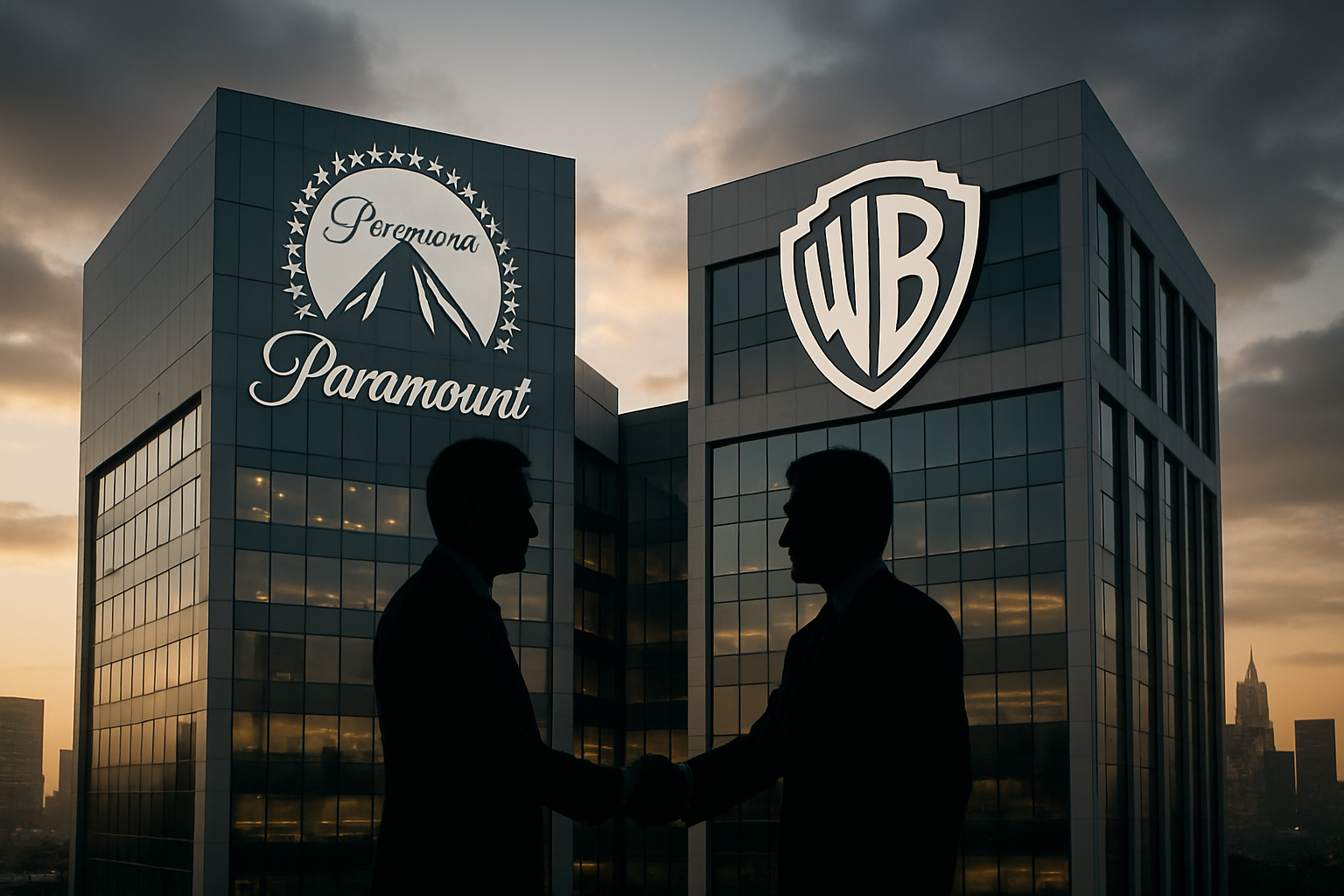
Paramount Skydance has officially secured Warner Bros Discovery in a groundbreaking $111 billion acquisition announced Friday, February 27, 2026, after Netflix withdrew from what became one of Hollywood's most intense corporate takeover battles.
The deal, valued at approximately $110-111 billion depending on final terms, represents the largest entertainment industry merger in history and will fundamentally reshape the global media landscape. Netflix's decision to abandon its competing bid came after determining that Paramount's enhanced offer was "no longer financially attractive" at the required price point to match the rival proposal.
The Bidding War That Captivated Hollywood
The acquisition battle began in earnest when Warner Bros Discovery put itself up for sale in 2025, initially agreeing to a takeover offer from Netflix worth approximately $82 billion including debt in December 2025. However, Paramount's strategic intervention with a rival proposal triggered months of intense negotiations that culminated in this week's dramatic conclusion.
According to sources familiar with the negotiations, Paramount's final bid exceeded $31 per share, forcing Netflix executives to make a critical strategic decision. As one Netflix executive stated, "The deal is no longer financially attractive at that price," leading to the streaming giant's withdrawal from the process on Thursday.
"Our pursuit of Warner Bros Discovery was always about creating the most compelling entertainment ecosystem for global audiences,"
— David Ellison, Skydance Media CEO
The transaction creates an unprecedented vertically integrated entertainment conglomerate combining Paramount's film studios and streaming capabilities with Warner Bros' extensive content library, including HBO Max, CNN, Discovery Channel, and the iconic Warner Bros film studio.
Market Reaction and Financial Impact
Paramount Skydance shares experienced explosive growth, surging over 20% on Friday as news of the successful acquisition spread through financial markets. The dramatic stock movement reflects investor confidence in the strategic vision of combining two of Hollywood's most storied studios.
The all-cash transaction structure demonstrates Paramount's considerable financial strength and commitment to the deal. Warner Bros Discovery shareholders are scheduled to vote on the proposal at an extraordinary meeting on March 20, 2026, though approval is widely expected given the board's endorsement of the "superior proposal."
International financial markets responded positively to the news, with coverage spanning from European capitals to Asian trading centers, confirming the global significance of this entertainment industry transformation.
Strategic Implications for the Streaming Wars
The merger positions the combined entity to compete more effectively against streaming giants like Disney+ and the now-independent Netflix, which must rely more heavily on its original programming strategy following this strategic setback. Industry analysts suggest this represents a potential turning point in the streaming wars, where traditional media consolidation proves viable against technology-driven platforms.
The new entertainment empire will control an vast content library spanning decades of film and television production across multiple genres, from HBO's premium drama programming to Discovery's factual content, Warner Bros' blockbuster films, and Paramount's established franchises.
"This fusion will create synergies through our combined content libraries, shared distribution networks, and integrated production capabilities that simply weren't possible as separate entities,"
— Industry analyst commenting on the strategic vision
Regulatory Landscape and Approval Process
The transaction now faces comprehensive regulatory review from both U.S. Federal Trade Commission antitrust authorities and European regulatory bodies. However, industry experts suggest the combined entity's market share will remain below critical thresholds that typically trigger aggressive regulatory intervention.
European Union regulators are expected to examine the deal under foreign subsidies regulations due to international investment backing, but sources close to the process indicate minimal obstacles are anticipated. The combined entity's market share is projected to remain below the 20% threshold across European markets, well under the 30% level that typically prompts European Commission intervention.
International Coverage Confirms Global Significance
The worldwide media attention surrounding this acquisition, with coverage spanning from Denmark to Venezuela, underscores the global implications for entertainment industry power structures. European media characterized the development as creating a potential entertainment giant with significant cultural influence, while Asian markets focused on the technological integration possibilities.
Netflix's Strategic Pivot
Netflix's withdrawal marks a significant strategic moment for the streaming pioneer, which must now double down on its original content strategy and international expansion rather than acquiring established content libraries. The company's decision reflects careful financial discipline amid intense competition for premium entertainment assets.
Netflix co-CEOs Ted Sarandos and Greg Peters emphasized that the company remains committed to technological innovation and original programming development as core competitive advantages, rather than pursuing acquisition-based growth strategies that could strain financial resources.
Industry Transformation and Future Outlook
This merger occurs during what industry observers have termed the "February 2026 Cultural Renaissance," a period of unprecedented international entertainment collaboration and industry consolidation. The successful completion of this transaction establishes important precedents for future media mergers and demonstrates that traditional media consolidation remains a viable strategy for competing in the digital age.
The combined organization will face the critical challenge of successfully integrating two distinct corporate cultures while maintaining the creative excellence that has defined both organizations. Success will require careful management of content strategies, distribution networks, and production capabilities to justify the massive investment.
Implementation challenges include harmonizing technology platforms, optimizing content libraries for global distribution, and capturing operational efficiencies while preserving the creative talent and unique identities that make each brand valuable to consumers worldwide.
Global Entertainment Power Shift
The completion of this acquisition represents a defining moment in the evolution of the global entertainment industry, establishing a new power structure that could influence content creation, distribution, and consumption patterns for years to come. The merger creates one of the world's largest entertainment conglomerates, capable of competing on equal footing with technology giants and traditional media companies alike.
As the entertainment landscape continues to evolve, this historic transaction sets the stage for further industry consolidation and strategic partnerships, potentially encouraging similar merger activity as companies seek the scale and content diversity necessary to compete in an increasingly complex global marketplace.
The final regulatory approvals and shareholder vote will determine whether this vision becomes reality, but the successful conclusion of Hollywood's most significant corporate takeover battle in decades has already begun reshaping expectations for the future of entertainment industry power and influence.