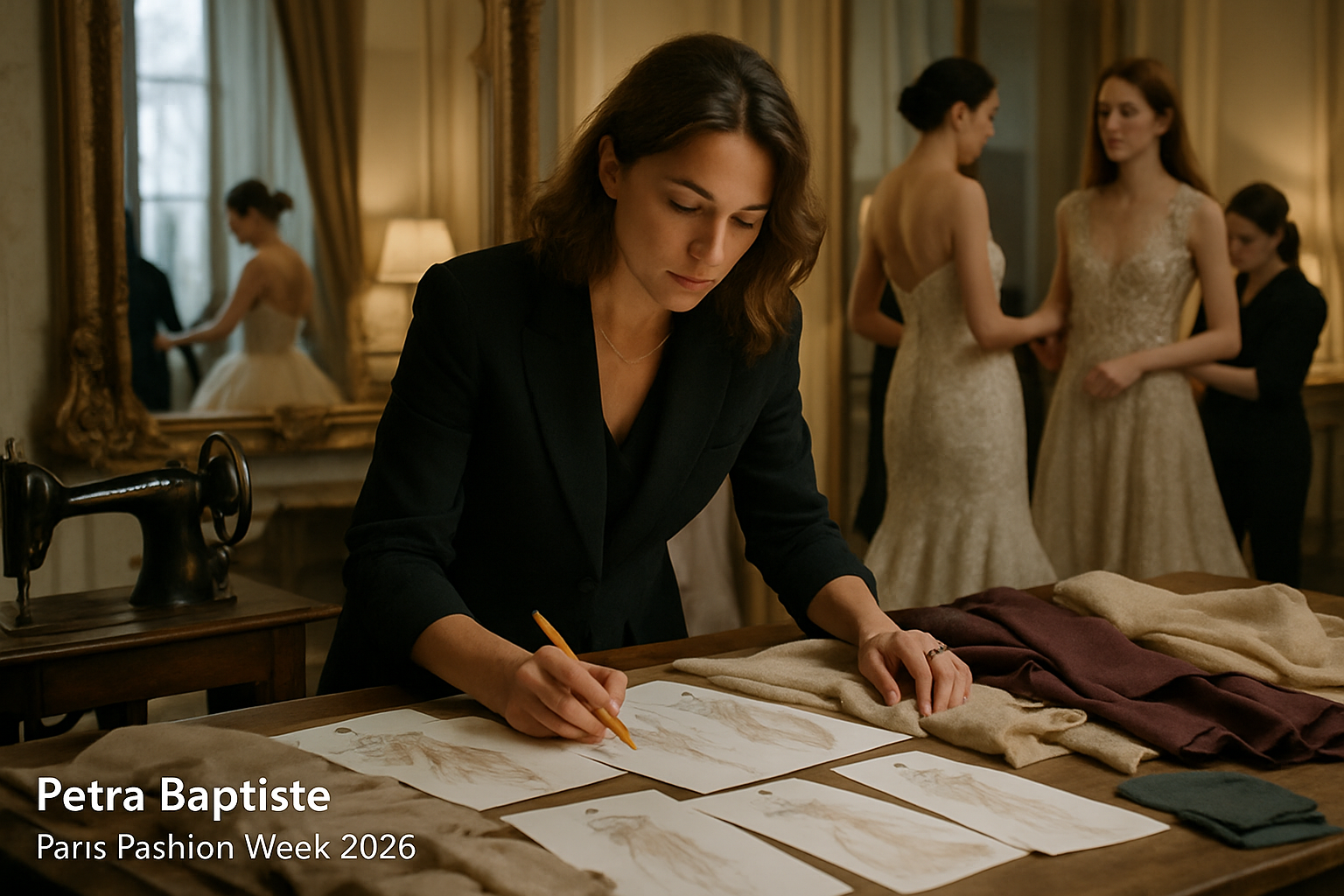
In the final countdown to Paris Fashion Week 2026, Saint Lucian designer Petra Baptiste is capturing international attention with her revolutionary "Art of the Pause" design philosophy, positioning Caribbean creativity at the forefront of global fashion discourse during one of the industry's most transformative periods.
As Paris prepares to host the world's most prestigious fashion gathering, Baptiste's emergence represents a significant moment for Caribbean designers seeking recognition on international luxury platforms. Her approach comes at a critical juncture when the fashion industry is grappling with sustainability concerns, cultural authenticity, and the democratization of fashion influence through social media platforms.
A Philosophy Born from Island Rhythms
Baptiste's "Art of the Pause" concept draws inspiration from Caribbean cultural traditions that emphasize reflection, natural rhythms, and thoughtful consideration over rapid consumption. This philosophy directly contrasts with the fast-fashion mentality that has dominated the industry, instead advocating for intentional design processes that honor both craftsmanship and environmental sustainability.
The designer's approach aligns with broader industry trends emerging in 2026, where sustainable fashion innovations are reshaping production methods. Revolutionary mycelium leather alternatives, developed using fungi-derived materials, are creating 100% biodegradable products identical to traditional leather for luxury goods. Major brands are shifting toward mushroom-based materials, eliminating animal products and petroleum synthetics while maintaining luxury quality and aesthetic standards.
Caribbean Cultural Soft Power on Global Stage
Baptiste's Paris Fashion Week debut follows Jamaica's Rachel Scott achieving global recognition with her "Femme Cheval" collection at New York Fashion Week 2026, marking significant Caribbean cultural soft power expansion onto international luxury market platforms. This Caribbean renaissance in fashion represents a fundamental shift from tourism-dependent economies toward cultural export leadership.
The timing is particularly significant given the fashion industry's current emphasis on cultural diversity and authentic representation. Recent developments have seen content creators like Malta's Sarah Zerafa achieving breakout success at Paris Fashion Week 2026, demonstrating the democratization of fashion influence where social media personalities share space with traditional fashion insiders.
Sustainability Meets Innovation
Baptiste's design process incorporates cutting-edge sustainable practices that reflect the Caribbean's deep connection to environmental stewardship. Her collections feature recycled ocean plastics, organic fibers, and zero-waste production methods, positioning her work within the broader context of sustainable fashion innovation gaining global traction.
This approach resonates with current consumer preferences, particularly among younger demographics viewing sustainable choices as both financially smart and environmentally responsible. Recent market analysis reveals that two-thirds of Germans now purchase second-hand items, representing unprecedented billion-euro growth in the sustainable fashion sector driven by environmental consciousness beyond mere cost savings.
The Collaborative Design Revolution
Baptiste's methodology echoes the collaborative consciousness movement emerging from recent fashion weeks. Milan Fashion Week in March 2026 witnessed Maria Grazia Chiuri's debut as Fendi's creative director, introducing the manifesto "Less me, more us!" – a philosophical approach emphasizing collective consciousness over individual artistic vision.
This departure from theatrical spectacle toward conceptual depth and social commentary reflects broader industry transformation. Chiuri's collaborative design process with artisans from various cultural backgrounds, featuring models walking in collective formations rather than individual showcase, offers a template that Baptiste adapts through her Caribbean lens.
Technology Meets Tradition
The most effective sustainable fashion combines cutting-edge materials science with traditional craftsmanship and community-based approaches. Baptiste's work demonstrates this integration, utilizing digital technologies for design optimization while honoring traditional Caribbean textile techniques passed down through generations.
Blockchain authentication is combating counterfeits while supporting sustainable luxury markets, and AI curation is revolutionizing fashion through virtual try-on capabilities and quality assessment standards. Baptiste's designs incorporate these technological advances while maintaining authentic Caribbean cultural elements.
Economic and Cultural Impact
The presence of Caribbean designers like Baptiste at Paris Fashion Week generates substantial economic multiplier effects through international media attention, tourism promotion, and export opportunities. This cultural tourism creates entrepreneurship opportunities and employment in design sectors, demonstrating environmental protection as an economic development strategy.
Monaco's positioning as an emerging fashion destination, with Italian brand Twinset confirming participation in Monte-Carlo Fashion Week April 18, reflects the broader geographic expansion of fashion influence beyond traditional centers. Baptiste's success could similarly position the Caribbean as a significant fashion destination.
Challenges and Opportunities
Implementation challenges facing sustainable fashion include scaling laboratory innovations to mass production, requiring manufacturing infrastructure investment and technical capacity building. Quality consistency, consumer education, and price competitiveness remain critical for mainstream adoption beyond luxury segments.
However, the convergence of environmental urgency – with January 2026 marking the 18th consecutive month temperatures exceeded 1.5°C pre-industrial levels – technological innovation, and changing consumer preferences creates unprecedented transformation opportunities. The fashion industry's window for effective environmental transformation is narrowing, but tools, knowledge, and consumer demand exist for revolutionary change.
Global Fashion Week Context
Paris Fashion Week 2026 occurs within a season of unprecedented innovation and controversy across global fashion weeks. Australian Fashion Week's return to Circular Quay after 13 years emphasized sustainability messaging and environmental stewardship, while Milan generated significant industry controversy through avant-garde presentations pushing traditional boundaries.
The industry remains divided between praising bold creative risks and questioning whether controversies overshadow actual clothing designs. Baptiste's "Art of the Pause" philosophy offers a middle path – innovative yet grounded in cultural authenticity, environmentally conscious yet commercially viable.
Looking Forward: A New Fashion Paradigm
Baptiste's emergence at Paris Fashion Week 2026 represents more than individual success – it signals a fundamental shift toward conscious consumption, environmental responsibility, and cultural diversity reshaping the fashion industry beyond simple retail trends. Her work demonstrates that meaningful innovation comes from deep cultural roots combined with forward-thinking environmental practices.
As the fashion industry continues navigating the balance between artistic expression, commercial success, and social responsibility in an increasingly connected global marketplace, designers like Baptiste offer templates for sustainable creativity that honors both cultural heritage and environmental stewardship.
The success of Caribbean designers on international platforms demonstrates the industry's evolution from cultural appropriation toward authentic collaboration, where diverse voices contribute to global fashion conversation while maintaining their distinct cultural identities. This represents the true "Art of the Pause" – taking time to listen, learn, and create with intention rather than rushing toward the next trend.