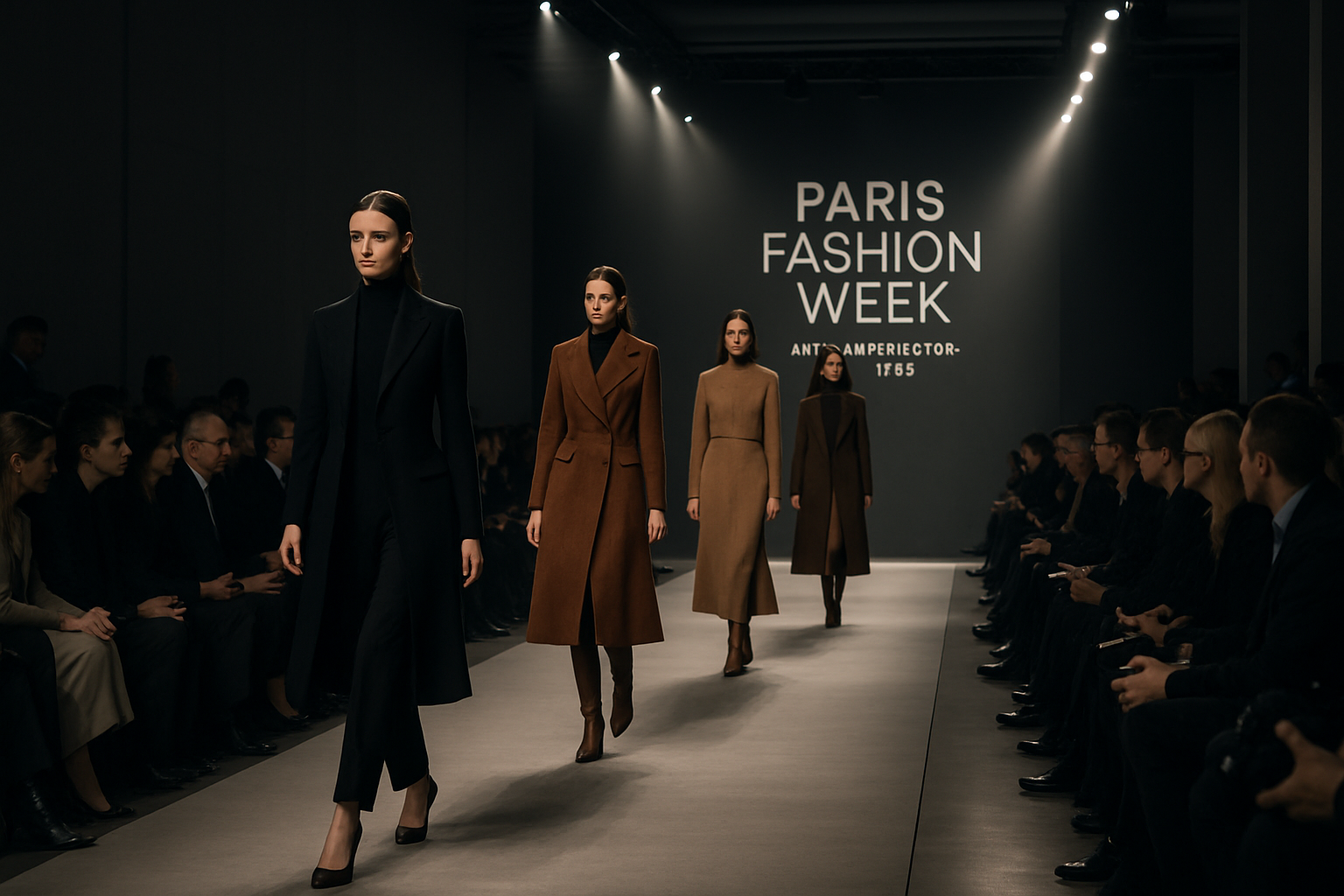
Following the conclusion of Paris Fashion Week for the Autumn/Winter 2026-2027 season, it has become evident that the fashion industry is traversing a period of aesthetic recalibration that represents far more than seasonal change—it signals a fundamental transformation in how we approach style, sustainability, and cultural expression in the modern era.
Where previous years emphasized visual spectacle, maximalism, and digital virality, many of the collections presented in Paris suggest a return toward construction, materiality, and deeper reflection on the contemporary wardrobe. This shift, emerging from the Romanian fashion analysis and corroborated by extensive international fashion intelligence, marks what industry insiders are calling the "Great Fashion Renaissance of 2026."
The Aesthetic Recalibration Movement
The most significant trend emerging from the Parisian runways represents a conscious departure from the attention-economy fashion that dominated the early 2020s. Designers are returning to fundamental principles of craftsmanship, with collections emphasizing thoughtful construction over immediately Instagram-able moments. This aesthetic recalibration reflects broader cultural shifts toward authenticity, sustainability, and meaningful engagement with clothing as both personal expression and cultural artifact.
The movement builds upon groundwork laid by previous fashion developments throughout 2026, including the revolutionary "Art of the Pause" philosophy introduced by Saint Lucian designer Petra Baptiste during her breakthrough Paris Fashion Week appearance. Baptiste's approach—emphasizing reflection, natural rhythms, and thoughtful consideration over rapid consumption—has become emblematic of the industry's new direction.
Global South Fashion Leadership
A remarkable aspect of the 2026-2027 season has been the prominent positioning of Global South designers as creative leaders rather than peripheral participants. Venezuelan designer Amanda Dudamel's collaboration with Lebanese master Elie Saab exemplifies this cross-cultural bridge-building, demonstrating how authentic cultural expression can achieve commercial viability while maintaining artistic integrity.
This trend reflects the fashion industry's recognition that innovation increasingly emerges from diverse cultural perspectives. The Caribbean cultural soft power expansion, demonstrated by both Baptiste and Jamaica's Rachel Scott, positions these regions as significant creative exports beyond traditional tourism-dependent economies.
"We're witnessing a fundamental shift where fashion capitals are expanding beyond traditional European and American centers to embrace voices from the Caribbean, Africa, Latin America, and the Middle East"
— Fashion Industry Analysis, March 2026
Technology Meets Traditional Craftsmanship
The Autumn/Winter 2026-2027 collections showcase sophisticated integration of cutting-edge sustainable practices with traditional techniques. Mycelium leather alternatives using fungi-derived materials have moved from experimental to mainstream, offering 100% biodegradable luxury products that maintain the aesthetic standards demanded by haute couture.
This technology-tradition synthesis represents a mature response to environmental consciousness. Rather than sacrificing quality or beauty for sustainability, designers are discovering that environmental innovation enhances rather than constrains creative possibilities. The Irish "Saol Arís" (Life Again) circular fashion initiative exemplifies this approach, transforming preloved textiles into contemporary womenswear through thoughtful design and high-quality craftsmanship.
The Collaborative Consciousness Movement
Maria Grazia Chiuri's debut as Fendi's creative director introduced the "Less me, more us!" manifesto during Milan Fashion Week, establishing a philosophical framework that has influenced collections throughout the season. This collaborative approach emphasizes collective consciousness over individual artistic vision, featuring design processes that incorporate artisans from various cultural backgrounds.
The collaborative methodology reflects broader cultural movements toward community engagement, cultural authenticity, and shared creative responsibility. This approach serves as both creative inspiration and practical response to increasing demands for cultural sensitivity and authentic representation in global fashion.
Sustainability as Creative Innovation
The 2026-2027 season demonstrates that sustainable fashion has evolved beyond moral imperative to become a driver of creative innovation. European leadership in this transformation is particularly evident, with Germany's billion-euro second-hand fashion market showing two-thirds consumer adoption, while Finland's textile recycling innovations make clothing recycling as accessible as plastic bottle returns.
Advanced sustainable practices now include blockchain authentication systems combating counterfeits while supporting legitimate pre-owned markets, AI curation improving buyer-seller matching, and sophisticated quality assessment standards that normalize sustainable consumption among luxury consumers.
Economic and Cultural Implications
The fashion transformation occurring in 2026 extends far beyond aesthetic trends to encompass fundamental economic and cultural shifts. The success of diverse international designers demonstrates that authentic cultural expression can achieve global commercial viability while maintaining local significance—a model with implications extending throughout creative industries.
Economic multiplier effects include enhanced cultural tourism, increased international media attention for emerging fashion markets, and new entrepreneurship opportunities in sustainable design sectors. The positioning of countries like Saint Lucia, Venezuela, and Lebanon as fashion diplomacy leaders represents strategic cultural development that serves both economic and soft power objectives.
Looking Forward: The Future of Fashion
The trends emerging from Paris Fashion Week Autumn/Winter 2026-2027 suggest an industry reaching maturity after decades of rapid commercialization. The movement toward authentic cultural expression, environmental responsibility, and meaningful craftsmanship represents evolution rather than revolution—a refinement of fashion's fundamental purpose as both personal expression and cultural dialogue.
The success of this aesthetic recalibration depends on continued innovation in sustainable materials, international cooperation in cultural exchange, and consumer willingness to support quality over quantity. The fashion industry's response to environmental urgency—with January 2026 marking the 18th consecutive month of temperatures exceeding 1.5°C above pre-industrial levels—demonstrates that creative excellence and environmental responsibility can reinforce rather than compromise each other.
Conclusion: A Renaissance for the Ages
The conclusions drawn from Paris Fashion Week Autumn/Winter 2026-2027 point to an industry undergoing profound transformation. The aesthetic recalibration represents more than seasonal trends—it signals fashion's evolution toward cultural sustainability, creative authenticity, and environmental consciousness.
This Great Fashion Renaissance of 2026 establishes precedents for 21st-century creative industries: balancing innovation with tradition, commercial success with environmental responsibility, global reach with local authenticity. The success factors identified—community engagement, authentic cultural expression, strategic technology integration, and sustainable economic models—provide templates for creative industries worldwide.
As the fashion world moves forward from this pivotal season, the trends established in Paris suggest a future where fashion serves not merely as commercial entertainment but as meaningful cultural dialogue addressing the defining challenges of our time while celebrating the diversity and creativity that make human culture endlessly fascinating.