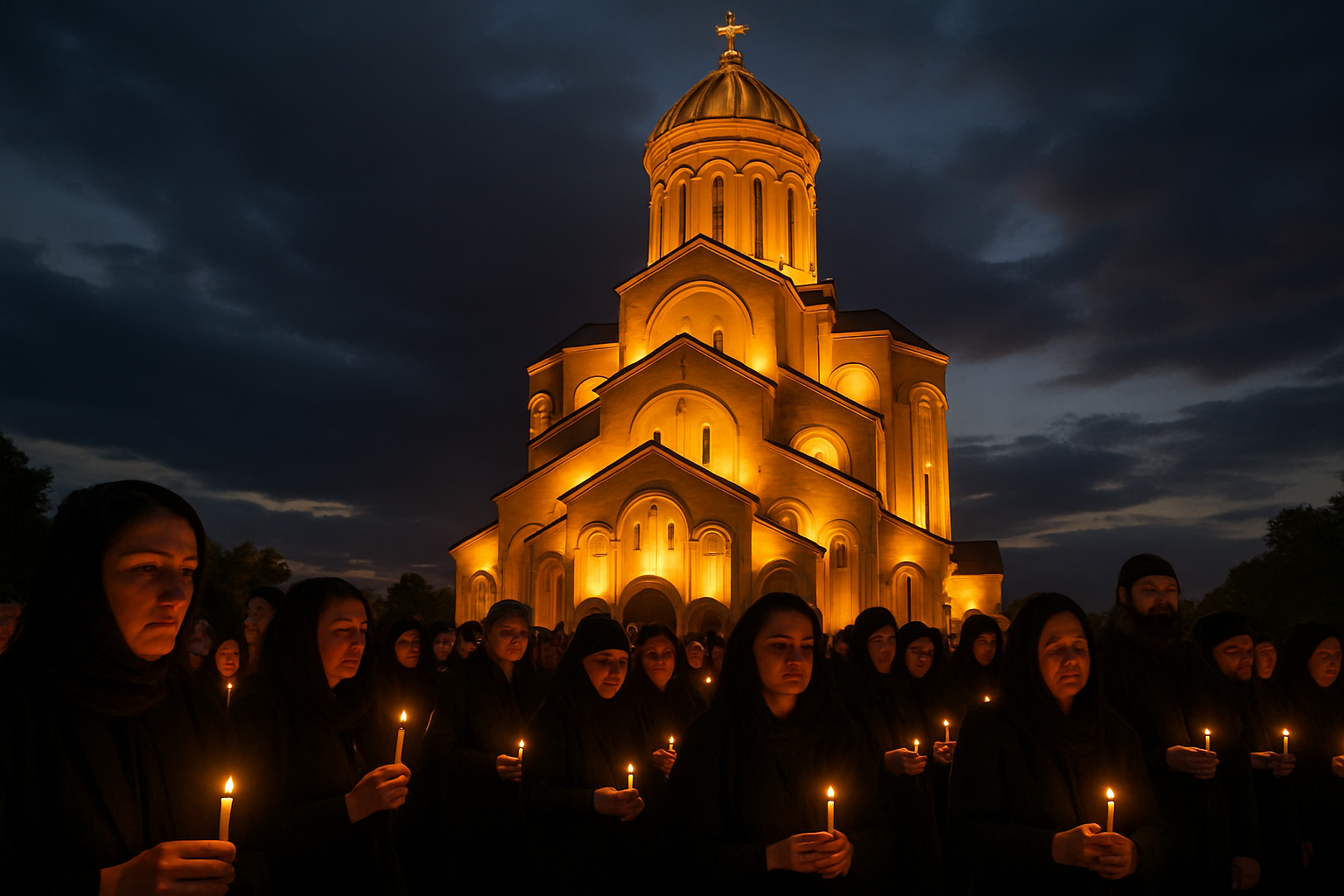
Patriarch Ilia II, the Catholicos-Patriarch of All Georgia and one of the most influential figures in modern Georgian history, died on March 17, 2026, at the age of 93, marking the end of an extraordinary 48-year tenure that spanned the Soviet era, Georgian independence, and the country's democratic transformation.
The spiritual leader, born Irakli Ghudushauri-Shiolashvili, passed away at Tbilisi's Caucasus Medical Center after being hospitalized in critical condition with severe internal bleeding during the early hours of March 17. His death has prompted an outpouring of international condolences and has left Georgia in a period of national mourning, with flags lowered across the country.
A Life of Historic Significance
Ilia II's remarkably long tenure, beginning on December 25, 1977, made him not only the longest-serving patriarch in Georgian Orthodox Church history but also one of the most enduring religious leaders globally. His leadership coincided with some of the most turbulent periods in Georgian history, from the final years of Soviet rule through the country's independence and subsequent democratic developments.
The patriarch's sharp political instincts allowed him to navigate Georgia's complex political landscape with remarkable skill. Under his guidance, the Georgian Orthodox Church experienced unprecedented expansion, symbolized most dramatically by the construction of the Holy Trinity Cathedral, Sameba, whose 80-meter-high structure dominates central Tbilisi's skyline.
"Ilia II was perhaps the strongest conservative voice in Georgia's recent history, yet his ability to adapt and survive through multiple political transitions made him truly unique."
— Religious Affairs Analyst, OC Media
International Condolences Pour In
The patriarch's death has drawn condolences from religious leaders, diplomatic missions, and government officials worldwide, underscoring his international stature and the respect he commanded across political and religious divides. Foreign church leaders particularly emphasized his role in preserving Orthodox Christianity through decades of political upheaval.
Georgia has declared an official period of mourning, with memorial services beginning at Tbilisi's Holy Trinity Cathedral. The patriarch was widely regarded as one of the most pivotal figures in Georgia's recent history, enjoying broad public trust in a country where more than 80 percent of the population identifies with Orthodox Christianity.
Political and Religious Legacy
Ilia II's influence extended far beyond religious matters. His political acumen and moral authority made him a key figure in Georgian politics, often serving as a mediating voice during times of crisis. His conservative positions on social issues significantly shaped public discourse in Georgia, while his support for Georgian independence and sovereignty proved crucial during the country's transition from Soviet rule.
The patriarch's ability to maintain the church's relevance and expand its influence during the post-Soviet period was remarkable. He oversaw the construction of hundreds of churches and monasteries, the restoration of religious education, and the strengthening of the church's social services network.
Succession and Future Challenges
With Ilia II's passing, the Georgian Orthodox Church faces its first leadership transition in nearly five decades. Metropolitan Shio Mujiri has been appointed to serve as locum tenens during the transition period, but questions remain about the long-term direction of the church and its continued political influence.
The succession process comes at a critical time for Georgia, as the country continues to navigate complex relationships with Russia, pursue European integration, and address internal political divisions. Ilia II's unique ability to transcend political boundaries and maintain national unity through moral authority will be difficult to replicate.
A Transformed Religious Landscape
Under Ilia II's leadership, the Georgian Orthodox Church not only survived Soviet persecution but emerged stronger than ever. His tenure saw the church evolve from a suppressed institution to the most trusted organization in Georgian society, often polling higher in public confidence than government institutions.
The patriarch's approach combined traditional Orthodox theology with pragmatic political engagement. His ability to adapt church teachings to contemporary challenges while maintaining theological orthodoxy helped the institution remain relevant across generational divides.
"The Patriarch's death marks not just the end of an era for the Georgian Orthodox Church, but for Georgia as a nation. His influence on our political and social development cannot be overstated."
— Georgian Political Observer
International Implications
Ilia II's death has implications beyond Georgia's borders. As one of the most senior Orthodox patriarchs globally, his voice carried significant weight in inter-Orthodox relations and broader Christian dialogue. His passing removes a stabilizing influence in a region marked by political volatility and religious tensions.
The international religious community has lost a leader who successfully balanced traditional religious values with practical political engagement. His model of religious leadership—maintaining doctrinal integrity while engaging constructively with secular authorities—has been studied and emulated by religious leaders worldwide.
Economic and Social Impact
The patriarch's influence extended to Georgia's economic development, as church-led social programs provided crucial support for vulnerable populations. The extensive network of religious institutions under his leadership contributed significantly to education, healthcare, and social services, creating a parallel support system that complemented government programs.
His death raises questions about the continuity of these programs and the church's continued role in Georgian social policy. The next patriarch will inherit not only spiritual responsibilities but also significant social and economic obligations that have become central to Georgian society.
Looking Forward
As Georgia prepares for Patriarch Ilia II's funeral at the Holy Trinity Cathedral, the nation faces the challenge of moving forward without its most unifying figure. The selection of his successor will be closely watched both domestically and internationally, as it will signal the future direction of one of Eastern Christianity's most influential churches.
The patriarch's 48-year tenure represents one of the longest patriarchal reigns in Orthodox history, spanning from the Brezhnev era through the present day. His death marks not just a religious transition but a generational shift that will reshape Georgia's political and cultural landscape for years to come.
Memorial services are expected to draw thousands of mourners to Tbilisi, as Georgians bid farewell to a leader who guided their nation through some of its most challenging and transformative periods. The international community's response reflects the global recognition of Ilia II's unique role in modern Orthodox Christianity and post-Soviet political development.