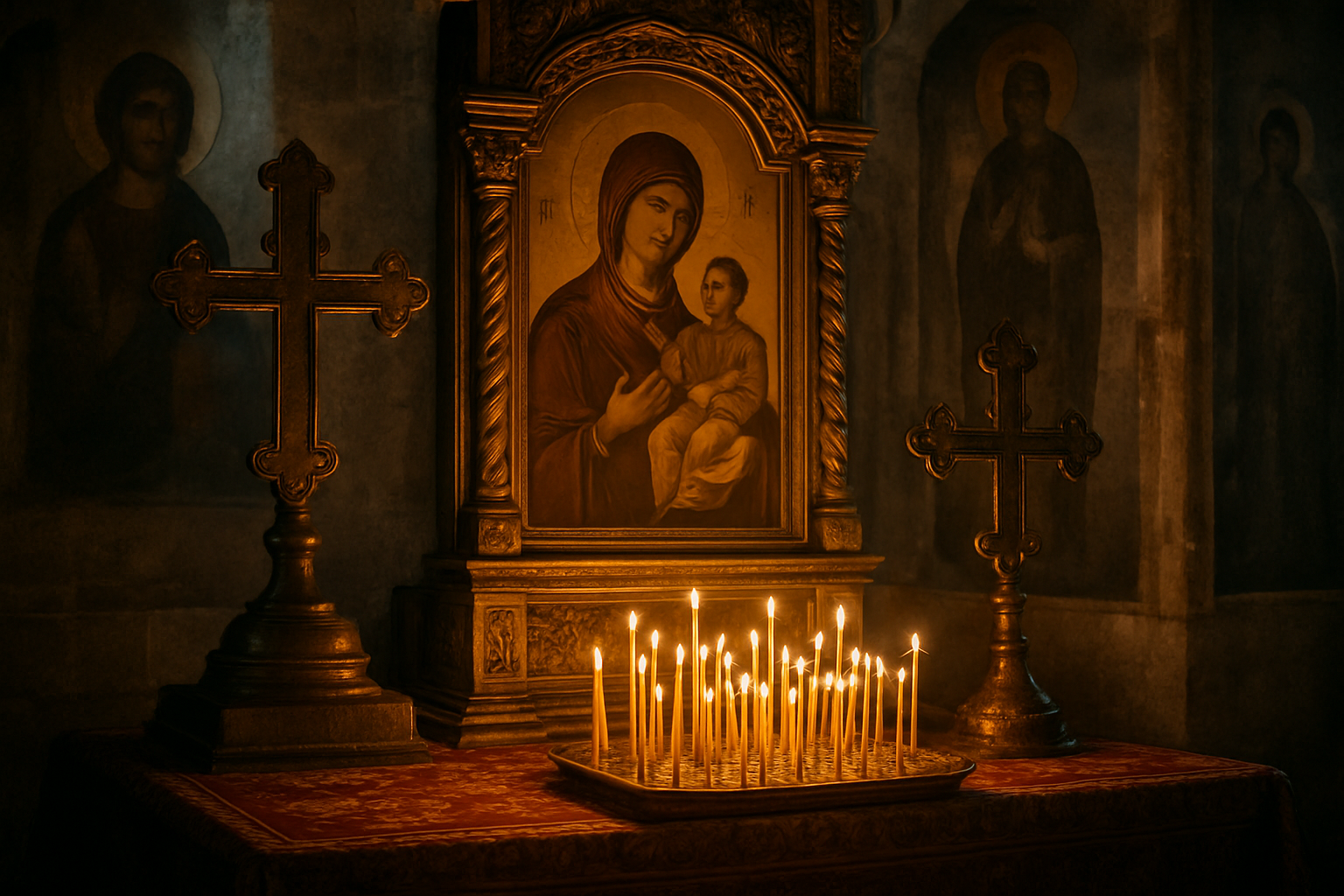
Patriarch Ilia II, the long-serving leader of the Georgian Orthodox Church who shaped the nation's spiritual life for nearly half a century, died Tuesday evening at age 93 after being admitted to intensive care with abdominal bleeding.
The beloved patriarch passed away at the Caucasus Medical Center in Tbilisi on March 17, 2026, following years of declining health that had reduced his public appearances and services. His death marks the end of an era for Georgia, where the Orthodox Church remains one of the most powerful and influential institutions in society.
A Life of Service Spanning Five Decades
Born Irakli Shiolashvili in 1933, Patriarch Ilia II was elected to lead the Georgian Orthodox Church in 1977, when he was just 44 years old. His appointment came during the Soviet era, making his tenure all the more remarkable as he navigated the complex political landscape while preserving Orthodox traditions and faith.
Metropolitan Shio Mujiri, the incumbent of the patriarchal throne who confirmed the patriarch's passing to reporters outside the hospital, hailed Ilia II's extraordinary legacy:
"He was an epoch-defining figure, and his passing is a great loss for the entire Orthodox world. I would like to extend my condolences to every Georgian, to all of Georgia, to our Church, and to all of Christendom."
— Metropolitan Shio Mujiri
Final Hours and Hospitalization
Patriarch Ilia II was first hospitalized at the Chapidze Clinic due to deteriorating health before being transferred to the Caucasus Medical Center, where he spent his final hours in intensive care. The 93-year-old patriarch had been battling health issues for several years, which had gradually limited his ability to conduct regular services and public appearances.
The announcement of his death came late Tuesday evening around 22:45 local time, as Metropolitan Shio addressed gathered journalists and faithful who had maintained a vigil outside the hospital.
A Transformative Leader During Georgia's Transition
Ilia II's nearly five decades of leadership coincided with some of the most turbulent periods in Georgian history. He guided the church through the final years of Soviet rule, Georgia's independence in 1991, civil wars, and the challenging transition to democracy. Throughout these upheavals, he remained a stabilizing force and moral authority for millions of Georgians.
Under his leadership, the Georgian Orthodox Church experienced a remarkable revival. As one of the oldest autocephalous Orthodox churches, dating back to the 4th century, the Georgian church regained its prominence in national life following the collapse of the Soviet Union. Ilia II oversaw the restoration of hundreds of churches and monasteries that had been destroyed or repurposed during the communist era.
Influence Beyond Religious Spheres
The patriarch's influence extended far beyond purely religious matters. He was often consulted on political and social issues, and his opinions carried significant weight in Georgian society. His close relationships with successive Georgian governments, including strong ties with current authorities, made him one of the most powerful figures in the country.
As Metropolitan Shio noted in his tribute, "Through him, through his labors, God brought Georgia" through its most challenging periods, highlighting the patriarch's role not just as a religious leader but as a unifying national figure.
International Recognition and Orthodox Leadership
At 93, Patriarch Ilia II was recognized as the oldest patriarch in the Orthodox world at the time of his death. His longevity in office and his theological contributions earned him respect far beyond Georgia's borders, making him a revered figure throughout the Orthodox Christian world.
The patriarch's death has prompted condolences from Orthodox churches worldwide, recognizing his contributions to maintaining Orthodox unity and traditions during a period of significant global change.
Funeral Arrangements and Succession
According to Church spokesperson Archpriest Jagmaidze, Patriarch Ilia II will be laid to rest at the Holy Trinity Cathedral in Tbilisi on Wednesday. The cathedral, one of the largest Orthodox churches in the world and a symbol of the Georgian Orthodox revival, serves as the seat of the Georgian Patriarchate.
The Patriarchate is expected to make formal announcements regarding funeral arrangements and the succession process during the ceremony. Metropolitan Shio Mujiri will serve as the patriarchal locum tenens during the transition period.
A Lasting Legacy
Patriarch Ilia II's death marks the end of one of the longest patriarchal reigns in Orthodox history. His tenure of nearly 50 years saw the Georgian Orthodox Church emerge from Soviet persecution to become a central pillar of Georgian national identity and cultural preservation.
His influence on Georgian society cannot be overstated. Beyond his religious duties, he was seen as a father figure to many Georgians, offering guidance during times of political uncertainty and social upheaval. His efforts to promote Georgian language, culture, and traditions helped preserve the nation's unique identity throughout periods of foreign domination and internal strife.
As Georgia mourns the loss of this towering figure, the nation prepares to bid farewell to a leader who shaped not just the religious landscape but the very soul of Georgian society for generations. His legacy will undoubtedly continue to influence Georgia and the broader Orthodox world for years to come.