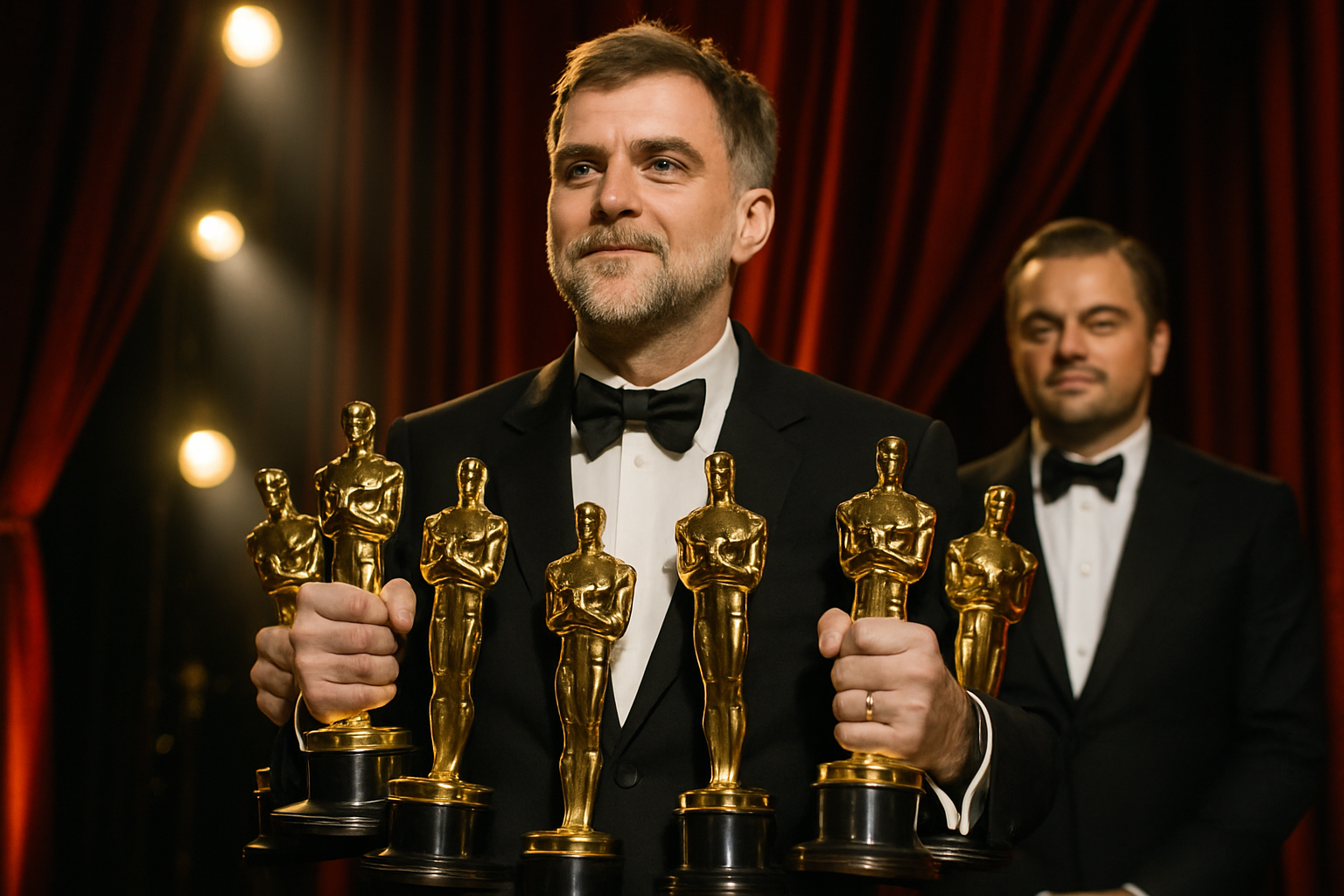
Paul Thomas Anderson's political thriller "One Battle After Another" emerged as the dominant force at the 98th Academy Awards, capturing six Oscars including Best Picture and Best Director in a ceremony that marked a historic breakthrough for the acclaimed filmmaker after nearly three decades of nominations.
The Warner Bros. film, starring Leonardo DiCaprio as a disillusioned former revolutionary turned cannabis-smoking single father, triumphed over Ryan Coogler's vampire thriller "Sinners" in what industry analysts described as one of the most unpredictable Best Picture races in recent memory. Anderson's magnum opus also secured wins for Best Adapted Screenplay, Best Cinematography, Best Film Editing, and Best Supporting Actor for Sean Penn.
Anderson's Long-Awaited Triumph
The victory represents a career-defining moment for Anderson, who had received 11 previous Oscar nominations without a win. The 54-year-old director's adaptation of Thomas Pynchon's novel "Vineland" was described by critics as "an affresco of America today raccontato by a director who considers himself a Californian hippie," according to Italian media coverage.
Anderson was notably absent from the ceremony, continuing his tradition of avoiding major Hollywood events, but his film's success was celebrated by cast and crew members present at the Dolby Theatre.
"This is a historic moment for cinematic storytelling that addresses contemporary political anxieties through the lens of personal transformation."
— Film Critic, analyzing Anderson's achievement
Genre Films Break Through
The 2026 ceremony marked an unprecedented recognition of genre filmmaking, with Ryan Coogler's "Sinners" capturing four awards despite falling short of Best Picture. Michael B. Jordan won Best Actor for his dual role as twin brothers in the Jim Crow-era vampire thriller, which used supernatural elements as a sophisticated metaphor for systemic racism.
Jordan expressed surprise at his victory, stating he "wasn't expecting" the win during his acceptance speech. The film's success, alongside recognition for "Frankenstein" which won three awards, signaled the Academy's evolving acceptance of horror and supernatural films as vehicles for serious social commentary.
Historic Irish Achievement
Jessie Buckley became the first Irish woman to win the Academy Award for Best Actress, taking home the honor for her performance in "Hamnet." The 36-year-old actress, who had swept both the BAFTA and Actor Awards in the same category, delivered an emotional acceptance speech while revealing her previous struggles with eating disorders and depression.
Buckley's victory was celebrated across Ireland as a historic milestone for Irish cinema on the international stage, with Tánaiste Simon Harris among those congratulating the actress on her achievement.
International Recognition
The ceremony showcased the Academy's continued global expansion, with several international breakthroughs. Norway's "Affeksjonsverdi" (Sentimental Value) won Best International Feature Film, marking the country's first Oscar in the category. Danish documentary "Mr. Nobody Against Putin" took Best Documentary Feature, examining Russian educational propaganda through the story of a teacher known as "Pasha."
The night also saw Italy's Valentina Merli win an Oscar, though she lamented Italy's relative absence from major categories, stating: "I think cinema in our country is not sufficiently supported."
Ceremony Under Unprecedented Security
The 98th Academy Awards proceeded under the most comprehensive security arrangements in Academy history, with over 1,000 law enforcement personnel deployed following FBI warnings of potential threats to California venues. The enhanced security measures, including SWAT teams and bomb squads, reflected the challenging global circumstances surrounding the ceremony.
Despite these precautions, the event maintained its traditional glamour, with Conan O'Brien hosting for the second consecutive year. The ceremony balanced celebration of artistic achievement with subtle political commentary, as presenters and winners addressed contemporary issues without directly naming political figures.
Technical and Artistic Excellence
Beyond the major categories, the ceremony recognized technical innovation and artistic craftsmanship. Amy Madigan won Best Supporting Actress at age 75, becoming the oldest winner in the category and the first from a horror film since 1991. The ceremony also marked historic firsts, including the first woman to win Best Cinematography and the inaugural recognition of casting directors.
The animated feature "KPop Demon Hunters" provided a cultural bridge between Eastern and Western entertainment, winning Best Animated Feature and Best Original Song, reflecting the global nature of contemporary filmmaking.
Industry Transformation
The 2026 Oscars represented more than individual achievements; they marked a potential turning point for the Academy and the film industry. The recognition of genre films, international voices, and diverse storytelling approaches suggested an evolving definition of cinematic excellence.
Industry observers noted the ceremony's success despite challenging global circumstances as evidence of cinema's enduring power to unite audiences across cultural and political boundaries. The event served as what many described as a "cultural touchstone" during a period of international uncertainty.
As the entertainment industry continues to navigate technological disruption and changing audience preferences, the 2026 Academy Awards demonstrated that authentic storytelling and artistic excellence remain the foundation of meaningful cinema, regardless of genre, origin, or budget.
The ceremony concluded with Barbra Streisand performing "The Way We Were" during the In Memoriam segment, honoring the late Robert Redford and other industry figures lost during the past year, providing a poignant reminder of cinema's capacity to preserve cultural memory while inspiring future generations of storytellers.