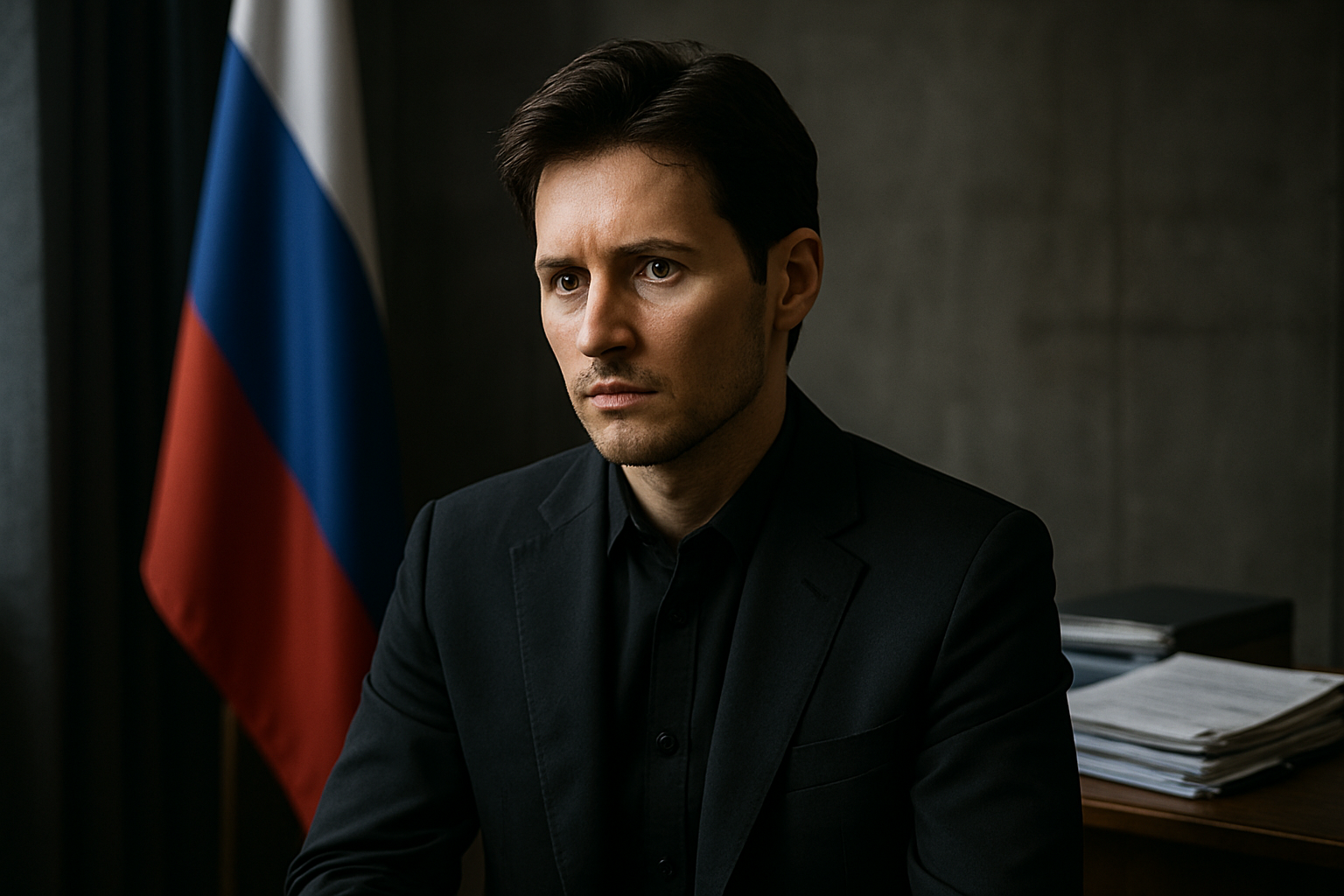
Telegram founder Pavel Durov announced Wednesday that he has received an official summons from Russian authorities naming him as a criminal defendant in an ongoing investigation, marking a dramatic escalation in Moscow's sustained campaign against the messaging platform and its outspoken CEO.
According to a post published by Durov, the legal document was sent to an outdated address in Russia where he had lived approximately 20 years ago. The summons formally identifies the 39-year-old entrepreneur as a defendant in what appears to be part of Russia's broader "digital sovereignty" campaign that has intensified throughout 2026.
Escalating Pressure Campaign
The criminal designation represents the most serious legal action yet taken against Durov personally, coming amid a systematic Russian effort to force citizens away from independent messaging platforms toward state-controlled alternatives with built-in surveillance capabilities.
Throughout 2026, Russian authorities have implemented what cybersecurity experts describe as a sophisticated "degradation strategy" against Telegram. Rather than completely blocking the service, Moscow has employed techniques including doubled response times, selective regional disruptions, and intermittent connectivity issues designed to create plausible deniability while achieving practical usage restrictions.
"Don't rush to laugh at European bureaucrats - this represents a coordinated authoritarian approach to digital control."
— Pavel Durov, Telegram Founder
Historical Context of Russian Digital Restrictions
The criminal summons emerges from a complex history of tensions between Durov and Russian authorities. In February 2026, the Russian State Duma granted the Federal Security Service (FSB) unprecedented authority to shut down internet services, mobile communications, and postal services without requiring specific security threat justifications - representing the most comprehensive communications control grant to a security service by a major power in the modern era.
Russian Federal Antimonopoly Service (FAS) has also declared that Telegram advertising violates federal law, stating that "law prohibits distribution of advertising on information resources whose activities are recognized as undesirable on territory of Russian Federation." Both advertisers and platforms now face liability under this expanded interpretation.
The systematic campaign has included the complete blocking of WhatsApp for over 100 million Russian users, with Kremlin spokesperson Dmitry Peskov citing the platform's "refusal to comply with Russian law provisions." In response, authorities have promoted the state-controlled "Max" messenger as a replacement, though the service lacks end-to-end encryption and has experienced significant capacity limitations during user migration attempts.
Durov's Defiant Response to Global Pressure
Durov has consistently positioned Telegram as a defender of free speech against what he characterizes as "surveillance state applications." This stance has brought him into conflict not only with Russian authorities but also with European regulators implementing unprecedented social media restrictions.
In recent months, Durov has sent mass alerts to Spanish Telegram users warning against European regulatory measures that could "turn Spain into surveillance state under pretext of protection." European authorities have used such communications as evidence supporting the need for platform regulation, creating a cycle where industry resistance is cited as justification for expanded oversight.
The criminal summons comes as Russia has implemented increasingly sophisticated technical restrictions. Remote regions including Nenets, Magadan, and Sakhalin oblasts have been particularly affected due to their dependence on satellite and undersea cable infrastructure with limited redundancy options.
Broader International Context
The Russian action against Durov occurs within a global transformation of technology governance. While Moscow focuses on information control and surveillance, democratic nations have pursued different regulatory approaches centered on child safety and platform accountability.
Spain has implemented the world's first criminal executive liability framework creating imprisonment risks for technology executives, spreading across Europe to Greece, France, Denmark, Austria, and the United Kingdom. Australia's under-16 social media ban eliminated 4.7 million teen accounts in December 2025, proving the technical feasibility of large-scale platform restrictions.
However, Russia's approach differs fundamentally from these democratic regulatory efforts. Where European measures focus on protecting children from harmful content through transparent legal processes, Russia's campaign centers on comprehensive information control with surveillance integration.
Technical Implications and User Impact
Despite the mounting pressure, Telegram continues to serve approximately 65 million daily Russian users, many accessing the platform through VPN services. This has created a technological arms race where users employ circumvention tools while authorities develop increasingly sophisticated blocking mechanisms.
Russian payment systems have experienced problems related to Telegram restrictions, affecting millions of citizens who rely on the platform for both personal communication and business transactions. The state-promoted alternatives lack the security features and international connectivity that have made Telegram popular among Russian users.
The criminal summons against Durov personally represents an escalation from technical restrictions to direct legal action against platform leadership. Legal experts note that such personal targeting of foreign technology executives creates concerning precedents for international business operations and digital rights.
Global Implications for Platform Governance
The Russian criminal case against Durov highlights fundamental questions about the relationship between sovereign governments and multinational technology platforms. While democratic nations pursue accountability through transparent legal frameworks and constitutional protections, authoritarian approaches rely on opacity and personal intimidation.
International observers are closely monitoring whether Russia's model influences other authoritarian governments seeking enhanced digital control. The systematic nature of Moscow's campaign - combining legal pressure, technical restrictions, and alternative platform promotion - provides a comprehensive template for information control with global implications.
Privacy advocates warn that the Russian approach demonstrates how criminal justice mechanisms can be weaponized against platform executives who refuse to comply with surveillance demands. The case raises questions about the protection of technology leaders operating across multiple jurisdictions with conflicting legal frameworks.
Future Outlook
The criminal summons represents a significant escalation that could influence Durov's operational decisions and Telegram's global strategy. While the messaging platform continues to operate in Russia through technical workarounds, the personal legal risk to its founder adds a new dimension to the ongoing conflict.
Industry analysts note that the Russian action occurs amid broader global tensions over platform governance, where technology companies face increasing pressure from multiple governments with different regulatory approaches. The challenge for platforms like Telegram is maintaining operational independence while navigating conflicting legal demands across jurisdictions.
The case will likely serve as a test for international protection of technology executives and platform independence. How democratic nations respond to Russia's criminalization of foreign platform leadership could establish important precedents for the future of global technology governance and digital rights protection.
As this story develops, it represents more than a legal dispute between one government and one platform - it embodies the broader struggle over who controls digital communication in an interconnected but politically fragmented world.