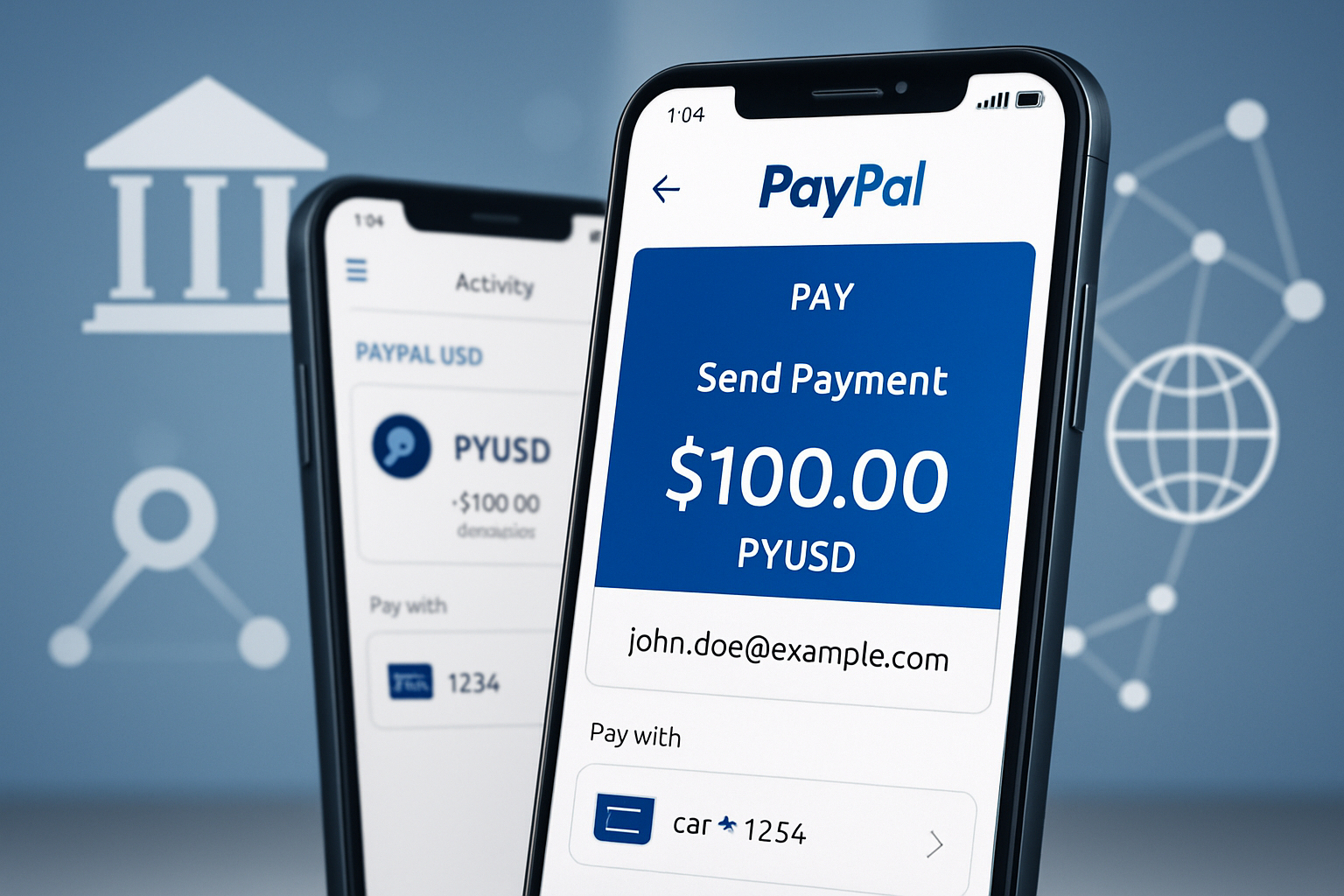
PayPal has announced the global launch of its USD-backed digital currency, PayPal USD (PYUSD), across 70 international markets, marking a significant expansion of the payment giant's cryptocurrency offerings during one of the most challenging periods in digital asset history.
The rollout, announced April 4, 2026, enables users worldwide to send funds globally with faster settlements and reduced transaction costs compared to traditional payment methods. The stablecoin is backed by the U.S. dollar and represents PayPal's strategic response to the growing digitization of international commerce, even as the broader cryptocurrency sector faces unprecedented volatility.
Contrasting Market Dynamics
PayPal's PYUSD expansion occurs against the backdrop of a catastrophic cryptocurrency market collapse that has wiped more than $2 trillion from global digital asset valuations since late 2025. Bitcoin, the world's largest cryptocurrency, has crashed over 50% from its October 2025 peak of $126,199 to current levels below $60,000, completely erasing gains made following political promises of crypto-friendly policies.
The collapse has been driven primarily by stalled Congressional legislation that was expected to provide regulatory clarity for digital assets. Despite campaign promises supporting cryptocurrency adoption, legislative gridlock has created what industry experts describe as a "regulatory vacuum," undermining institutional confidence and triggering massive sell-offs across all major digital currencies.
"The tool will enable users to send funds globally with faster settlements and at a lower cost than traditional payment methods."
— PayPal Statement
However, PayPal's approach differs fundamentally from volatile cryptocurrencies like Bitcoin. PYUSD operates as a stablecoin, maintaining price stability through its dollar backing while leveraging blockchain technology for improved transaction efficiency. This positions it closer to emerging government-backed digital currencies than speculative crypto assets.
Government-Backed Digital Success Stories
PayPal's expansion comes as government-backed digital payment systems demonstrate superior stability and adoption rates compared to unregulated cryptocurrency markets. Nigeria has achieved remarkable success with 43% of fuel sales now processed through digital payments, providing same-day settlements that solve traditional liquidity challenges for businesses.
Similarly, Slovakia has launched a €1.3 billion digital euro pilot project, positioning the nation as a pioneer in European monetary digitalization. The project operates years ahead of the planned EU-wide rollout and demonstrates how state-backed digital currencies can provide stability during market turbulence.
Zimbabwe's innovative Ndarama platform has created a world-first programmable collateral-to-fiat system that enables $1 minimum investments without requiring cryptocurrency wallets or blockchain complexity. These practical implementations focus on solving real economic problems rather than speculative trading.
Infrastructure Challenges and Opportunities
The global expansion faces significant infrastructure constraints, particularly the ongoing memory chip crisis that has created sixfold price increases for major manufacturers including Samsung, SK Hynix, and Micron. These shortages, expected to persist until 2027, have paradoxically accelerated the development of more efficient financial technology solutions that maximize performance while minimizing resource requirements.
PayPal's PYUSD leverages existing blockchain infrastructure rather than requiring new proprietary systems, allowing for more efficient deployment during hardware constraints. This practical approach aligns with the broader industry trend toward utility-focused digital financial services over resource-intensive speculative platforms.
Regulatory Landscape Evolution
The launch occurs amid increasingly divergent regulatory approaches worldwide. Ghana's Bank of Ghana and Securities Exchange Commission recently issued the strictest cryptocurrency advertising ban in Africa, prohibiting all public promotion of virtual assets and stablecoins. Meanwhile, Slovakia has announced comprehensive cryptocurrency taxation frameworks potentially reaching 51% combined taxes and social contributions.
European authorities have intensified warnings about US-dominated stablecoin systems, with the European Central Bank expressing concerns that widespread adoption of dollar-denominated digital currencies could transmit American monetary policy conditions to European markets, potentially undermining the ECB's monetary sovereignty.
Market Recovery Conditions
Despite the broader cryptocurrency crisis, some institutional players remain optimistic about digital asset recovery. JPMorgan has issued an unprecedented $266,000 long-term Bitcoin price target, identifying supporting factors including Bitcoin's correlation with gold and declining volatility patterns, while acknowledging continued short-term challenges.
However, recovery conditions require comprehensive regulatory frameworks, improved macroeconomic conditions, and renewed institutional confidence. The timeline remains highly uncertain given the Congressional stalemate and increasing international regulatory hostility toward unregulated cryptocurrency markets.
"The future of money and payments will feature gradual evolution, not revolution that crypto-grifters promised."
— Industry Expert Analysis
Strategic Implications for Digital Finance
PayPal's PYUSD expansion represents a measured approach to digital currency adoption that prioritizes stability and regulatory compliance over speculative gains. The company's strategy builds on its established payment infrastructure and regulatory relationships, contrasting with the regulatory uncertainty facing pure cryptocurrency platforms.
Investment strategies are increasingly favoring practical utility over technological speculation, with performance reflecting regulatory clarity, government backing, and solutions to real economic problems rather than speculative trading sentiment. Traditional financial institutions implementing digital transformation are achieving superior risk-adjusted returns compared to purely speculative cryptocurrency ventures.
Global Adoption Patterns
The 70-market rollout reflects PayPal's recognition that digital payment adoption varies significantly by region, with emerging markets often leading in practical implementation. Countries with strong institutional frameworks and sound economic policies are consistently outperforming despite broader international market volatility.
Regional integration opportunities continue expanding through cross-border digital systems, including discussions between India and China about linking UPI and Alipay systems to create the world's largest cross-border digital payment network. The African Continental Free Trade Area framework is creating trillion-dollar trade flow opportunities for digital payment systems independent of traditional reserve currencies.
Evidence increasingly favors government-backed digital payment systems over volatile unregulated cryptocurrency markets for sustainable financial modernization. Success consistently requires balancing innovation with stability, technological advancement with regulatory clarity, and global connectivity with local accountability frameworks.
Future Outlook
PayPal's PYUSD expansion represents a template for sustainable digital currency development that combines technological innovation with established monetary frameworks, democratic accountability, and practical economic benefits for users. As the cryptocurrency sector continues to face unprecedented challenges, regulated stablecoins backed by traditional financial institutions may provide the stability and utility that purely speculative digital assets have failed to deliver.
The success of this expansion will likely influence broader digital currency adoption patterns, potentially establishing precedents for how traditional financial institutions can successfully navigate the transition to digital payments while maintaining regulatory compliance and user trust during periods of extreme market volatility.