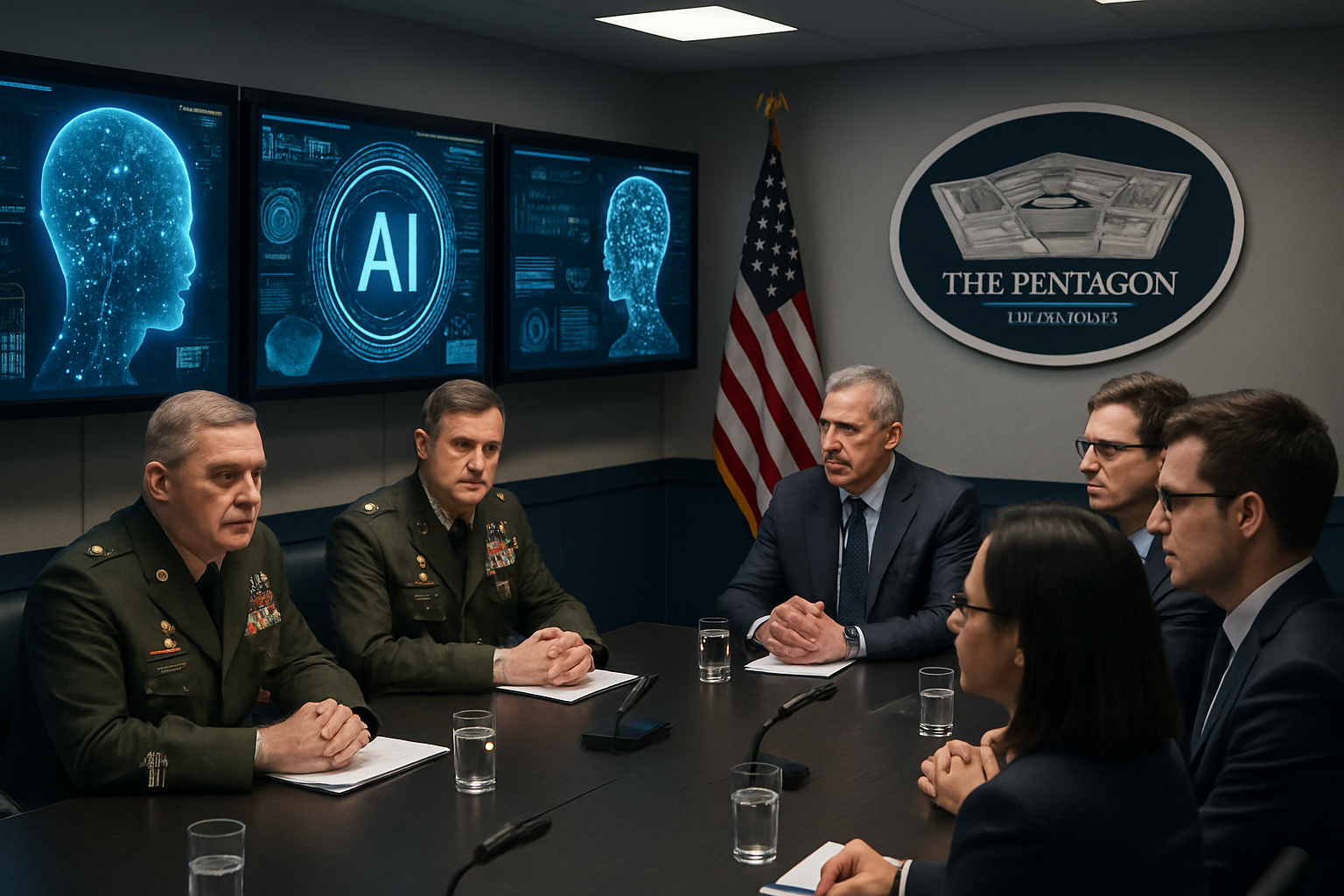
The Pentagon is threatening to cut ties with Anthropic over the AI company's safety restrictions, while India simultaneously announces plans for a massive artificial intelligence "data city" project, underscoring the intensifying global competition for AI supremacy amid mounting military and commercial pressures.
The dispute centers on the Defense Department's push for AI companies to permit military use of their tools for "all lawful purposes," directly challenging Anthropic's stated opposition to autonomous weapons development and military applications that could violate their terms of service.
Pentagon Escalates Pressure on AI Companies
According to multiple reports from Indian and Singaporean media outlets, the Pentagon is demanding four major AI companies, including Anthropic, allow unrestricted military access to their artificial intelligence systems. The confrontation represents a significant escalation in the ongoing clash between AI safety advocates and national security interests.
The military's position has hardened considerably since revelations that U.S. forces reportedly used Anthropic's Claude AI chatbot in operations to capture former Venezuelan President Nicolás Maduro, despite the company's terms prohibiting violence and surveillance applications. This unauthorized use has intensified the standoff between Anthropic and Pentagon officials seeking fewer restrictions on classified networks.
The dispute reflects broader tensions within the AI industry, where companies face mounting pressure to balance commercial opportunities with ethical considerations and safety protocols. The Pentagon's demands come as military officials increasingly view advanced AI capabilities as essential rather than optional for maintaining strategic advantage.
India's Ambitious AI Infrastructure Vision
Meanwhile, India is positioning itself as a major player in the global AI landscape with plans for an unprecedented "data city" infrastructure project in Visakhapatnam, Andhra Pradesh. The announcement comes as India has risen to third place in global AI power rankings, surpassing South Korea and Japan.
"The AI revolution is here,"
— Andhra Pradesh Information Technology Minister
The ambitious project represents India's commitment to becoming a major AI hub, building on the country's existing technological capabilities and growing investment in artificial intelligence research and development. The data city initiative is part of a broader digital push that positions Visakhapatnam as a cornerstone of India's AI ambitions.
India's AI surge has been driven by substantial investment and strategic planning, with the country now ranking as the third most powerful AI nation globally. This represents a significant achievement for a developing economy seeking to compete with established technological powers like the United States and China.
Global Context of AI Military Integration
The Pentagon-Anthropic dispute occurs within a broader context of military AI integration efforts worldwide. Historical records show that as early as February 2026, the U.S. Department of Defense had already been integrating ChatGPT into military artificial intelligence systems through OpenAI collaboration, marking a historic expansion of AI into critical government infrastructure.
OpenAI CEO Sam Altman has reported exceptional growth, with ChatGPT exceeding 800 million weekly users and experiencing over 10% monthly growth. The military integration represents what analysts describe as a strategic shift recognizing advanced AI capabilities as essential for maintaining strategic advantage.
Ukrainian forces have also deployed AI-enhanced drone systems with improved vision capabilities for low-light operations, while approximately one-third of countries have agreed to AI warfare governance protocols. Notably, both the United States and China have abstained from comprehensive AI warfare commitments, highlighting the geopolitical complexity of military AI regulation.
Industry Infrastructure Challenges
Both the Pentagon's demands and India's data city plans face significant infrastructure challenges stemming from the ongoing global semiconductor crisis. Memory chip prices have surged sixfold, affecting major manufacturers including Samsung, SK Hynix, and Micron, with shortages expected to persist until 2027 when new fabrication facilities come online.
This "memory crisis" has created severe bottlenecks for AI development, driving consumer electronics costs up 20-30% over the past year. The shortage has forced companies to seek alternatives and prioritize applications, potentially favoring those willing to compromise on safety measures to maximize limited computational resources.
The infrastructure constraints have also prompted innovative solutions, with companies like SpaceX exploring space-based data centers powered by solar energy to address the AI industry's massive energy and cooling requirements.
Regulatory and Safety Concerns
The Pentagon's pressure on Anthropic comes amid intensifying global regulatory responses to AI development. European authorities have implemented unprecedented oversight measures, including Spain's world-first criminal executive liability framework for social media platforms and French cybercrime raids on AI companies over content violations.
The United Nations has established an Independent International Scientific Panel on Artificial Intelligence with 40 experts, representing the first fully independent global body for AI impact assessment. This regulatory intensification reflects growing concerns about the rapid pace of AI development and its potential societal implications.
Former Anthropic researchers have warned about AI development dangers to humanity, with one security chief resigning with warnings that "the world is in peril" due to interconnected crises involving AI, bioweapons, and other advanced technologies. These departures highlight internal tensions within leading AI companies between commercial pressures and safety considerations.
Educational and Civilian Applications
Despite military tensions, successful civilian AI integration models continue to emerge globally. Canadian universities have successfully implemented AI teaching assistants while maintaining critical thinking standards, while Malaysia has opened the world's first AI-integrated Islamic school, combining technology with traditional religious learning.
Singapore has also demonstrated positive applications with WonderBot 2.0 for heritage education, showing how AI can enhance rather than replace fundamental educational relationships. These examples provide templates for responsible AI integration that balances technological advancement with human development needs.
Economic and Market Implications
The AI industry faces critical market pressures, with what analysts describe as a "SaaSpocalypse" having eliminated hundreds of billions in market capitalization as AI systems demonstrate capabilities that directly threaten traditional software business models. Major technology companies have committed unprecedented investments, with Alphabet allocating $180 billion for AI infrastructure in 2026 alone.
Chinese AI breakthroughs, including advances from companies like DeepSeek, have challenged U.S. technological dominance assumptions and triggered significant market volatility. Indian IT giants including Infosys, Wipro, and HCL Tech have experienced stock declines as AI threatens core business services traditionally provided by these companies.
Strategic Competition and Future Implications
The developments represent a critical inflection point in the transition from experimental AI to essential infrastructure across military, business, and civilian sectors. The Pentagon's demands on Anthropic and India's data city plans illustrate the multipolar nature of AI competition, with geographic distribution challenging traditional Silicon Valley concentration.
Success in resolving these tensions depends on addressing infrastructure constraints, developing effective international cooperation frameworks, and establishing sustainable business models that prioritize human welfare alongside technological advancement. The decisions made in 2026 will likely determine whether AI fulfills its transformative promise or creates systemic social and economic disruption.
As nations and companies navigate these complex challenges, the need for sophisticated solutions that balance innovation with safety, national security with international cooperation, and commercial interests with ethical considerations has never been more urgent. The outcome of current disputes and initiatives will shape the AI landscape for the remainder of the decade and beyond.