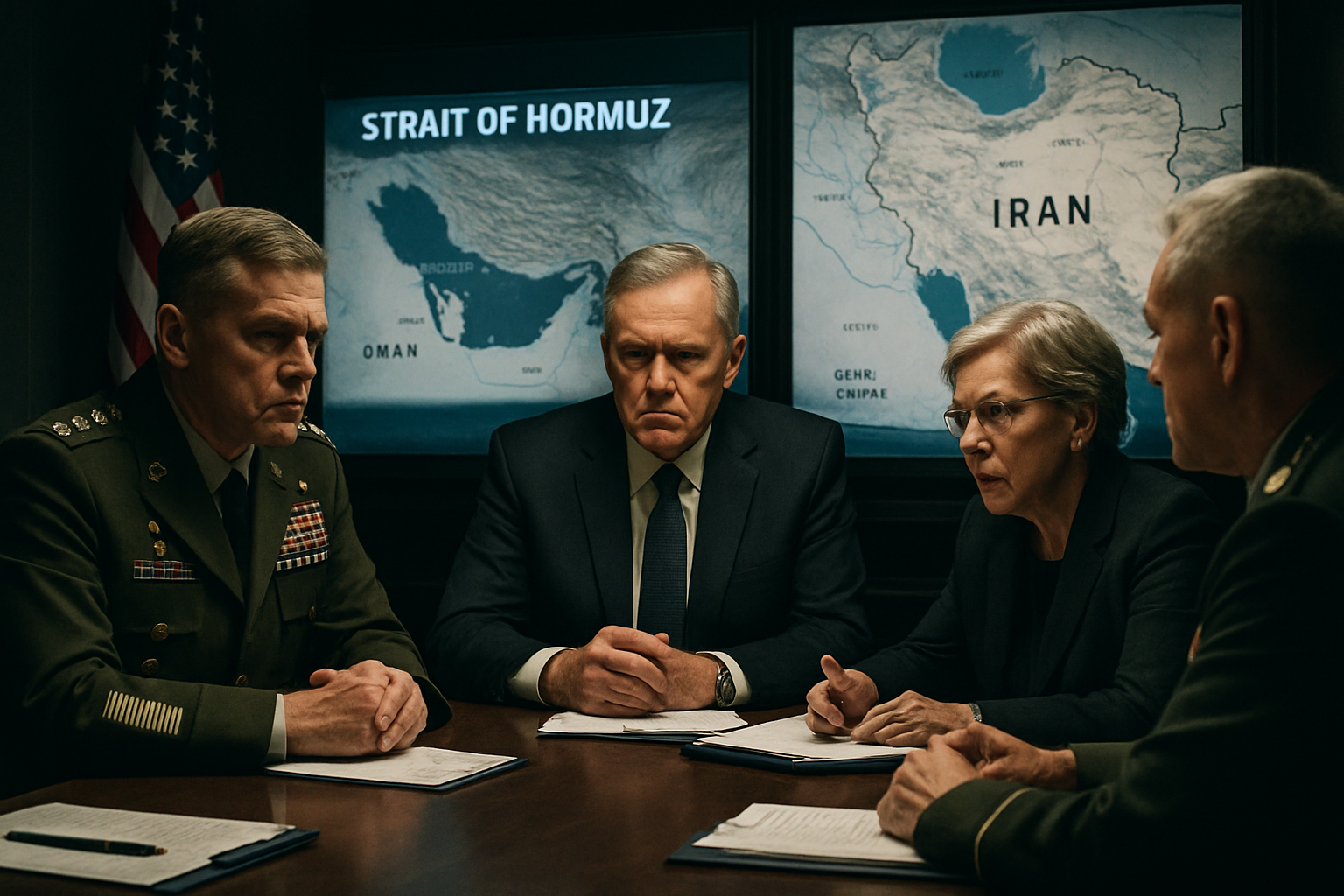
Pentagon officials are actively discussing military options against Iran, including a potential blockade of the Strait of Hormuz, while the US Treasury announced the seizure of $344 million in Iran-linked cryptocurrency assets as tensions reach a critical juncture following the collapse of Pakistan-mediated peace talks.
The dual-track escalation marks the most significant deterioration in US-Iran relations since the historic ceasefire brokered by Pakistan in April 2026, which temporarily prevented what many considered the most dangerous international crisis since the Cold War.
Pentagon Strategic Options Under Review
According to defense sources familiar with the discussions, Pentagon planners are examining multiple military scenarios as diplomatic channels remain stalled. The strategic options under consideration include naval enforcement actions in the Persian Gulf, targeted strikes on Iranian nuclear facilities, and comprehensive blockade operations affecting the Strait of Hormuz—the critical waterway through which 40% of global oil transit occurs.
The military planning comes amid Iran's continued control over strategic shipping lanes and its maintenance of uranium enrichment at 60% purity, approaching weapons-grade levels. Intelligence assessments suggest Iran possesses sufficient enriched uranium for multiple nuclear weapons if a weaponization decision is made.
"Iran can't blackmail us with strait control. Our naval forces remain prepared to ensure freedom of navigation in international waters."
— Senior Pentagon Official
The Pentagon's renewed focus on military options reflects frustration with the breakdown of diplomatic initiatives, particularly the failure of Pakistan's unprecedented mediation effort that had achieved a temporary ceasefire in April 2026.
Treasury Strikes Iranian Crypto Network
In parallel with military planning, Treasury Secretary Scott Bessent announced the freezing of $344 million in cryptocurrency assets linked to Iranian entities, representing one of the largest digital asset seizures targeting Iran's sanctions evasion network.
The Treasury action specifically targets Iran's cryptocurrency payment system, which the Islamic Republic has been using to circumvent traditional banking sanctions. Iranian authorities had implemented a "$1 per barrel" cryptocurrency payment mechanism for oil tankers transiting the Strait of Hormuz, effectively creating an alternative financial infrastructure outside the global banking system.
Bessent also declared that renewal of the one-time waiver for Iranian oil at sea is "totally off the table," signaling a hardening of the US economic pressure campaign against Tehran.
Nuclear Standoff Intensifies
The current crisis stems from Iran's refusal to abandon its nuclear program despite months of diplomatic engagement. Iran continues enriching uranium at 60% purity—significantly above the 3.67% limit established in the original Joint Comprehensive Plan of Action (JCPOA) and approaching the 90% threshold considered weapons-grade.
Former IAEA inspector Dr. Yusri Abu Shadi has confirmed that Iran's current stockpile of 400+ kilograms of enriched uranium makes weapons development "easily achievable" if Iran makes that strategic decision. This nuclear capability has become the central sticking point preventing any sustainable diplomatic resolution.
The fundamental disagreement remains unchanged from previous negotiation rounds: Iran excludes ballistic missiles and regional proxy support as "red lines" from any nuclear-only talks, while the US insists on a comprehensive agreement addressing missiles, armed groups, and human rights issues.
Regional Coalition Under Pressure
The escalation threatens the unprecedented regional coalition that had supported diplomatic solutions throughout 2026. Saudi Arabia, the UAE, Qatar, and Egypt had maintained extraordinary consensus backing the peace process, but Iranian attacks on their territories during previous crises severely strained this unity.
During Iran's "Operation True Promise 4" retaliation campaign, the UAE suffered one civilian killed in Abu Dhabi, Kuwait recorded 32 injured in airport strikes, and Qatar had 8 wounded while intercepting 65 missiles and 12 drones. Egyptian President Sisi had warned of "comprehensive chaos" spreading to "sisterly countries" if the conflict escalated further.
Congressional Opposition Mounts
Any military action faces significant domestic opposition, with Congressional support for military operations against Iran remaining at historically low 25% levels. The previous "Operation Epic Fury" cost $11.3 billion in its first week alone, with Pentagon operations extending far beyond initial projections.
Senator Blumenthal has expressed being "more concerned than ever" about potential ground troop deployments, while financial markets continue to serve as an "ultimate constraint" on prolonged military confrontation. The economic costs of previous military actions, combined with energy market volatility, have created powerful incentives for diplomatic solutions.
Energy Security Implications
The potential for Strait of Hormuz disruption remains the most significant global concern. Previous Iranian mining operations in the waterway led to oil prices surging above $119 per barrel, triggering the largest strategic petroleum reserve release in the International Energy Agency's 50-year history—400 million barrels from 32 countries.
Major shipping companies Maersk and MSC had suspended Persian Gulf operations during previous crises, stranding over 150 tankers worth billions in cargo. The vulnerability of this single chokepoint handling 40% of global oil transit has exposed fundamental weaknesses in the international energy architecture.
Nuclear Governance Crisis
The current standoff occurs against the backdrop of broader nuclear governance challenges. The New START treaty between the US and Russia expired in February 2026, marking the first time in over 50 years that these nuclear powers operate without formal arms control constraints. Combined with China's nuclear expansion and Iran's advancing capabilities, UN Secretary-General António Guterres has warned that nuclear risks are at their "highest in decades."
International Diplomatic Isolation
The US faces significant challenges in building international support for military action. NATO allies have largely rejected American requests for naval support, with UK Prime Minister Starmer declaring Britain "will not be dragged into Iran war." France and Germany continue to emphasize diplomatic approaches over military solutions.
This represents one of the most significant rejections of American military leadership since the Iraq War in 2003, highlighting the changing dynamics of international coalition-building in the multipolar era.
Path Forward Uncertain
The combination of military planning and financial pressure represents the Biden administration's dual-track approach to Iran policy. However, the fundamental structural disagreements that have prevented diplomatic breakthroughs for over a decade remain unchanged.
Pakistan's innovative "message relay system" mediation had previously demonstrated that middle-power diplomacy could bridge major adversaries when traditional mechanisms failed. The success of the "Islamabad Accord" framework in preventing global catastrophe showed that diplomatic solutions remained possible even in the darkest hours.
Yet the collapse of those talks over nuclear program disagreements and the Lebanon loophole—Netanyahu's exclusion of Lebanon from ceasefire arrangements—highlighted the complexity of achieving comprehensive solutions in the current regional environment.
Template-Setting Implications
The current crisis represents what experts call a "template-setting moment" for 21st-century international relations. The choice between diplomatic innovation and military confrontation will establish precedents for how the international community addresses nuclear proliferation, territorial sovereignty, and energy security challenges in an increasingly multipolar world.
UN Secretary-General Guterres has characterized the situation as the "greatest test of multilateral cooperation in the modern era," with implications extending far beyond the immediate US-Iran dispute.
As Pentagon officials continue their strategic deliberations and Treasury tightens financial pressure through cryptocurrency seizures, the international community watches for signs that innovative diplomatic solutions can still prevent the return to what many consider the most dangerous crisis since the Cold War's end.
The stakes encompass regional war prevention, global energy security, nuclear governance credibility, and the effectiveness of international law enforcement mechanisms—outcomes that will shape international stability for decades to come.