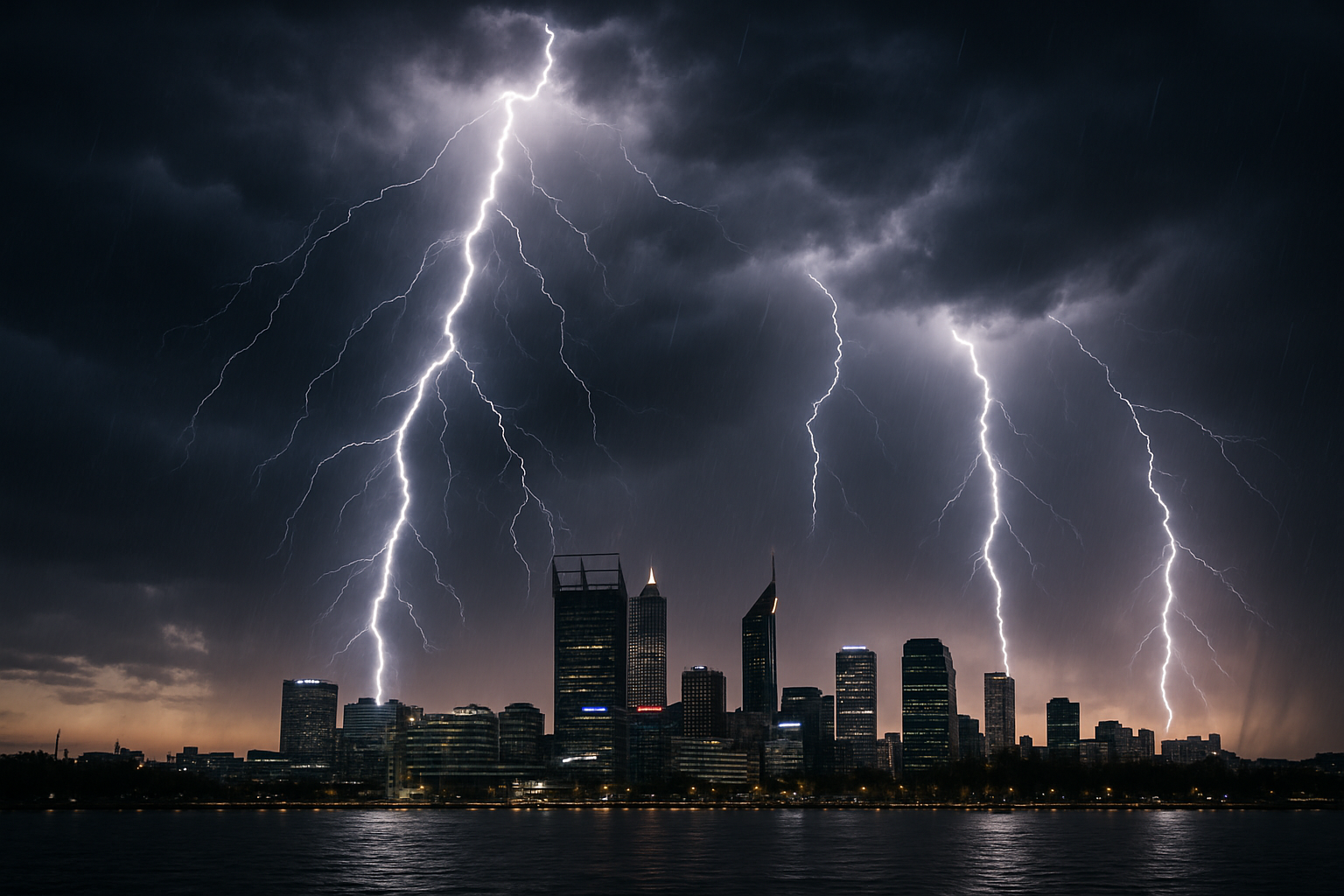
Three people were struck by lightning in Perth on the same day during a severe summer storm, marking an extremely rare meteorological occurrence that has highlighted the dangerous unpredictability of Western Australia's weather patterns.
The lightning strikes, which affected two teenagers and a grandfather walking with his dog, represent the first multiple-victim lightning incident in Perth since 2022, when a single person was last struck in the metropolitan area. The extraordinary nature of three separate lightning strikes occurring within the same 24-hour period has prompted weather experts to examine the specific atmospheric conditions that created such dangerous circumstances.
The incidents occurred as a powerful summer storm system moved across Perth, bringing with it the type of electrical activity that meteorologists describe as exceptionally hazardous. Wild weather conditions accompanying the storm also sparked a house fire and created significant traffic chaos across suburban areas, demonstrating the broader impact of the severe atmospheric disturbance.
Multiple Lightning Strike Victims
According to emergency services reports, the three lightning strike victims were caught in separate incidents as the storm cell moved through different areas of Perth. The two teenagers were among the youngest lightning strike victims recorded in Western Australia in recent years, while the grandfather and his dog represented a tragic reminder of the vulnerability of people caught outdoors during electrical storms.
Lightning strikes are among the most unpredictable and dangerous weather phenomena, with the human body providing an excellent conductor for electrical discharge. The fact that three separate individuals were struck within the same geographical area on the same day represents a statistical anomaly that weather experts are calling "extremely rare."
Emergency responders were deployed to multiple locations across Perth as reports of the lightning strikes came in. The coordination required to manage three simultaneous lightning-related medical emergencies tested the city's emergency response capabilities and highlighted the importance of rapid medical intervention in such cases.
Atmospheric Conditions and Storm Development
The summer storm that produced the multiple lightning strikes developed under specific atmospheric conditions that created an unusually active electrical environment. Meteorological analysis suggests that the combination of high humidity, temperature differentials, and upper-level atmospheric instability contributed to the storm's exceptional lightning production.
Perth's location and topography can occasionally create conditions where storm systems become particularly intense and long-lasting. The interaction between sea breezes from the Indian Ocean and heated land masses can produce the type of convective activity that generates frequent and powerful lightning discharges.
Weather monitoring systems recorded significant electrical activity throughout the storm's duration, with multiple cloud-to-ground lightning strikes occurring across the metropolitan area. The concentration of strikes in areas where people were present created the dangerous circumstances that led to the three victims being affected.
Emergency Response and Medical Intervention
Emergency services responded rapidly to each of the lightning strike incidents, with paramedics, police, and fire services coordinating across multiple locations. Lightning strike victims require immediate medical attention due to the potential for cardiac arrest, severe burns, neurological damage, and other life-threatening complications.
The medical response to lightning strikes involves careful assessment of both visible injuries and potential internal damage. Electrical burns, cardiac rhythm abnormalities, and neurological effects can all result from lightning strikes, making rapid transportation to hospital facilities crucial for patient survival and recovery.
Perth's emergency services demonstrated their preparedness for multiple simultaneous incidents, though the unusual nature of three lightning strikes in one day created logistical challenges in terms of resource allocation and coordination between different emergency response teams.
Historical Context and Rarity
The last recorded lightning strike incident in Perth occurred in 2022, making the current multiple-victim event particularly notable for its timing and scale. Historical weather records for Western Australia show that lightning strikes affecting multiple people within a single storm system are exceptionally uncommon.
Lightning strike statistics for Australia indicate that the country experiences thousands of cloud-to-ground lightning strikes annually, but the vast majority occur in unpopulated areas or do not result in human casualties. Urban lightning strikes affecting multiple victims represent a fraction of total lightning activity.
The rarity of the Perth incident has prompted discussions among meteorologists and emergency management professionals about public awareness of lightning safety and the unpredictable nature of severe weather events in urban environments.
Broader Storm Impact
Beyond the lightning strikes, the severe weather system caused significant disruption across Perth's metropolitan area. A house fire sparked by the storm created additional emergency response demands, while traffic chaos resulted from reduced visibility, flooding, and fallen debris blocking major roadways.
The storm's impact extended beyond immediate safety concerns to affect transportation networks, with several roads temporarily closed due to flooding and debris. Public transport services experienced delays and disruptions as operators prioritized passenger safety during the dangerous weather conditions.
Property damage from the storm included not only the house fire but also reports of roof damage, flooding, and fallen trees across suburban areas. The combination of lightning, heavy rain, and strong winds created multiple hazards that tested Perth's infrastructure resilience.
Lightning Safety and Public Awareness
The multiple lightning strike incident has renewed focus on public awareness of lightning safety measures. Emergency services emphasize that lightning can strike several kilometers away from the main storm center, making it dangerous to remain outdoors even when storms appear distant.
Safety experts recommend seeking shelter in substantial buildings or hard-topped vehicles at the first sign of electrical storm activity. Avoiding open areas, tall objects, and bodies of water during thunderstorms can significantly reduce lightning strike risk.
The Perth incident serves as a stark reminder that lightning strikes can occur with little warning and that multiple strikes within a confined area, while rare, are possible under certain atmospheric conditions. Public education campaigns may need to emphasize the unpredictable nature of lightning and the importance of taking all electrical storm warnings seriously.
Climate and Weather Pattern Considerations
The severe storm that produced the lightning strikes occurred within the context of broader climate patterns affecting Western Australia. Summer storm systems have shown increasing intensity in recent years, with meteorologists noting changes in storm frequency and electrical activity.
Perth's geographic location makes it susceptible to both tropical and temperate weather influences, creating conditions where severe thunderstorms can develop rapidly and intensify significantly. The city's growing urban heat island effect may also contribute to increased convective activity during summer months.
Climate research suggests that warming atmospheric conditions can lead to more intense thunderstorm activity, potentially increasing the likelihood of dangerous lightning events in urban areas. The Perth incident may represent an example of how climate change is affecting local weather patterns and storm intensity.
Infrastructure and Emergency Preparedness
The multiple lightning strike event has highlighted both the strengths and potential vulnerabilities in Perth's emergency response infrastructure. The successful coordination of emergency services across three separate incident locations demonstrated effective emergency management protocols.
However, the unusual nature of simultaneous lightning strikes has prompted discussions about resource allocation during extreme weather events and the importance of maintaining adequate emergency response capacity for multiple concurrent incidents.
Weather monitoring and early warning systems played a crucial role in alerting the public to dangerous conditions, though the specific locations and timing of lightning strikes remained unpredictable despite advanced meteorological forecasting capabilities.
Recovery and Investigation
As Perth recovers from the severe storm and its multiple lightning strike incidents, investigations into the specific atmospheric conditions that created such dangerous circumstances are ongoing. Meteorological analysis will examine radar data, atmospheric measurements, and lightning detection systems to better understand the event.
The condition and recovery progress of the three lightning strike victims remains a priority for medical professionals, with ongoing monitoring required for potential delayed effects of electrical injury. Lightning strike survivors often require extended medical observation and rehabilitation.
The incident will likely contribute to research into lightning strike patterns, urban meteorology, and emergency response protocols for rare but dangerous weather events. The lessons learned may inform future public safety strategies and emergency preparedness planning for similar circumstances.