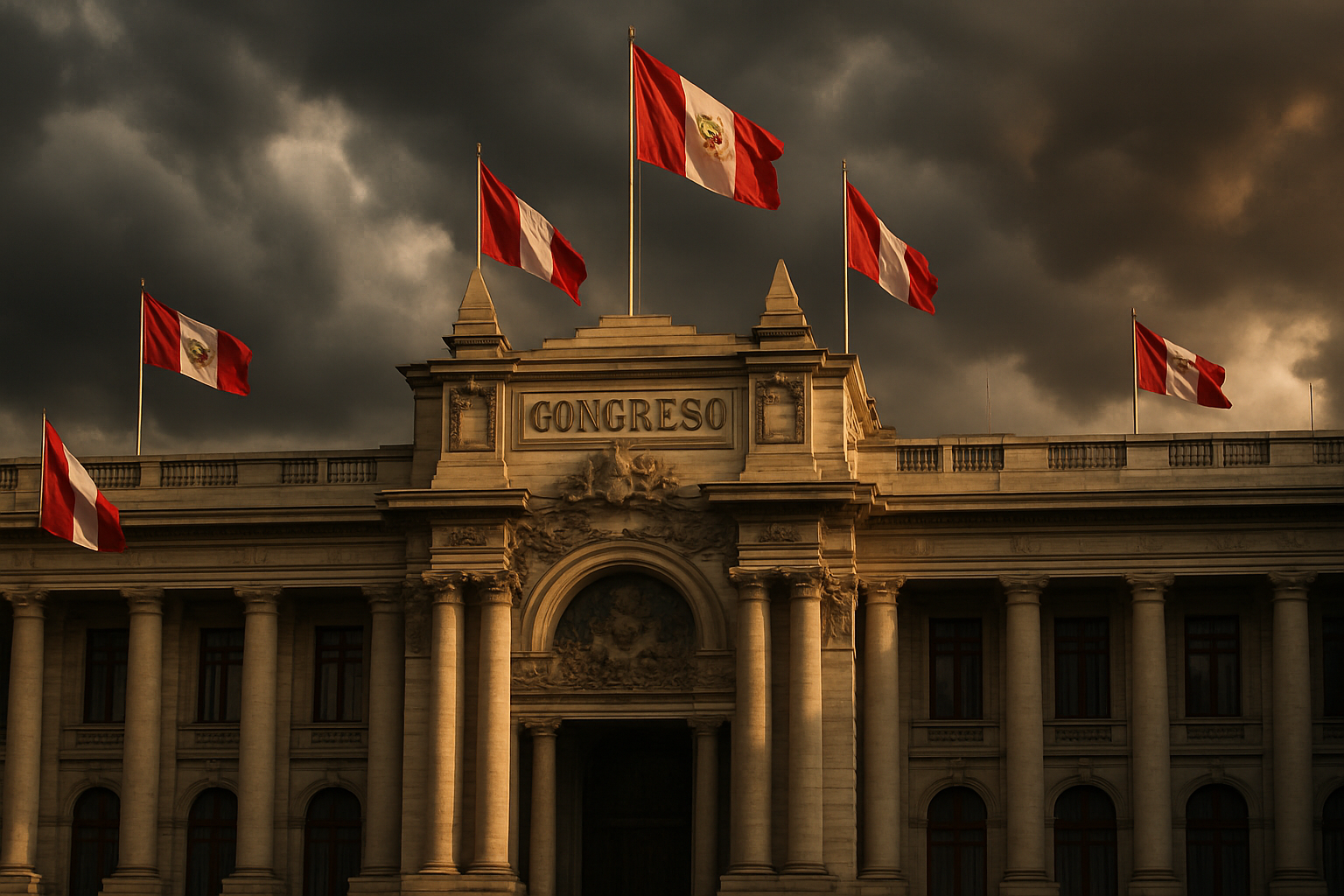
José María Balcázar, an 83-year-old congressman from the leftist Perú Libre party, has assumed Peru's interim presidency following a congressional vote that removed José Jerí after just four months in office, marking yet another chapter in Peru's ongoing political crisis that has seen eight presidential changes in nearly a decade.
The National Congress elected Balcázar on Wednesday night, February 19, 2026, making him the oldest president in Peru's history and the eighth leader to occupy the presidential palace since 2016. His elevation comes amid mounting concerns about Peru's democratic stability, with regional leaders and international observers expressing cautious optimism while warning of continued institutional fragility.
From Congressional Vote to Presidential Palace
Balcázar secured his position through Peru's constitutional mechanism that automatically elevates the Congress president to the national presidency during institutional vacuums. The vote followed Jerí's removal over the "Chifagate" scandal, involving secret meetings with Chinese businessmen that raised sovereignty concerns.
In his first public statements, the new president promised to open "a round of dialogue to ensure transparent elections in April" and sought to distance himself from his party's Marxist ideology. "This is not time to fight," Balcázar declared, calling for a "peaceful and transparent democratic transition" while ruling out pardons for former president Pedro Castillo.
"Today we are being released. There is much to discuss regarding the present and future of Peru. Always with the truth at the forefront."
— José María Balcázar, Peru's Interim President
However, political analyst Fernando Rospigliosi warned of underlying concerns: "Balcázar is a person with whom one can deal, but who is behind him?" This question reflects broader anxieties about the influence of Perú Libre, the party that brought Pedro Castillo to power in 2021 before his eventual removal and imprisonment.
A Pattern of Institutional Crisis
Balcázar's ascension continues a troubling pattern of political instability that has plagued Peru since 2016. The cycle includes the removal of Martín Vizcarra in 2020, Pedro Castillo's failed coup attempt in 2022, Dina Boluarte's removal in 2025, and now Jerí's brief tenure.
This systematic governance failure demonstrates how Peru's constitutional "vacancy" procedure has been repeatedly weaponized by Congress against weak executives. The average presidential mandate duration has decreased by 70% since the Pedro Pablo Kuczynski period, with the country experiencing what observers characterize as chronic institutional breakdown.
The business confederation CONFIEP has warned that Peru "cannot afford a new uncertainty stage" weeks before the crucial April elections, highlighting how political instability threatens economic confidence and international investment in a nation of 33 million citizens.
Economic Stability Amid Political Turmoil
Despite the political upheaval, Peru's financial markets have shown remarkable resilience. The Lima stock exchange operated without major disruptions, with the general index advancing 0.41% by mid-morning following Balcázar's election, demonstrating how markets have adapted to the country's chronic political volatility.
This stability reflects investors' focus on Peru's underlying economic fundamentals rather than its revolving door of political leadership. However, the continued uncertainty raises questions about long-term confidence and the country's ability to attract sustained international investment.
Controversial Background and Ongoing Investigations
Balcázar's presidency has not been without immediate controversy. The Peruvian prosecutor's office has been investigating him since 2025, and his past statements defending child marriage have drawn sharp criticism from human rights organizations and political opponents.
Opposition congressmen Miguel Ángel Torres criticized the new president, stating: "If there is a constant in the left, it is that it lives in chaos. In 50 days they can destroy the country." Such statements reflect the deep polarization that continues to characterize Peruvian politics.
Adding to the complexity, Balcázar has indicated he will evaluate granting safe conduct to Betssy Chávez, the former prime minister convicted for her role in Castillo's attempted coup, who is currently seeking asylum in the Mexican embassy.
Regional and International Reactions
The international response to Balcázar's presidency has been cautiously measured. Mexican President Claudia Sheinbaum stated her government would "wait to see if it is feasible to restore relations with Peru," indicating the complex diplomatic challenges facing the new administration.
Regional media coverage has been extensive, with outlets characterizing Peru's situation as an "endless crisis" that affects broader Latin American democratic stability. International observers are monitoring the situation as a test case for democratic resilience during a period of global democratic stress.
The timing is particularly sensitive given Peru's upcoming elections and its strategic importance in the Andean region. The country's political stability directly impacts regional cooperation on security, trade, and migration issues.
The April Elections Challenge
Perhaps Balcázar's most critical challenge will be managing Peru's April presidential and congressional elections while maintaining public confidence in democratic institutions. With only approximately five months in office, his mandate is primarily focused on ensuring electoral integrity rather than implementing substantial policy changes.
The new president has convened urgent meetings with political leaders at the Government Palace to address key issues including public security, the state oil company Petroperú, and social security reform. These discussions will test his ability to build consensus across Peru's fragmented political landscape.
The success of the April elections will largely determine whether Peru can break its cycle of political crisis and achieve the stability necessary for effective governance and economic development. International observers will be closely monitoring the electoral process as an indicator of Peru's democratic commitment.
Structural Problems Remain Unresolved
Beyond immediate electoral management, Peru faces deeper structural challenges that have contributed to its governance crisis. These include the weaponization of constitutional procedures, party system fragmentation, and the absence of consensus about basic governance rules.
While democratic forms are maintained, their effectiveness has been severely compromised by repeated transitions and institutional fragility. The fundamental question remains whether Peru's institutions can provide stability and effectiveness or will continue an indefinite cycle of dysfunction.
The coming months will be crucial in determining whether Peru can transition from crisis management to democratic consolidation. The test is not just about managing another political transition, but about establishing sustainable governance patterns that serve the country's 33 million citizens.
As Peru enters this new phase under Balcázar's interim leadership, the stakes extend far beyond national borders. The country's experience provides a cautionary tale about democratic fragility and the consequences of institutional weaponization, while also offering potential lessons for democratic renewal and resilience in challenging times.