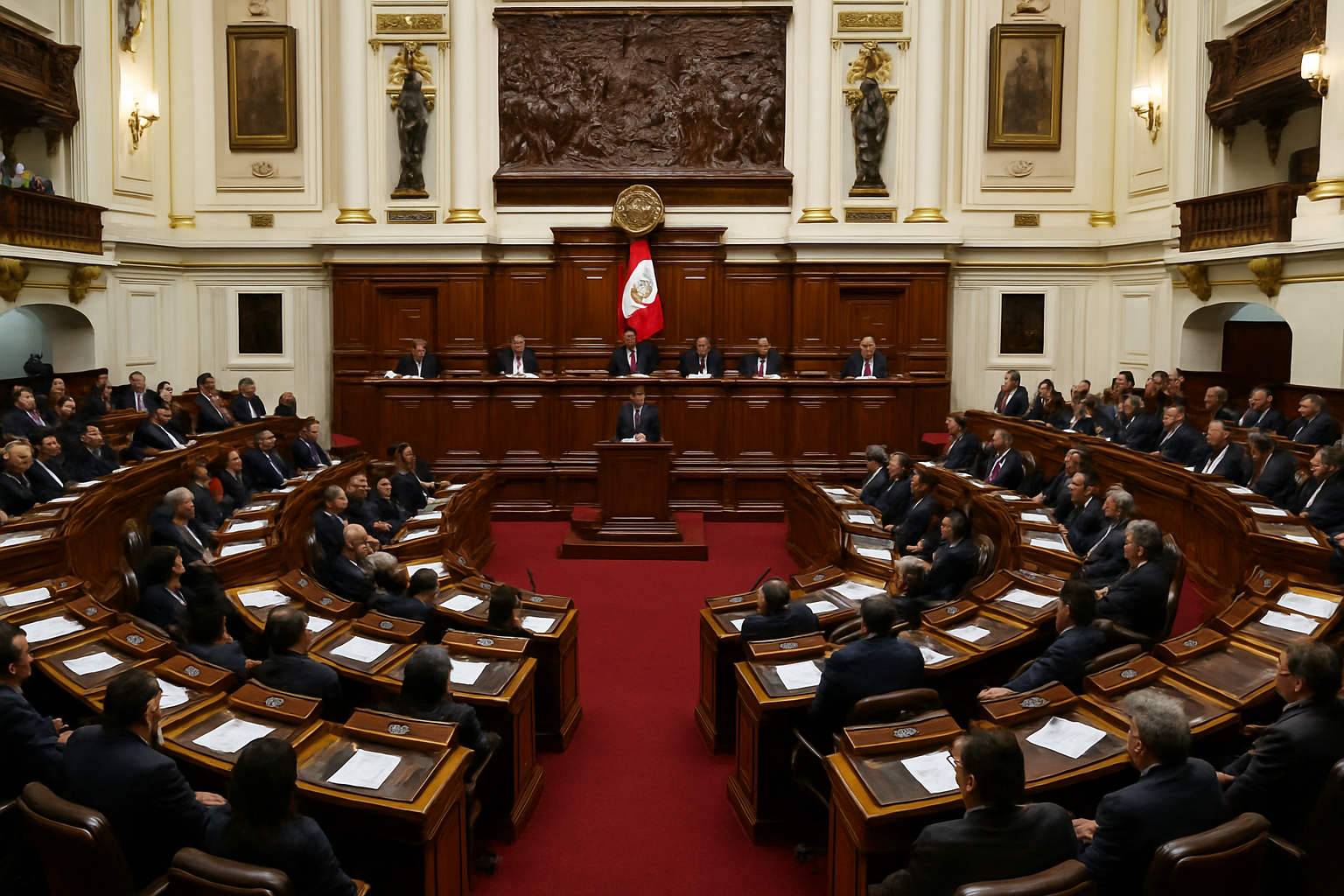
Peru's Congress convenes Wednesday evening at 6:00 PM to elect a new legislative president who will automatically assume the nation's presidency, following the dramatic censure of José Jerí just one day earlier in a decisive vote that removed the country's eighth president in the past decade.
Four congressional candidates have formally submitted their nominations to succeed Jerí in what represents another pivotal moment in Peru's ongoing constitutional crisis. The candidates include right-wing legislators María del Carmen Alva and Héctor Acuña, alongside left-wing contenders Edgar Reymundo and José Balcázar, each representing different political visions for the country's immediate future.
The Censure That Changed Everything
José Jerí's removal came after an extraordinary congressional session where lawmakers voted to censure both his roles as Congress President and interim President of the Republic. The swift action followed mounting allegations and controversies that had eroded confidence in his leadership during his brief tenure.
Jerí's departure from office Tuesday evening marked the end of one of Peru's shortest presidential terms in recent democratic history, lasting just four months. On Wednesday, the deposed leader offered his farewell through social media, addressing "all Peruvians" after being forced from both positions by Congress in what was described as an expedited removal process.
"The Congress has spoken, and I respect the institutional decision. I thank the Peruvian people for their support during my time in office."
— José Jerí, Former President (via social media)
The Four Contenders
The race to replace Jerí has crystallized around four distinct political profiles, each representing different factions within Peru's fragmented political landscape. All candidatures were officially submitted before Tuesday's 6:00 PM deadline to Congressional Official Mayor Giovanni Forno.
María del Carmen Alva emerges as perhaps the most experienced candidate, having previously served as Congress President during the 2021-2022 period. The 58-year-old lawyer from the conservative Acción Popular party brings institutional knowledge and prior executive experience to her campaign. Her candidacy was formally presented by AP parliamentary spokesperson Edwin Martínez, emphasizing continuity and administrative competence.
Héctor Acuña represents the Honor y Democracia bloc, positioning himself as an alternative right-wing option with a different political approach than Alva's traditional conservatism. His campaign emphasizes governmental stability and institutional respect during the critical months leading up to April's general elections.
On the left, Edgar Reymundo and José Balcázar offer contrasting visions to the right-wing alternatives, potentially representing a significant ideological shift if either succeeds. Their candidacies reflect ongoing tensions about Peru's political direction and the possibility of left-wing leadership during this transitional period.
Constitutional Succession and Electoral Timeline
Peru's constitutional framework dictates that the Congress President automatically assumes the national presidency when that office becomes vacant, making Wednesday's legislative vote effectively a presidential election. This succession mechanism has been repeatedly activated during Peru's recent political instability, contributing to the country's reputation for governmental volatility.
The timing proves particularly critical as Peru approaches its April general elections, scheduled to elect both a new president and Congress. The winning candidate will govern for approximately five months, managing the electoral process while addressing ongoing governance challenges that have plagued successive administrations.
Congressional rules require a simple majority for victory in the first round of voting. If no candidate achieves this threshold, a runoff vote between the top contenders will determine the winner, potentially extending the selection process and increasing political uncertainty.
Political Dynamics and Party Tensions
The congressional leadership race has exposed deep fractures within Peru's political establishment, with traditional party loyalties increasingly strained by personal ambitions and ideological differences. Tensions between major political forces have intensified, particularly between Renovación Popular and Fuerza Popular, who have engaged in public disputes through social media regarding the electoral process.
These inter-party conflicts reflect broader concerns about political stability and the ability of Peru's institutions to manage democratic transitions effectively. The disputes have included accusations and counter-accusations about candidate qualifications and party loyalty, undermining confidence in the electoral process.
Meanwhile, prosecutorial authorities have moved quickly to investigate Jerí's administration, with prosecutors intervening at the Government Palace just one day after his removal. This rapid legal response demonstrates the ongoing accountability pressures facing Peruvian political leaders and the potential legal consequences of holding high office.
Economic and International Implications
Peru's continued political instability carries significant economic consequences, with business organizations repeatedly warning about the costs of governmental uncertainty. The CONFIEP business confederation has emphasized that the country "cannot afford a new stage of political uncertainty" just weeks before crucial elections that could determine Peru's economic direction for the next five years.
International observers continue monitoring Peru's democratic resilience, particularly given the country's pattern of presidential removals and early departures from office. The situation has drawn regional attention as other Latin American countries face similar challenges of institutional stability and democratic governance.
Financial markets have shown resilience despite the political turbulence, with Lima's stock exchange and the sol currency maintaining relative stability. This market response suggests that investors have internalized Peru's political volatility as a manageable risk factor, though continued instability could eventually impact economic confidence.
The Path Forward
Wednesday evening's congressional vote represents more than a simple leadership change—it constitutes a critical test of Peru's democratic institutions and their capacity to manage political transitions during periods of intense public scrutiny. The outcome will influence not only the country's immediate governance but also its international reputation and democratic credibility.
The successful candidate will inherit significant challenges, including managing the April electoral process, maintaining governmental continuity, addressing ongoing institutional reforms, and attempting to restore public confidence in democratic institutions. With only five months in office, the new president will have limited time to implement substantive policy changes while ensuring electoral integrity.
For Peru's 33 million citizens, Wednesday's vote represents another chapter in their country's ongoing struggle to achieve political stability while maintaining democratic principles. The international community watches closely as Peru continues navigating one of Latin America's most complex constitutional crises, hoping this latest transition can provide the stability necessary for effective governance and democratic consolidation.