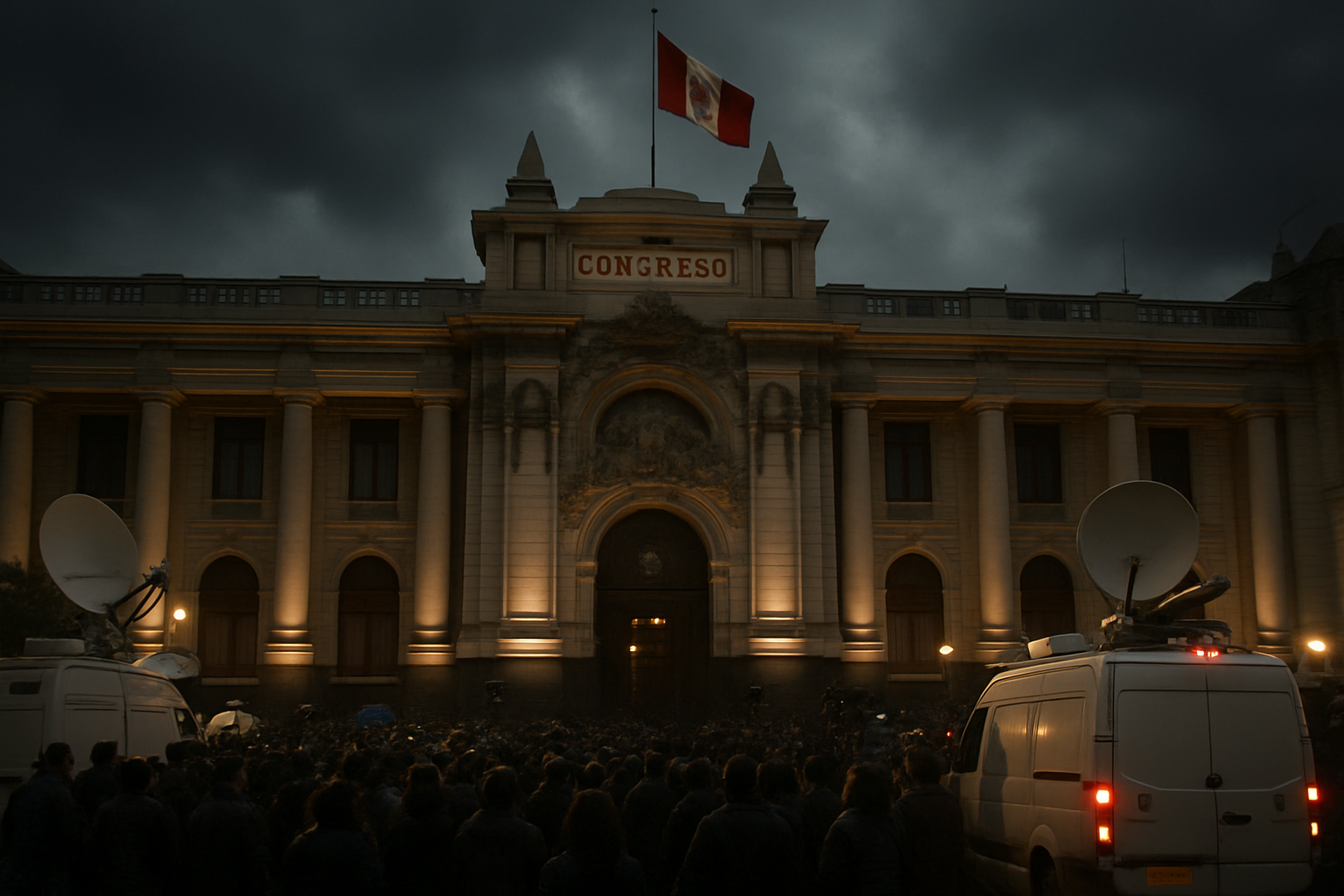
Peru's Congress voted to remove interim President José Jerí from office after just four months in power, making him the eighth president to leave office prematurely in the past decade following a corruption scandal involving secret meetings with Chinese businessmen.
In what lawmakers called an "express impeachment," Congress voted 75-24 to oust the 39-year-old lawyer on Tuesday, February 18, 2026, following the emergence of security camera footage showing Jerí in clandestine meetings with Chinese contractor Zhihua Yang. The scandal, dubbed "Chifagate" after the Peruvian term for Chinese restaurants, has become the latest chapter in Peru's devastating cycle of political instability.
The Chifagate Scandal Unfolds
The crisis began when security footage emerged showing President Jerí arriving at night meetings with Chinese businessman Zhihua Yang, whose companies hold lucrative state contracts. In one particularly damaging video, Jerí appears to conceal his identity by wearing a hooded top while entering Yang's restaurant for what prosecutors describe as undisclosed meetings outside his official agenda.
"The scandal represents not just personal misconduct but raises serious sovereignty concerns given Chinese infrastructure investments in Peru, including the controversial Chancay Port majority-owned by Cosco Shipping."
— Congressional Security Analysis
Constitutional expert Aníbal Quiroga declared any official documents signed by Jerí following his Congressional censure to be "totally invalid," underscoring the complete breakdown of executive authority that preceded the formal removal vote.
A Pattern of Institutional Breakdown
Jerí's removal continues an unprecedented pattern of executive instability that has plagued Peru since 2016. The country has now seen eight presidents in a single decade, with leaders consistently leaving office through impeachment, resignation, or other extraordinary circumstances before completing their terms.
This chronic instability began with the removal of Martín Vizcarra in 2020, followed by Pedro Castillo's failed coup attempt in 2022, and Dina Boluarte's removal in 2025. Each transition has utilized Peru's constitutional "vacancy" procedure, which powerful legislative majorities have repeatedly employed against weakened executives.
The business confederation CONFIEP warned that Peru "cannot afford a new stage of political uncertainty" during the crucial weeks before April's presidential and congressional elections, highlighting the economic costs of continued governmental chaos.
International Dimensions and Sovereignty Concerns
The Chinese connection in the Chifagate scandal has heightened international attention, particularly given Peru's strategic importance in China's Belt and Road Initiative. The undisclosed meetings with contractor Zhihua Yang occurred amid ongoing tensions over Chinese control of critical infrastructure, including the massive Chancay Port project north of Lima.
Previous U.S. warnings about risks to national autonomy from Chinese infrastructure control have taken on new relevance as the scandal exposes potential undisclosed influence channels between Chinese executives and Peru's highest government levels.
Congressional Process and Democratic Dysfunction
The lightning-fast impeachment process saw seven censure motions filed against Jerí, reflecting overwhelming Congressional opposition that had effectively paralyzed his government. The 75-24 vote included participation from 102 lawmakers in the 130-seat Congress, demonstrating broad cross-party consensus for removal.
Acting Congressional Speaker Fernando Rospigliosi scheduled an immediate Wednesday evening session at 6:00 PM to select a new legislative president, who will become Peru's ninth interim president in the current decade of crisis.
"The repeated use of constitutional mechanisms for essentially political objectives has created a cycle where executives struggle against legislative opposition, leading to systematic governance failure beyond individual leaders."
— Regional Democratic Observers
Economic and Social Impact
The political turmoil occurs just weeks before Peru's April presidential and congressional elections, creating uncertainty about the interim government's authority to ensure free and fair electoral processes while managing ongoing governance challenges.
Despite maintaining a democratic framework, Peru's institutional fragility, permanent power clashes, party fragmentation, and absence of political consensus have created chronic instability that threatens the country's 33 million citizens and undermines regional democratic development.
Regional and International Response
The crisis has drawn extensive coverage from regional media, with headlines characterizing Peru's situation as an "endless crisis" affecting democratic stability throughout Latin America. International observers are closely monitoring developments as a test case for democratic resilience during a period of global democratic stress.
The removal occurs against the backdrop of broader challenges facing Latin American democracies, from Venezuela's ongoing transition to democratic governance challenges in Ecuador and other regional countries experiencing various forms of political instability.
Looking Ahead: The Search for Stability
With Peru's eighth presidential change in a decade now complete, the focus turns to Wednesday's Congressional session to select new leadership. The incoming interim president will face the daunting task of maintaining governmental functions while preparing for April elections amid severely damaged public trust in institutions.
The pattern established over the past decade suggests systematic governance failure where constitutional continuity is maintained but effectiveness is compromised by repeated transitions and persistent executive-legislative conflicts. Success will require not just competent interim leadership but fundamental reforms to address the structural problems that have made Peru ungovernable.
As Peru prepares to select its ninth leader in ten years, the international community watches closely to see whether the country can break free from its cycle of political crisis and establish the institutional stability necessary for effective democratic governance and economic development.