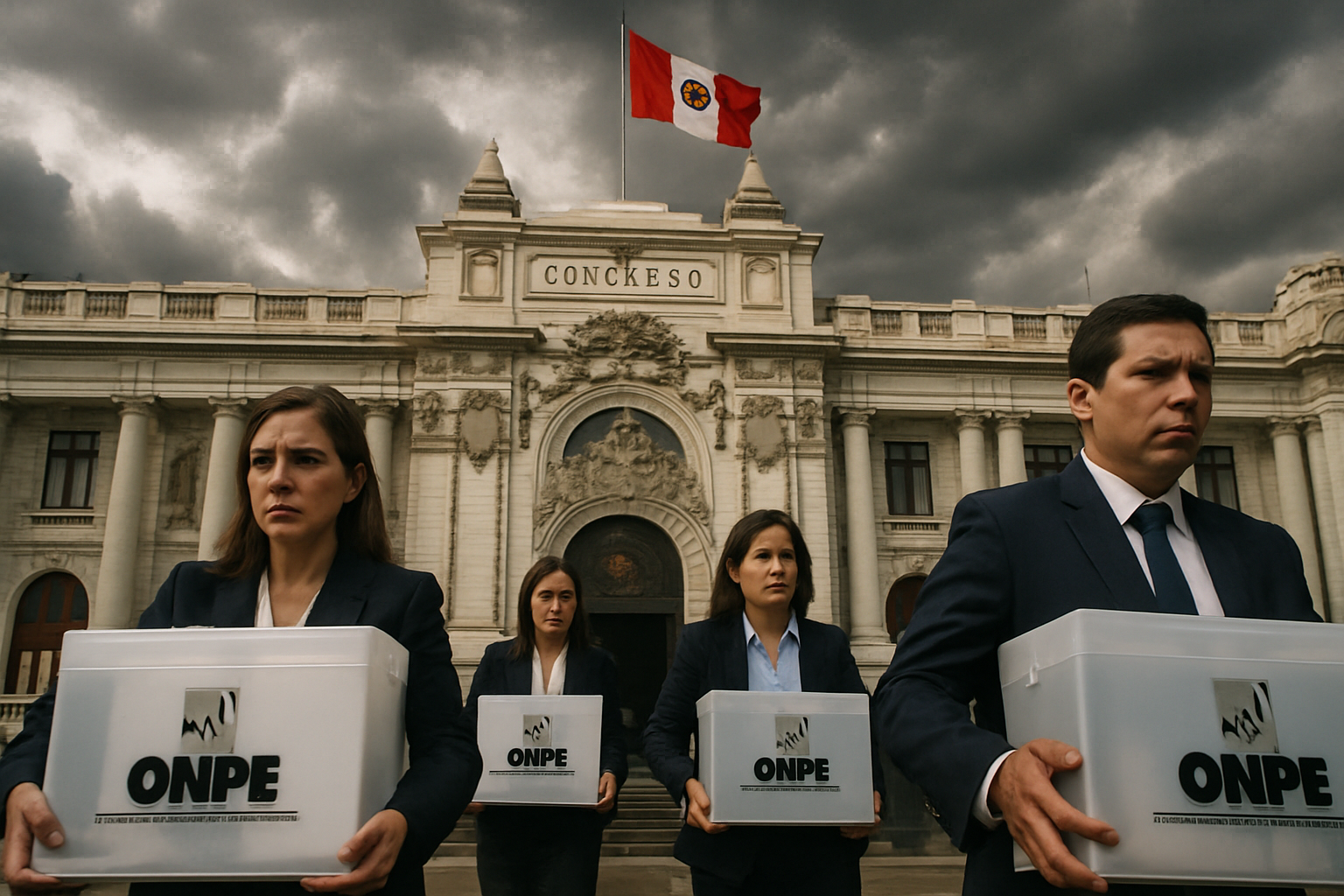
Peru's electoral system faces its most severe crisis in democratic history as pressure intensifies on election authorities amid persistent delays in the presidential vote count, with calls mounting for the removal of the head of the National Office of Electoral Processes (ONPE) over alleged irregularities and organizational failures.
Five days after Peru's April 12 presidential election, the vote counting process remains stalled at 93.359% of ballots processed, fueling widespread allegations of electoral misconduct and raising serious questions about the integrity of the democratic process. The delay has created a constitutional crisis as the nation awaits confirmation of which candidate will face conservative Keiko Fujimori in the anticipated June runoff election.
Electoral Crisis Deepens as Count Stalls
The crisis reached a crescendo Friday when calls to remove ONPE chief Piero Corvetto intensified dramatically. Opposition leaders, civil society groups, and international observers have expressed growing alarm over what they characterize as systematic organizational failures that prevented more than 52,000 voters from casting ballots across 187 polling stations on election day.
Roberto Burneo, president of the National Jury of Elections (JNE), delivered a scathing rebuke of ONPE's handling of the election process, specifically contradicting earlier claims about the transportation of ballot boxes. ONPE was forced to issue a public correction after Burneo clarified that "there was no inspector or police officer present during the transportation of ballot boxes containing voting ballots."
"ONPE now says that an official gave 'inaccurate information' and offers apologies. This level of confusion and misinformation from our electoral authorities is completely unacceptable in a democracy."
— Constitutional Law Expert, Universidad San Marcos
The electoral chaos has been particularly acute in Lima's peripheral districts, including San Juan de Miraflores, Lurín, and Pachacámac, where missing ballot boxes, voting records, and essential electoral materials forced unprecedented voting extensions. The systematic nature of these failures has raised questions about whether they represent mere incompetence or deliberate interference in the democratic process.
Historical Context of Political Instability
This electoral crisis unfolds against the backdrop of Peru's unprecedented political instability, with the nation seeking its ninth president in a decade. The pattern of chronic governmental dysfunction has severely damaged institutional trust and created a climate of suspicion around all democratic processes.
The current electoral controversy follows February's removal of President José Jerí over the "Chifagate" scandal involving secret meetings with Chinese contractor Zhihua Yang. This marked the eighth presidential change since 2016, as the constitutional "vacancy" procedure has been repeatedly weaponized, reducing average presidential tenure by 70%.
Business confederation CONFIEP has warned that Peru "cannot afford a new stage of uncertainty," emphasizing the economic costs of prolonged political instability. The confederation's concerns reflect broader anxiety within the international investment community about Peru's governance capacity and democratic resilience.
International Stakes and Regional Implications
The electoral crisis carries significant implications beyond Peru's borders, with regional observers characterizing the situation as an "endless crisis" affecting Latin American democratic stability. International election monitors have praised JNE's decision to extend voting hours as "timely," while simultaneously questioning ONPE's competence to manage complex electoral processes.
The controversy has also raised sovereignty concerns regarding Chinese influence through the Belt and Road Initiative, particularly following the Chifagate scandal's revelations about undisclosed meetings with Chinese contractors holding major infrastructure contracts, including the strategic Chancay Port project.

Candidate Positions and Runoff Implications
Despite the counting delays, Keiko Fujimori has maintained her lead with approximately 17% of valid votes in her fourth consecutive presidential attempt. Her security-focused platform has resonated with voters frustrated by rising violence, organized crime, and daily extortions that have reshaped life in Lima and other major cities.
The battle for second place remains contested, with Roberto Sánchez from the left-wing coalition holding a narrow lead at 12%. However, Rafael López Aliaga, who trails in third place with 11.9%, has threatened protests over alleged fraud, despite Peru's Attorney General finding no evidence of electoral irregularities.
The fragmented nature of the election, with 35 candidates competing, has virtually guaranteed a runoff scenario that will extend the uncertainty period until June. This prolonged electoral process poses additional challenges for institutional stability and economic confidence.
Systemic Failures and Democratic Legitimacy
The current crisis represents more than isolated organizational failures; it demonstrates systematic problems with Peru's electoral infrastructure. The inability to properly staff 187 voting locations, the confusion over ballot transportation protocols, and the contradictory information provided by electoral authorities point to deeper institutional weaknesses.
Former constitutional tribunal member Samuel Abad has characterized the situation as a "serious democratic failure affecting fundamental voting rights." The crisis has exposed critical gaps in electoral administration that require comprehensive reform to restore public confidence in democratic processes.
"What we're witnessing is not just incompetence but a breakdown of institutional capacity that threatens the very foundation of our democracy. The right to vote is sacred, and when that right is compromised on this scale, it undermines the entire system."
— Samuel Abad, Constitutional Law Expert
Business and Economic Concerns
The prolonged electoral uncertainty has prompted strong condemnation from Peru's business sector. The Lima Chamber of Commerce characterized the extension of voting hours as "proof of preparation failure" that should have been "irreproachable." CONFIEP, ComexPeru, ADEX, and other major business organizations have united in demanding accountability for what they term "structural failures in electoral organization."
Despite the political turbulence, the Lima stock exchange and sol currency have maintained relative stability, demonstrating market adaptation to chronic instability. However, business leaders warn that extended uncertainty could undermine economic confidence and international investment crucial for Peru's recovery.
Path Forward and Reform Imperatives
As Peru navigates this electoral crisis, the immediate priority remains completing the vote count transparently and credibly. However, the systematic failures exposed during this process demand comprehensive electoral reform to prevent future crises.
International observers emphasize that Peru's experience provides crucial lessons for democratic governance under pressure. The nation's ability to resolve this crisis while maintaining institutional integrity will influence regional approaches to democratic consolidation and crisis management.
The stakes extend far beyond electoral administration to encompass fundamental questions about democratic viability in Latin America. Success in managing this crisis could provide a positive model for institutional resilience, while failure risks cementing patterns of permanent instability with regional consequences.
With the vote count still incomplete and tensions rising, Peru faces a critical test of its democratic institutions. The resolution of this crisis will determine not only the country's immediate political direction but also its capacity for effective governance in the years ahead. For Peru's 33 million citizens, the outcome represents nothing less than the future viability of their democratic system.