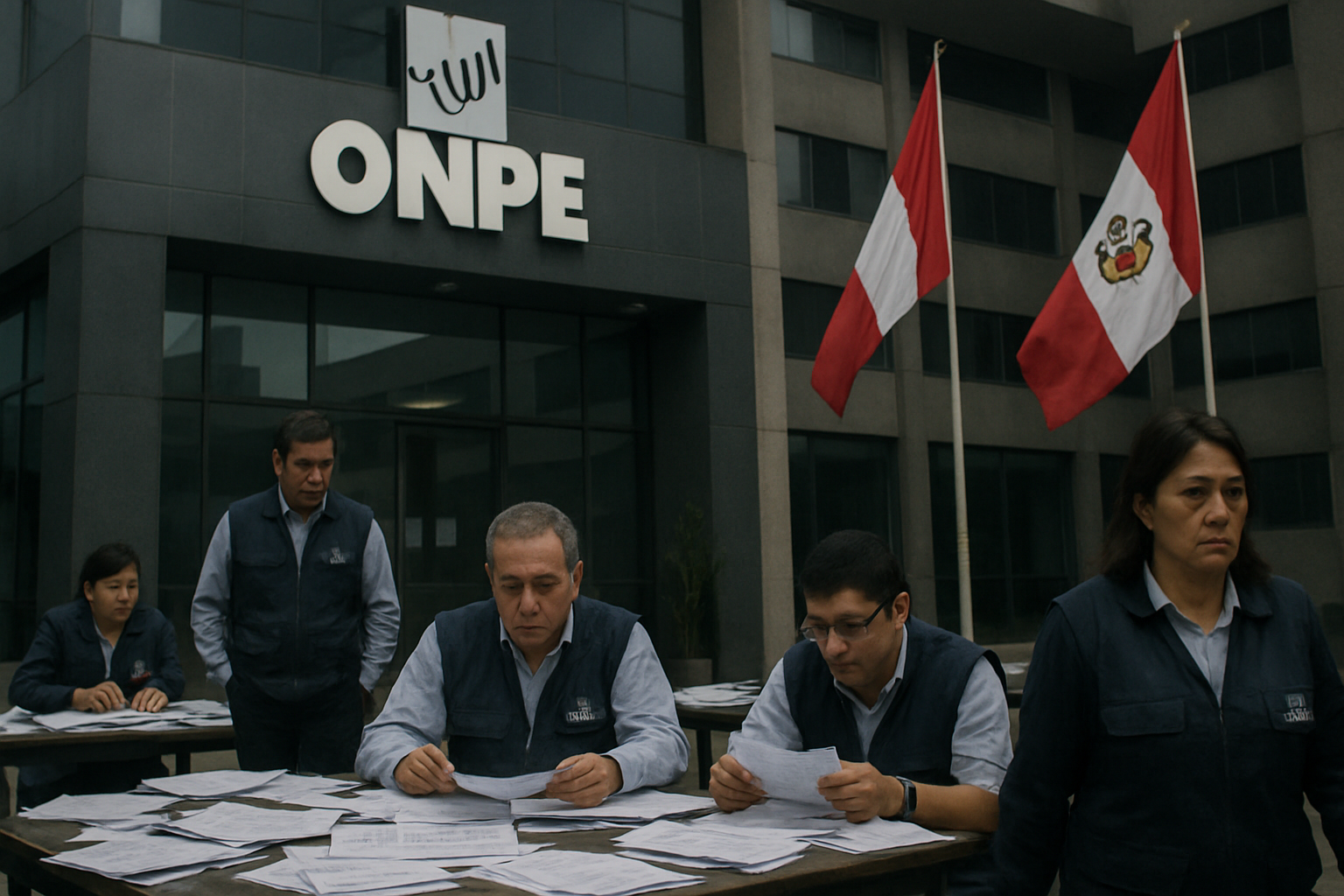
Peru's electoral chief resigned on Tuesday following catastrophic logistical failures that prevented over 50,000 voters from casting ballots in the country's hotly contested presidential election, marking yet another institutional breakdown in a nation already reeling from chronic political instability.
The head of Peru's National Electoral Office (ONPE), Piero Corvetto, stepped down amid mounting pressure over systematic organizational failures that plagued the April 12 presidential election. The resignation comes after unprecedented delays forced electoral authorities to extend voting hours, with 187 polling stations failing to open on time and widespread shortages of critical electoral materials.
The electoral chaos particularly affected Lima's peripheral districts, including San Juan de Miraflores, Lurín, and Pachacámac, where missing ballot boxes, voting records, and electoral materials left tens of thousands of citizens unable to exercise their constitutional right to vote. The failures forced an emergency extension of voting hours until 6:00 PM, an unprecedented decision in Peru's democratic history.
Institutional Breakdown Deepens Political Crisis
The electoral failures occur against the backdrop of Peru's deepest political crisis in decades, as the country seeks its ninth president in just ten years. The April election follows the February removal of President José Jerí after just 130 days in office over the "Chifagate" scandal, involving secret meetings with Chinese contractor Zhihua Yang whose companies hold significant state contracts.
Constitutional expert Samuel Abad characterized the electoral problems as "serious democratic failure affecting fundamental voting rights," highlighting how the crisis extends beyond mere administrative incompetence to threaten the foundations of Peru's democratic system.
The National Elections Jury (JNE) President Roberto Burneo publicly contradicted ONPE's explanations about ballot transportation issues, forcing the electoral office to issue corrections and public apologies for providing "inaccurate information" to the public.
Business Sector Condemns Electoral Failures
Peru's business confederation CONFIEP, along with other major trade organizations including ComexPeru and ADEX, issued a joint condemnation of what they termed "structural failures in electoral organization." The Lima Chamber of Commerce characterized the voting hour extensions as "proof of preparation failure" that should have been "irreproachable."
CONFIEP warned that Peru "cannot afford a new uncertainty stage" as the country faces critical economic challenges amid ongoing political instability. The business sector's concerns reflect broader fears about governance capacity and institutional effectiveness in Latin America's third-largest economy.
"The systematic organizational failures we witnessed on election day represent more than administrative incompetence – they threaten the very foundation of our democratic system."
— Samuel Abad, Constitutional Expert
Pattern of Governance Failure
The electoral crisis represents the latest chapter in Peru's ongoing governance breakdown, which has seen the constitutional "vacancy" procedure repeatedly weaponized to remove presidents. Since 2016, the average presidential tenure has decreased by 70%, creating a cycle of chronic instability that has severely damaged institutional trust.
The pattern includes the removals of Martín Vizcarra in 2020, Pedro Castillo's failed coup attempt in 2022, Dina Boluarte's exit in 2025, and now José Jerí in 2026. This unprecedented turnover has created what observers characterize as systematic governance failure extending far beyond individual leadership inadequacies.
International observers have characterized Peru's situation as an "endless crisis" affecting broader Latin American democratic stability, with regional implications that extend beyond Peru's borders to influence democratic consolidation efforts across the continent.
Vote Count Stalls Amid Institutional Tensions
As of Tuesday, the official vote count remained stalled at 93.359% five days after the election, with significant ballots still pending transmission and processing. The prolonged counting process has fueled additional criticism of ONPE's capacity to manage basic electoral functions.
Early results show former presidential candidate Keiko Fujimori leading with approximately 17% in her fourth presidential attempt, followed by Roberto Sánchez at 12%. The fragmented field of 35 candidates virtually guarantees a runoff election in June, extending the period of political uncertainty.
Rafael López Aliaga, finishing third with 11.9%, has threatened protests over alleged fraud, despite Peru's Attorney General confirming that no electoral irregularities have been detected in the voting process itself.
International Concerns and Regional Implications
The electoral crisis has drawn significant international attention, with observers monitoring the situation as a test of democratic resilience in Latin America. The systematic failures raise broader questions about institutional capacity and democratic governance during a period of global democratic stress.
Chinese influence concerns have also emerged through the Chifagate scandal, raising sovereignty questions about Belt and Road Initiative infrastructure control, including the strategic Chancay Port. The undisclosed meetings between former President Jerí and Chinese contractors have become an electoral issue affecting candidates' foreign policy positions.
Regional observers emphasize that Peru's experience provides crucial lessons for democratic governance under pressure, with success or failure in managing this crisis likely to influence approaches to democratic consolidation across Latin America.
Reform Imperatives and Future Challenges
The systematic electoral failures have highlighted the urgent need for comprehensive reform of Peru's electoral infrastructure. Beyond addressing immediate organizational competence issues, experts argue that deeper structural reforms are needed to prevent future crises.
The crisis demonstrates that Peru's democratic legitimacy questions extend beyond political disagreements to fundamental questions about electoral system capacity. The right to vote being compromised on such a massive scale undermines the entire democratic system's foundation.
International observers emphasize that the Peru experience provides a template for how democratic institutions respond to governance crises while maintaining constitutional integrity. The resolution of this crisis will determine whether Peru can transition from perpetual crisis management to sustainable democratic consolidation.
Stakes for Democratic Governance
With 33 million Peruvian citizens affected by the ongoing democratic system viability questions, the stakes extend far beyond immediate electoral outcomes. The resolution of this crisis will determine Peru's immediate political direction and governance capacity for years ahead.
The current situation serves as a template for Latin American institutional resilience versus permanent instability patterns, with consequences that reach across the region. Success in managing the crisis while maintaining institutional integrity would provide a positive model for other nations facing similar institutional challenges.
As Peru approaches the critical June runoff election, the fundamental question remains whether the country can break its political crisis cycle and establish the governance stability necessary for effective democracy and economic development. The resignation of the electoral chief, while removing one source of institutional failure, represents just the first step in a broader reform process essential for democratic renewal.