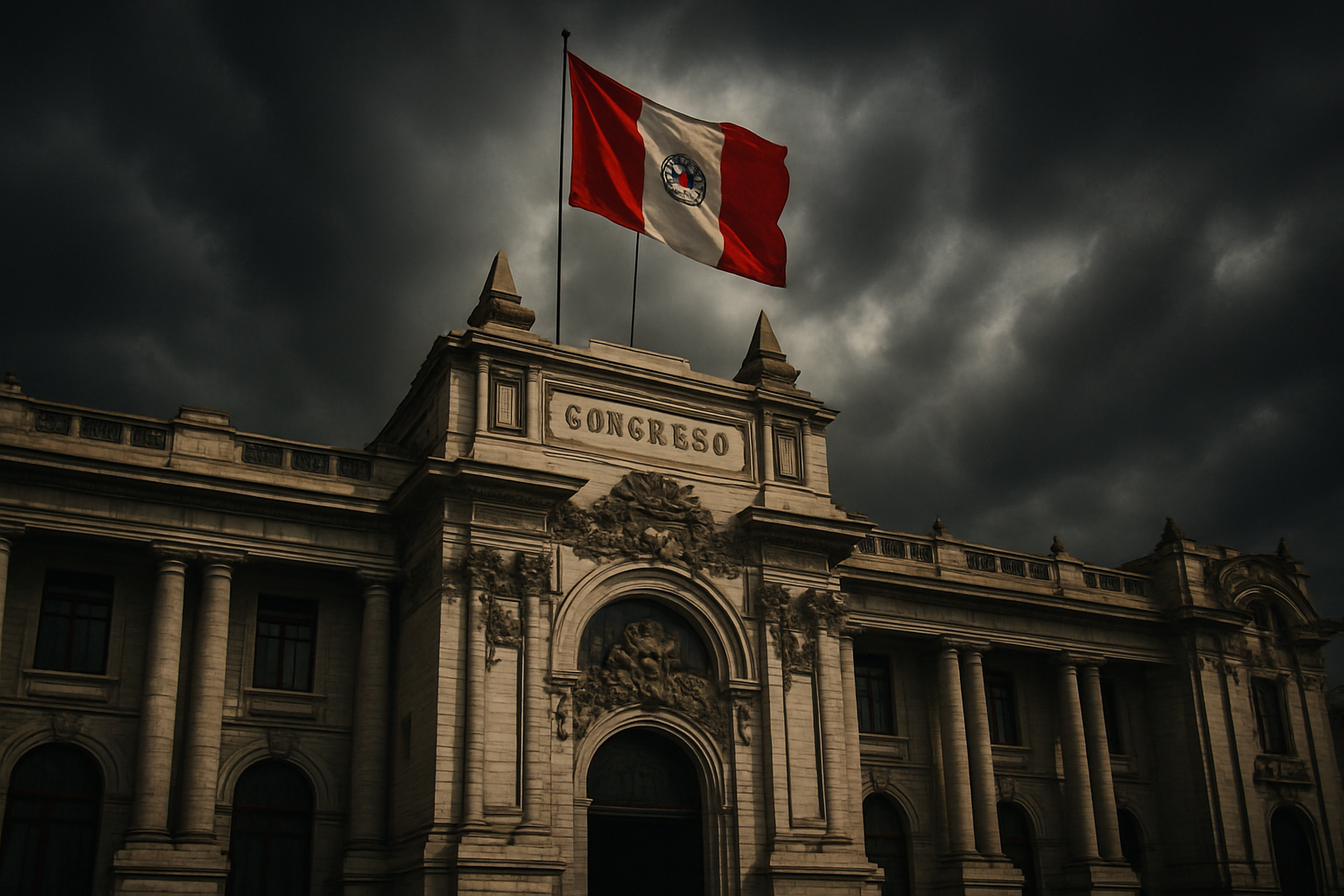
Peru's Congress voted Tuesday to impeach President José Jerí after just four months in office, following revelations of undisclosed meetings with a Chinese state contractor in what has become known as the "Chifagate" scandal. The vote of 75 in favor, 24 against, and three abstentions marks yet another chapter in Peru's chronic political instability.
Jerí, who assumed office in October 2025 following the ousting of former President Dina Boluarte, becomes Peru's eighth president in the last decade to leave office before completing his term. The impeachment centers on a series of secret late-night meetings at a Chinese restaurant with businessman Zhihua Yang, whose companies have supplied the state and who owns the restaurant where the encounters took place.
The "Chifagate" Scandal Unfolds
The scandal that brought down Jerí—dubbed "Chifagate" in reference to Peru's popular Chinese-Peruvian fusion cuisine—emerged from the president's failure to officially register meetings with Yang. According to multiple sources, these encounters took place at Yang's restaurant and included discussions that raised serious questions about influence peddling and potential conflicts of interest.
The revelation of these unregistered meetings sparked widespread condemnation across Peru's political spectrum. The scandal was compounded by diffusion of videos and photographs showing Jerí entering the establishment covertly, which weakened his defense before Parliament despite his claims that the encounters were merely "formal errors" rather than criminal misconduct.
"Today we are facing a new episode of instability that once again shakes Peru. The censure was approved after a series of questions about the president's clandestine meetings with Chinese businessmen."
— El Salvador media analysis
Congressional Action and Vote Breakdown
Tuesday's impeachment proceedings unfolded rapidly in what observers characterized as a "lightning-fast political trial." Of the 112 lawmakers present in the 130-seat Congress, an overwhelming majority voted to remove Jerí from office on grounds of "misconduct in his duties and lack of suitability to hold office."
The Alianza Para el Progreso (APP) party issued a statement reaffirming its support for the censure motion, declaring that "with firmness, the position that we have maintained has been to censure President José Jerí." The party's backing proved crucial in securing the supermajority needed for removal.
Constitutional expert Aníbal Quiroga warned that any documents signed by Jerí following the censure would be "totally invalid," emphasizing the immediate legal consequences of the parliamentary action. Congress is scheduled to meet Wednesday to select a new president to lead the country.
Peru's Pattern of Political Instability
Jerí's removal continues Peru's devastating pattern of presidential instability that has plagued the nation since 2016. The country has experienced a permanent clash between a strong parliament and weak executive branch within a context of party fragmentation and absence of political consensus.
Since 2020, when Congress removed President Martín Vizcarra, Peruvian lawmakers have repeatedly used the "vacancy" procedure—a constitutional mechanism that empowers Parliament to force out the head of state. Pedro Castillo, who attempted to dissolve Parliament, was also ousted and now faces charges of attempting a coup d'état after his mandate lasted barely over a year until December 7, 2022.
The instability has had severe consequences for governance and international standing. As one analysis noted, "Peru faces constitutional dysfunction and institutional fragility despite maintaining a democratic framework," while business confederation CONFIEP has warned the country "cannot afford a new stage of political uncertainty" during the electoral process.
International Implications and Regional Context
The scandal's connection to Chinese business interests has drawn international attention, particularly given Peru's significant economic ties with China. The Chancay Port, majority-owned by China's Cosco Shipping and serving as a major Belt and Road Initiative hub, has already been the subject of sovereignty concerns from Washington, which warned Peru about risks to its national autonomy.
International media coverage has been extensive, with regional outlets characterizing the crisis as evidence of "Peru's endless crisis" and institutional fragility. The timing, just weeks before general elections, has intensified concerns about the country's democratic stability and governance capacity.
"The destitution of Jerí falls within the institutional crisis that Peru has been experiencing since the 2016 elections, when a permanent clash of powers between a strong parliament and a weak Executive was unleashed."
— Bolivian media analysis
Next Steps and Constitutional Process
With Jerí's removal, Peru faces a familiar constitutional process. Congress will convene Wednesday to name a new authority who will assume the presidency—the country's ninth president in a decade if the pattern holds. This latest transition occurs against the backdrop of preparations for upcoming general elections, adding another layer of complexity to an already turbulent political landscape.
The impeachment vote represents the culmination of seven censure motions filed against Jerí, reflecting the broad political opposition he faced. Despite his defense team's arguments that the encounters with Yang were simple procedural errors rather than criminal acts, the succession of contradictory versions ultimately undermined his position before Parliament.
Implications for Democratic Governance
Peru's recurring presidential crises have raised serious questions about the sustainability of its democratic institutions. The ease with which Congress can remove presidents has created what critics describe as institutional imbalance, where the legislative branch holds disproportionate power over the executive.
The crisis reflects broader challenges facing Latin American democracies, including corruption scandals, weak institutional frameworks, and the difficulty of maintaining stable governance amid economic pressures and social demands. The international community continues monitoring these developments as indicators of broader democratic trends in the region.
As Peru prepares to select yet another president, the fundamental question remains whether the country's institutions can break the cycle of instability that has characterized its politics for nearly a decade. The success or failure of efforts to establish more stable governance will have implications not only for Peru's 33 million citizens but also for democratic development throughout Latin America.