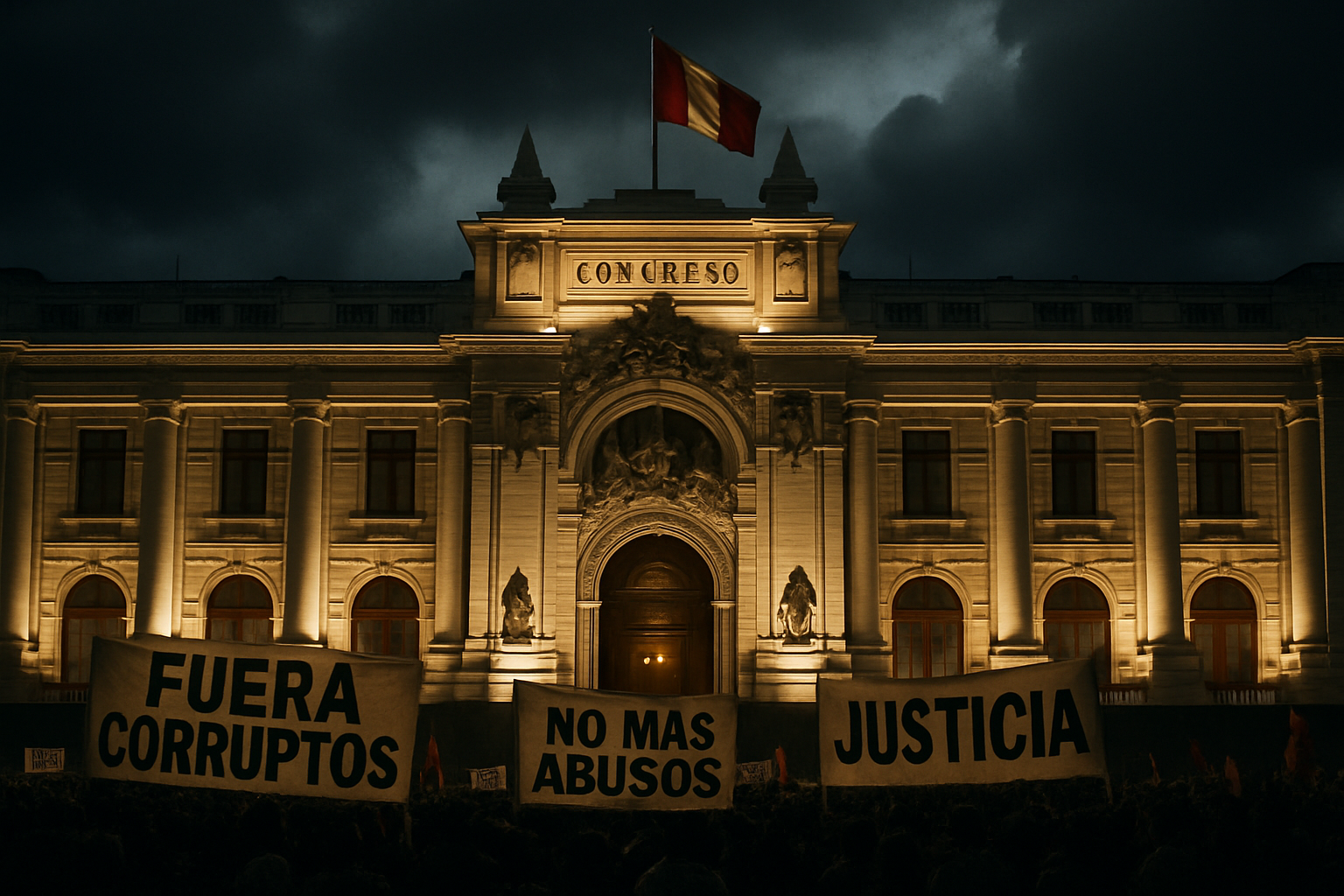
Peru's Congress voted Tuesday to remove interim President José Jerí after just four months in office, following an expedited impeachment process triggered by corruption allegations dubbed "Chifagate" - marking the country's eighth presidential change in less than a decade.
The decisive 75-24 vote, conducted after a brief political trial, removed Jerí from office over allegations of "functional misconduct and lack of suitability for office," according to the session's presiding officer Fernando Rospigliosi. The impeachment came just weeks before Peru's scheduled April presidential and congressional elections, deepening the nation's chronic political instability.
The Chifagate Scandal
The scandal that sealed Jerí's fate emerged when the 39-year-old lawyer was filmed arriving at a Chinese restaurant late at night wearing a hood to meet with businessman Zhihua Yang. The meetings, which took place at Yang's establishment, were conducted in secret and involved discussions about government contracts with companies Yang supplies to the state.
The controversy earned the nickname "Chifagate" - derived from the Peruvian term "chifa" for Chinese restaurants - and exposed what investigators described as undisclosed meetings that raised serious questions about influence peddling. Videos and photos showing Jerí entering the establishment covertly undermined his initial denials and contradictory explanations about the nature of these encounters.
"The mesa directiva declares the vacancy of the President of the Republic," announced congressional leader Fernando Rospigliosi after the vote.
— Fernando Rospigliosi, Acting Congressional President
A Pattern of Instability
Jerí's removal continues Peru's devastating cycle of presidential instability that has plagued the nation since 2016. The country has now witnessed eight changes in executive leadership in less than a decade, creating what analysts describe as chronic institutional dysfunction despite maintaining a democratic framework.
The lawyer-turned-politician had assumed the presidency in October 2025 following the impeachment of Dina Boluarte, rising from his role as Congress president to interim head of state. His tenure, lasting only four months, represents one of the shortest presidential terms in Peru's modern democratic history.
Seven censure motions were filed against Jerí, reflecting broad congressional dissatisfaction with his leadership. Constitutional expert Aníbal Quiroga declared that any documents signed by Jerí after the censure would be "totally invalid," highlighting the immediate legal implications of his removal.
International Implications
The Chinese connection in the scandal has raised broader sovereignty concerns, particularly given China's significant infrastructure investments in Peru, including the majority ownership of the Chancay Port through Cosco Shipping as part of Beijing's Belt and Road Initiative.
U.S. officials have previously warned Peru about risks to national autonomy from Chinese infrastructure control, making the Jerí scandal particularly sensitive from a geopolitical perspective. The undisclosed meetings with Chinese executives highlight ongoing tensions about foreign influence in Peruvian governance.
Democratic Dysfunction
Peru's business confederation CONFIEP warned that the country "cannot afford a new stage of political uncertainty" during the electoral process. The organization's concerns reflect broader anxiety about the economic impact of continued political instability on investment and development.
The repeated use of the constitutional "vacancy" procedure by a powerful Parliament against weak executives has become a defining feature of Peru's democratic dysfunction. This pattern began with the removal of Martín Vizcarra in 2020, continued through Pedro Castillo's coup attempt in 2022, and persisted through Dina Boluarte's 2025 impeachment.
Regional media have characterized Peru's situation as an "endless crisis" that threatens not only the country's 33 million citizens but also serves as a concerning example for democratic development throughout Latin America.
What Comes Next
Congress is scheduled to meet Wednesday at 6:00 PM local time to elect a new legislative president, who will automatically assume Peru's interim presidency until July 28. This will mark the ninth presidential transition in Peru's tumultuous decade of political instability.
The timing of Jerí's removal, coming just weeks before general elections, creates additional uncertainty about the country's democratic processes. Questions remain about whether the new interim government will have sufficient time and authority to ensure free and fair elections while managing ongoing governance challenges.
The business community and international observers are closely monitoring developments, as continued instability threatens Peru's economic recovery and its standing as a regional democracy. The pattern of executive-legislative clashes that has characterized Peruvian politics since 2016 shows little sign of abating.
As Peru prepares for its April elections, voters face the challenge of selecting leadership capable of breaking the cycle of institutional instability that has defined the country's recent political history. The success or failure of this democratic transition will have implications extending far beyond Peru's borders, serving as a test case for democratic resilience in Latin America during a period of global democratic stress.