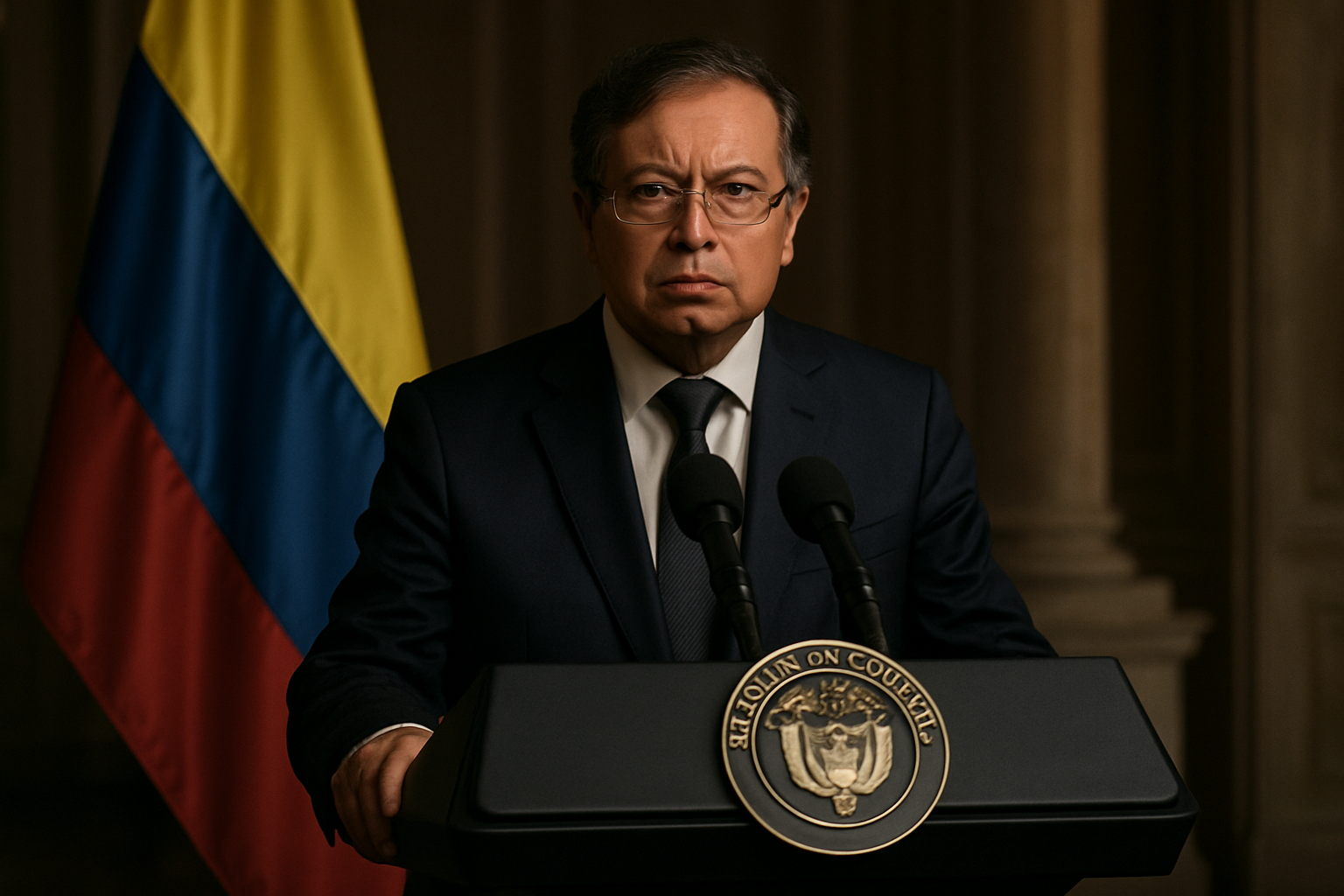
Colombian President Gustavo Petro announced Tuesday that he survived an assassination attempt the previous night while traveling by helicopter, as the South American nation faces an escalating security crisis marked by the apparent kidnapping of indigenous Senator Aida Quilcué and his stern ultimatum to armed groups.
The dramatic developments unfolded over 24 hours that have shaken Colombia's political establishment and highlighted the persistent security challenges facing the country despite ongoing peace processes with various armed groups.
Presidential Helicopter Under Threat
Petro revealed that on Monday night, he was forced to remain airborne for four hours over the open sea after his helicopter could not land in the department of Córdoba on the Caribbean coast. The leftist president stated he feared his aircraft would come under fire if it attempted to land.
"My helicopter was under threat of attack, my daughters were also at risk," Petro said in statements reported by Italian news agency ANSA. The president described having to fly over open water for an extended period due to security concerns.
According to Peruvian media outlet El Comercio, Petro explained that he could not land in Córdoba because he "feared they were going to shoot" at the aircraft in which he was traveling. The incident occurred just days after Petro's historic diplomatic meeting with U.S. President Donald Trump at the White House on February 3, where the two leaders discussed counter-narcotics cooperation.
Senator's Disappearance Sparks Alarm
Compounding the security crisis, indigenous Senator Aida Quilcué reportedly vanished along with her security team on a road between Inza and Totoro in Cauca province. Her vehicle was found empty, according to alerts issued by her communications team.
Quilcué, a prominent human rights defender from her indigenous community, serves as a voice for marginalized populations in Colombia's conflict-affected regions. The Cauca province, where she disappeared, has long been plagued by violence between illegal armed groups competing for territorial control and drug trafficking routes.
The senator's disappearance has prompted immediate concern from human rights organizations and political leaders, given the systematic targeting of social leaders and political figures in Colombia's rural areas.
Presidential Ultimatum to Armed Groups
In response to both incidents, Petro issued what Italian media described as an ultimatum to armed groups, declaring that a "red line" had been crossed. The president's strong language signals a potential shift in his administration's approach to dealing with illegal armed actors.
"The red line has been crossed"
— President Gustavo Petro, addressing armed groups
This ultimatum comes as Petro's government has been pursuing "Total Peace" negotiations with various armed groups, including remnants of the FARC guerrilla movement and other illegal organizations. The president's declaration suggests these recent incidents may prompt a reassessment of his diplomatic approach to achieving peace.
Broader Context of Colombian Violence
The twin crises occur against a backdrop of persistent violence in Colombia, where illegal armed groups continue to operate despite the 2016 peace agreement with the FARC guerrillas. Recent memory from our analysis shows that in early February, there was video evidence of a brutal assault on Senator Jairo Castellanos' security escorts in Arauca region, highlighting the ongoing threats faced by political figures.
The Cauca province, where Senator Quilcué disappeared, remains particularly volatile. The region has seen competition between various criminal organizations, including dissident FARC groups and the ELN guerrillas, who fight for territorial control and access to drug trafficking routes.
Colombia's security challenges have drawn international attention, particularly from the United States. The February 3 meeting between Petro and Trump focused heavily on counter-narcotics cooperation, with both leaders agreeing that sanctions have been ineffective and exploring alternative approaches to combating drug trafficking.
International Diplomatic Implications
The timing of these security incidents is particularly significant given recent diplomatic developments. Petro's White House visit marked a dramatic reset in U.S.-Colombia relations after a year of public feuding over immigration and drug policy issues.
During their Oval Office meeting, Trump and Petro discussed expanded cooperation against drug trafficking organizations, with Colombia providing lists of cartel leaders operating outside the country and seeking international assistance. The two leaders also explored collaboration on Venezuelan border security and regional mediation efforts.
The assassination attempt and senator's kidnapping may test this newly established cooperation framework and could influence future U.S. support for Colombia's security operations.
Regional Security Concerns
These incidents underscore broader security challenges across Latin America, where organized crime groups have demonstrated increasing boldness in targeting high-profile political figures. The apparent sophistication of the threat against Petro's helicopter suggests well-organized criminal networks with access to intelligence and planning capabilities.
The Venezuelan border region, which includes parts of both Córdoba and Cauca provinces, has become a particular flashpoint due to cross-border criminal activities and the presence of various illegal armed groups that operate with relative impunity in remote areas.
Government Response and Investigation
Colombian authorities have launched comprehensive investigations into both incidents. Security protocols for the president and other high-level officials are likely under review following the helicopter incident, while search operations continue for Senator Quilcué and her security team.
The dual crisis has prompted emergency meetings among Colombia's security leadership and may accelerate plans for enhanced protection of political figures, particularly those working in conflict-affected regions.
Looking Forward
As Colombia grapples with these security challenges, the international community is closely monitoring developments. The incidents represent a significant test for Petro's "Total Peace" strategy and may influence his government's approach to negotiations with armed groups.
The coming days will be crucial in determining whether these incidents represent isolated attacks or signal a broader escalation in violence against Colombia's political leadership. The government's response will likely shape both domestic security policy and international cooperation efforts in the months ahead.
With investigations ongoing and search efforts continuing for the missing senator, Colombia faces a critical moment that could define the trajectory of its peace process and security situation for the remainder of Petro's presidency.