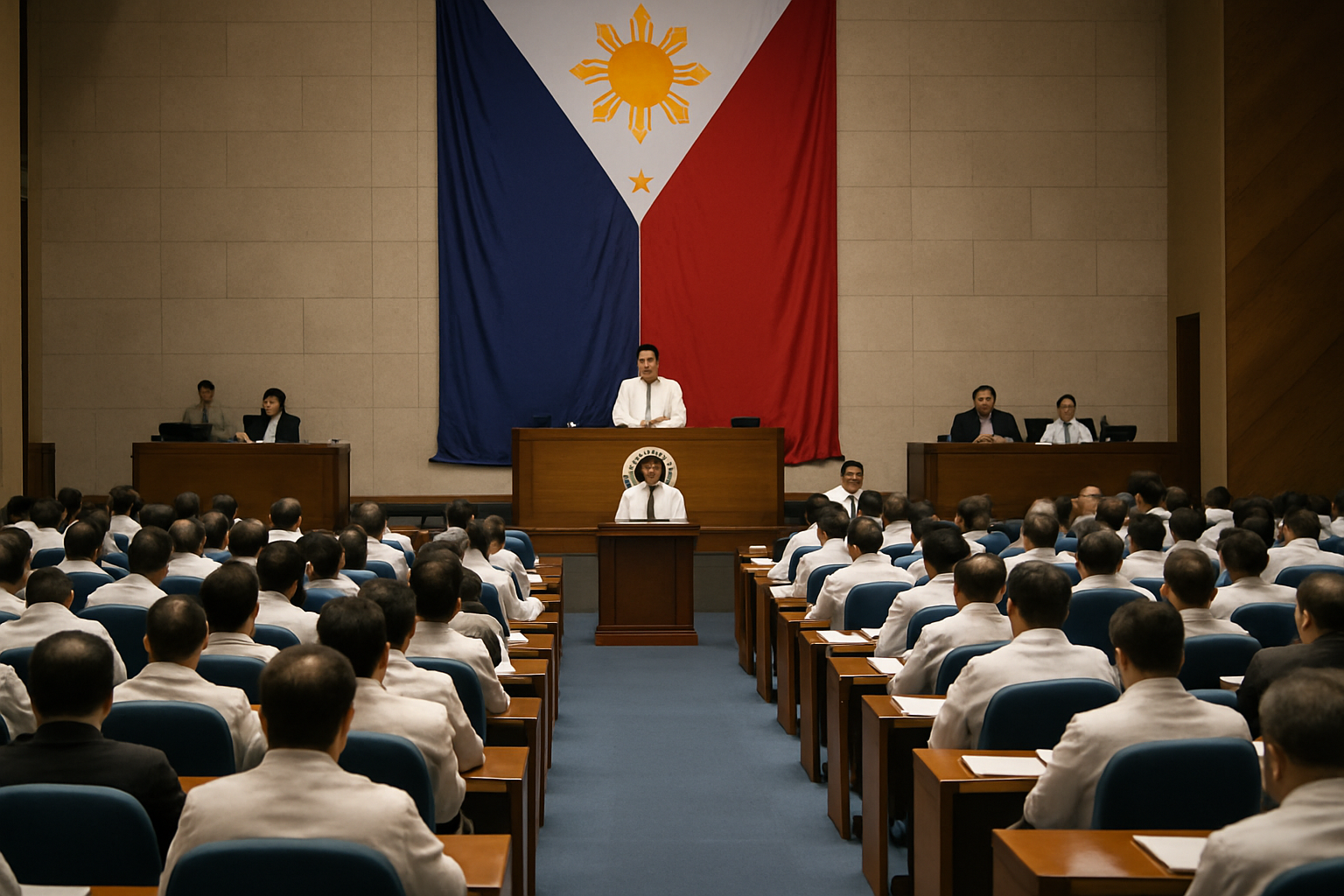
The Philippines continues to grapple with unprecedented political turmoil as Vice President Sara Duterte faces mounting impeachment pressure while major corruption scandals involving hundreds of millions of pesos rock government institutions from the Department of Public Works to the armed forces.
The constitutional crisis reached a new phase on March 17, 2026, as House lawmakers denounced Duterte's response to impeachment allegations as a "non-answer," setting the stage for resumed hearings on March 18 that will determine the trajectory of her political future.
Duterte's Defiant Response Sparks Congressional Outrage
Vice President Sara Duterte's March 16 filing to the House justice committee has been characterized by legislators as fundamentally inadequate, with lawmakers criticizing her approach of simply denying all allegations rather than providing substantive responses to specific charges.
According to House sources, Duterte's response centered on attacking what she termed "double standards" in congressional proceedings, noting that President Ferdinand Marcos Jr.'s impeachment complaints were dismissed after three days despite what she called "serious allegations revolving around misuse and corruption of billions of public funds," while her case proceeded with a 54-1 committee vote declaring complaints "sufficient in substance."
The strategic focus on procedural criticisms rather than substantive defense indicates a broader political calculation, legal experts suggest. "She's not addressing the core allegations about unexplained wealth, misuse of public funds, and threats against the president," noted constitutional law professor Dr. Maria Santos. "This appears designed to frame the proceedings as politically motivated rather than legally justified."
Corruption Scandals Rock Government Institutions
As the impeachment drama unfolds, multiple corruption investigations have emerged that underscore the scale of alleged financial irregularities plaguing Philippine government institutions.
Former Department of Public Works and Highways (DPWH) undersecretary Roberto Bernardo revealed he received ₱130 million in "balato" (gratitude money) from fugitive former lawmaker Zaldy Co, according to testimony that has sent shockwaves through the government procurement system.
The Bernardo revelations come as investigators probe an alleged cash delivery network involving former Marines. Eighteen former military personnel have agreed to National Bureau of Investigation (NBI) interviews as the probe into alleged systematic cash deliveries proceeds, suggesting the corruption may extend deep into the country's security apparatus.
"The scope of these allegations suggests systematic corruption that goes beyond individual misconduct to institutional failure."
— Anti-corruption advocate Maria Rodriguez
International Legal Pressures Mount
The domestic political crisis occurs against the backdrop of international legal proceedings that have complicated the Duterte family's political standing. The Presidential Palace on March 17 criticized former president Rodrigo Duterte's counsel Nicholas Kaufman, accusing him of "politicking" instead of defending his client before the International Criminal Court.
Palace spokesperson Martin Andanar questioned whether Kaufman was "preparing for the 2028 elections" rather than focusing on his ICC defense responsibilities, highlighting how the international proceedings continue to cast a shadow over domestic politics.
The ICC proceedings against Rodrigo Duterte for crimes against humanity charges related to his "war on drugs" campaign have created additional pressure on Sara Duterte's political brand, complicating her 2028 presidential ambitions even as she uses her early candidacy declaration as potential armor against removal efforts.
Constitutional Process Under Scrutiny
The House justice committee's March 18 resumption of impeachment hearings will focus on clarifying procedural matters, according to congressional sources. The proceedings have moved with unprecedented speed compared to recent impeachment attempts, passing both "sufficient in form" and "sufficient in substance" tests within days.
Legal observers note that the House serves as prosecutor while the Senate acts as trial court, requiring a two-thirds majority (16 of 24 senators) for conviction and removal from office. The political composition makes outcomes unpredictable, though the proceedings carry significant political consequences regardless of the verdict.
"This represents a fundamental test of Philippine democratic institutions' ability to handle high-stakes political confrontations while maintaining rule of law," observed political analyst Dr. Carlos Mendoza. "The stakes extend beyond individual careers to the principles of democratic governance itself."
Alliance Breakdown Accelerates
The impeachment proceedings reflect the complete breakdown of the Marcos-Duterte political alliance that brought both leaders to power in the 2022 elections. The partnership collapsed following the ICC proceedings against Rodrigo Duterte and policy disagreements that emerged throughout 2025.
Political experts describe the current crisis as a "rare smart play" by Sara Duterte in declaring her 2028 presidential candidacy early, designed to change electoral dynamics and provide political protection against impeachment efforts. However, the strategy also makes her a target for extended opposition attacks over the next two years.
Regional and International Implications
The constitutional crisis has drawn international attention due to the Philippines' strategic importance in the South China Sea and its alliance relationships with the United States and other regional partners. International observers are monitoring developments as an indicator of regional stability and democratic resilience.
Analysts suggest that a Sara Duterte presidency could significantly alter the Philippines' foreign policy trajectory, particularly regarding China-US relationships, reflecting her father's approach during his presidency. The potential shift has implications for regional geopolitical alignment and alliance structures in the Indo-Pacific.
The European Union and other international partners have emphasized the importance of democratic institutions and rule of law in their relationships with the Philippines, making the resolution of the current crisis relevant to international cooperation and development assistance.
Looking Ahead: Critical Weeks
The coming weeks will be decisive for both the impeachment proceedings and the broader corruption investigations that have emerged. House floor votes on impeachment could occur within the month, potentially setting up a Senate trial that could overlap with the crucial 2028 campaign period.
The Bernardo revelations and the former Marines investigation suggest that additional corruption scandals may emerge, potentially affecting multiple government agencies and officials. The NBI's systematic approach to the investigations indicates authorities are treating these as institutional rather than isolated problems.
For Sara Duterte, the next phase represents a critical test of whether she can enter the 2028 presidential race as a battle-tested political survivor or faces potential elimination from Philippine politics entirely. The resolution will determine not only her personal political future but also the broader trajectory of Philippine democracy and governance through the end of the decade.
As constitutional scholars note, the current crisis represents beginning of what could be the most consequential election cycle in recent Philippine history, with implications extending far beyond the country's borders to regional stability and democratic governance in Southeast Asia.