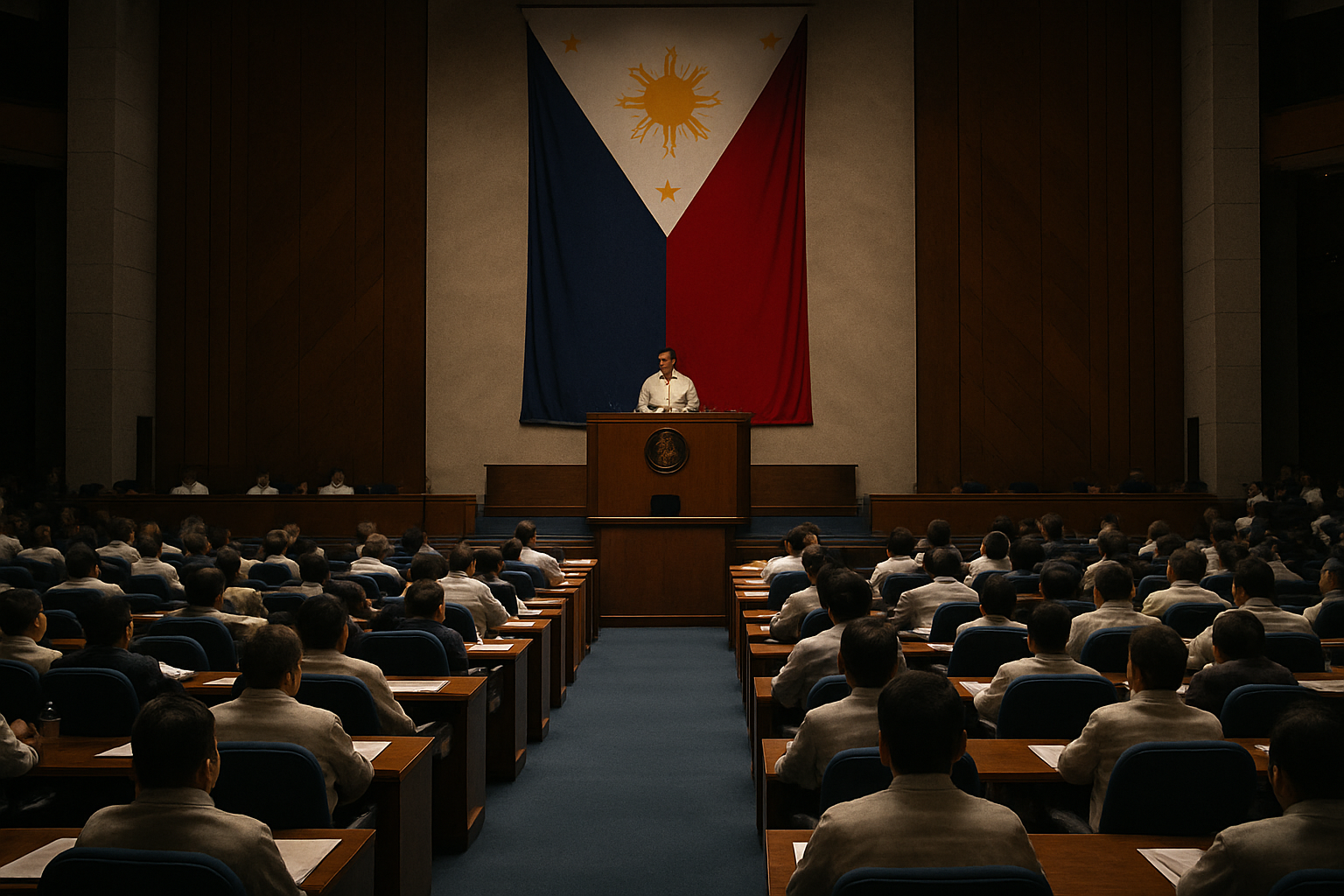
The Philippine political landscape is experiencing a dramatic realignment as President Ferdinand Marcos Jr. steadily narrows the trust and approval gap with Vice President Sara Duterte, who continues to face mounting impeachment proceedings while launching sharp criticisms against the House of Representatives' handling of her case.
According to the latest Pulse Asia survey data, the once-substantial lead held by Vice President Duterte over President Marcos in public trust ratings has diminished significantly over the past year, reflecting the profound impact of the ongoing constitutional crisis and the complete breakdown of what was once hailed as a powerful political alliance.
Trust Ratings Signal Political Realignment
The narrowing gap between the nation's two highest officials represents more than mere polling fluctuations—it signals a fundamental shift in Philippine political dynamics that began with the collapse of the Marcos-Duterte partnership in early 2025. While Sara Duterte maintains her position as the most trusted and appreciated official, the trajectory clearly favors President Marcos, whose approval ratings have shown consistent improvement as his administration weathers various political storms.
This trend coincides with the Vice President's increasingly contentious relationship with the House of Representatives, where she faces unprecedented impeachment proceedings that have exposed deep fractures within the Philippine political establishment.
Impeachment Proceedings Reach Critical Phase
Vice President Duterte's filing of her verified answer to two impeachment complaints on Monday, March 16—the final day permitted under constitutional procedures—marked a pivotal moment in what has become the most serious constitutional crisis facing the Philippines in recent years. Rather than addressing the specific allegations point by point, Duterte chose to challenge what she characterized as "double standards" in the House's treatment of her case compared to similar proceedings against President Marcos.
"The House justice committee went beyond the four corners of the complaint and relied on extraneous considerations that are irrelevant when it dismissed the complaints against Marcos, even though there were serious allegations revolving around misuse and corruption of billions of public funds."
— Vice President Sara Duterte, in her impeachment response
This strategic approach reflects the Vice President's broader political calculation, focusing on procedural criticisms rather than substantive defenses against charges including unexplained wealth, misuse of public funds, and public threats against the sitting president.
Historical Context of Political Alliance Collapse
The current political crisis represents the complete disintegration of the formidable Marcos-Duterte alliance that secured decisive victory in the 2022 elections. The partnership, which promised political stability and continuity, began unraveling in March 2025 amid growing policy disagreements and personal tensions between the two political dynasties.
The deterioration accelerated dramatically following the International Criminal Court's proceedings against Sara Duterte's father, former President Rodrigo Duterte, who currently faces crimes against humanity charges at The Hague related to his administration's "war on drugs" campaign. The ICC proceedings, which began in February 2026, have created additional pressure on the Duterte political brand and complicated Sara's own presidential ambitions.
Double Standards Allegation Exposes Institutional Tensions
Sara Duterte's central argument centers on the stark contrast between her impeachment proceedings and those faced by President Marcos. While Marcos survived his impeachment case after just three days of deliberation by the House justice committee, which dismissed complaints despite what Duterte described as "serious allegations revolving around misuse and corruption of billions of public funds," her own case has proceeded through multiple stages with apparent momentum.
The House justice committee voted 54-1 in March 2026 to declare the impeachment complaints against Duterte "sufficient in substance," finding substantial grounds to proceed with charges. This overwhelming committee decision, with only Quezon City Representative Bong Suntay dissenting, demonstrated unprecedented speed compared to recent impeachment proceedings against sitting officials.
Legal experts have noted the procedural differences, with some suggesting that the varying treatment reflects the different political dynamics surrounding each case rather than strictly legal considerations. The Vice President's claims of "double standards" resonate with her supporters who view the proceedings as politically motivated rather than constitutionally justified.
Constitutional Process and Political Implications
Under the Philippine constitutional framework, the House of Representatives serves as prosecutor while the Senate acts as the trial court, requiring a two-thirds majority of 16 out of 24 senators for conviction and removal from office. The political composition of the Senate makes outcomes unpredictable, though the proceedings carry significant political consequences regardless of the eventual verdict.
The impeachment process has become intertwined with Sara Duterte's announced candidacy for the 2028 presidential election, declared in February 2026. Political analysts suggest that her early campaign announcement was strategically timed to provide political armor against removal efforts, making the impeachment proceedings as much about electoral positioning as constitutional accountability.
Impact on 2028 Electoral Landscape
The narrowing trust gap between Marcos and Duterte occurs against the backdrop of the 2028 presidential election, where current President Marcos is constitutionally ineligible for re-election, leaving the field potentially open for intense competition. Sara Duterte's early candidacy announcement, coupled with her impeachment challenges, has fundamentally altered the political calculations for all potential candidates.
Political observers note that President Marcos's improving approval ratings, combined with Sara Duterte's legal troubles, could influence the administration's approach to governance and policy implementation in the remaining years of the current term. The shifting dynamics may also affect coalition-building efforts and legislative priorities as various political forces position themselves for the upcoming electoral cycle.
Regional and International Implications
The Philippine political crisis extends beyond domestic concerns, with significant implications for regional stability and international relationships. The country's strategic position in the South China Sea and its alliance relationships with the United States make political stability a matter of international concern.
The ongoing proceedings against former President Rodrigo Duterte at the International Criminal Court add another layer of complexity, as international observers monitor whether democratic institutions can handle high-stakes political confrontations while maintaining rule of law principles. The outcome of Sara Duterte's impeachment proceedings will serve as a critical test of Philippine democratic resilience.
Looking Ahead: Critical Months Ahead
As the impeachment proceedings advance toward potential House floor votes, the political stakes continue to escalate. If the House votes to impeach, the case would proceed to a Senate trial that could last months, potentially overlapping with the crucial 2028 campaign period and significantly affecting electoral dynamics.
The narrowing trust gap between President Marcos and Vice President Duterte reflects broader changes in Philippine political alignments, with implications extending far beyond individual approval ratings. The resolution of the current constitutional crisis will likely determine not only the immediate political landscape but also the trajectory of Philippine governance through the remainder of this decade.
For Sara Duterte, the coming months represent a critical test of political survival, as she simultaneously fights impeachment proceedings while building her presidential campaign. For President Marcos, the improving trust ratings provide an opportunity to cement his administration's legacy and influence the succession process, even as he cannot seek re-election himself.