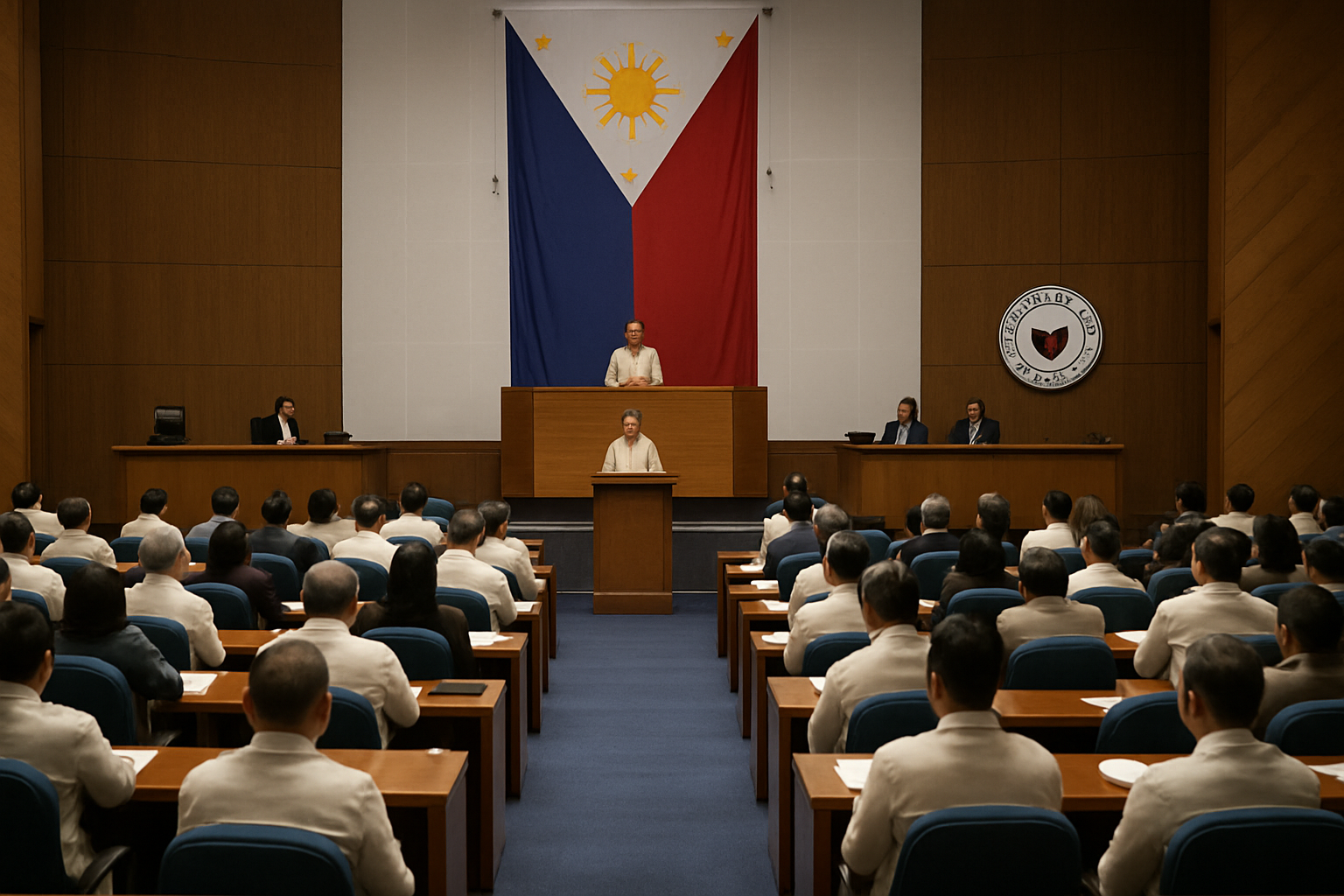
Philippine lawmakers took a decisive step Wednesday in advancing impeachment proceedings against Vice President Sara Duterte-Carpio, with the House justice committee voting overwhelmingly to declare two complaints against her "sufficient in substance" following allegations of unexplained wealth, misuse of public funds, and public threats against President Ferdinand Marcos Jr.
The House justice committee delivered a crushing 54-1 vote Wednesday, March 4, finding substantial grounds to proceed with impeachment charges against the daughter of former president Rodrigo Duterte. The proceedings represent the most serious challenge to her political career as she prepares for a potential 2028 presidential campaign.
Quezon City 4th District Representative Bong Suntay cast the lone dissenting vote in a rare display of political isolation for the embattled vice president, who has positioned herself as a frontrunner for the next presidential election.
Swift Progression Through Legal Hurdles
The committee's decision came just two days after deeming the complaints "sufficient in form," demonstrating unprecedented speed in the normally drawn-out impeachment process. Both active complaints cleared the preliminary procedural test and now the crucial substantive review, setting up a potential trial in the Senate.
The development stands in stark contrast to recent impeachment proceedings against President Ferdinand Marcos Jr., where neither of two petitions filed against him survived the substance test last month. The failure of complaints against the president to advance beyond preliminary review while Duterte's cases proceed highlights the political dynamics at play in the Philippines' volatile political landscape.
"The committee has found sufficient substance in the allegations to warrant further investigation through the full impeachment process."
— House Justice Committee Statement
The impeachment complaints center on three main areas of concern: allegations of unexplained wealth that prosecutors argue she cannot account for through legitimate sources, claims of systematic misuse of public funds during her tenure as vice president, and the controversial public threats she made against President Marcos Jr. that legal experts characterize as potentially seditious.
Political Context and Electoral Implications
The timing of these proceedings carries enormous political weight as Sara Duterte has emerged as the presumptive frontrunner for the 2028 presidential election. The 45-year-old politician, who served as mayor of Davao City before becoming vice president, announced her presidential candidacy in February 2026 in a dramatic televised address.
Her political trajectory has been closely watched both domestically and internationally, particularly given her family's controversial legacy. Her father, former President Rodrigo Duterte, currently faces crimes against humanity charges at the International Criminal Court in The Hague for his administration's brutal "war on drugs" campaign that allegedly resulted in thousands of extrajudicial killings.
The impeachment proceedings create a complex political calculus for Sara Duterte, who must now navigate serious legal challenges while maintaining her presidential campaign momentum. Political analysts suggest the timing is particularly damaging as it occurs during the crucial early phase of the 2028 election cycle.
Alliance Breakdown with Marcos Administration
The impeachment push reflects the complete collapse of the political partnership that brought both Marcos Jr. and Duterte to power in the 2022 elections. What began as a formidable political alliance—combining the Marcos family's northern Luzon stronghold with the Duterte clan's Mindanao base—has deteriorated into open hostility.
The breakdown accelerated following controversies surrounding the International Criminal Court's pursuit of Rodrigo Duterte and disagreements over domestic and foreign policy directions. The alliance's collapse has created a fundamental realignment in Philippine politics, with former partners now positioned as adversaries heading into the crucial 2028 presidential race.
Political observers note that the impeachment proceedings serve multiple strategic purposes for the Marcos administration, potentially weakening a formidable 2028 rival while demonstrating commitment to accountability and rule of law—themes that could prove politically valuable in the upcoming campaign.
Constitutional and Legal Framework
Under the Philippine Constitution, impeachment requires a complex two-stage process that begins in the House of Representatives and concludes in the Senate. The House acts as prosecutor, while the Senate serves as the trial court, with senators functioning as judges who must determine guilt or innocence.
For Sara Duterte to be removed from office, the Senate would need a two-thirds majority vote for conviction—a high bar that requires 16 of 24 senators. The political composition of the Senate and the intense partisan dynamics surrounding the case make predicting outcomes challenging, though the proceedings themselves carry significant political consequences regardless of the final verdict.
The charges against Duterte focus on constitutional violations related to her conduct in office, including allegations that she failed to properly declare assets and income as required by law, misappropriated government resources for personal or political purposes, and made public statements that prosecutors argue constitute threats against the sitting president.
Regional and International Implications
The impeachment proceedings occur against the backdrop of broader concerns about democratic governance in Southeast Asia and the Philippines' strategic position in an increasingly competitive regional environment. International observers view the case as a test of Philippine democratic institutions' ability to handle high-stakes political confrontations while maintaining stability.
The Duterte family's international profile, particularly given Rodrigo Duterte's ongoing ICC case, adds another layer of complexity to the proceedings. Sara Duterte's potential ascension to the presidency in 2028 could significantly alter the Philippines' foreign policy trajectory, particularly its relationships with China, the United States, and regional partners.
Regional analysts note that the Philippines' internal political dynamics have broader implications for Southeast Asian stability and the balance of power in the South China Sea, where competing territorial claims continue to generate tensions among regional powers and their international partners.
Public Response and Civil Society
The impeachment proceedings have generated intense public interest and debate across the Philippines, reflecting the deep political polarization that has characterized the country's politics in recent years. Social media platforms have become battlegrounds for supporters and critics of both the Marcos and Duterte political clans.
Civil society organizations have called for transparency throughout the impeachment process, emphasizing the importance of due process and institutional integrity. Legal experts stress that regardless of political affiliations, the proceedings must adhere to constitutional requirements and established legal procedures.
Public opinion polls suggest a divided electorate, with regional variations reflecting the geographic bases of support for different political factions. The southern Philippines, particularly Mindanao, remains a Duterte stronghold, while other regions show more mixed attitudes toward the impeachment proceedings.
Looking Ahead: Timeline and Next Steps
With the House justice committee having cleared both procedural hurdles, the impeachment complaints now move toward potential floor votes in the House of Representatives. If the full House votes to impeach, the case would then proceed to the Senate for trial, a process that could extend for several months.
The timeline for these proceedings could significantly impact the 2028 presidential election timeline, particularly if a Senate trial occurs during the crucial campaign period. Political strategists on all sides are carefully calculating the potential electoral implications of various timing scenarios.
For Sara Duterte, the coming weeks will prove crucial in determining whether she can weather the impeachment storm while maintaining her presidential ambitions, or whether the proceedings will effectively end her political career at its apparent zenith.
The broader implications extend beyond individual political careers to fundamental questions about accountability, institutional strength, and the future direction of Philippine democracy in an era of increasing regional competition and internal political polarization.