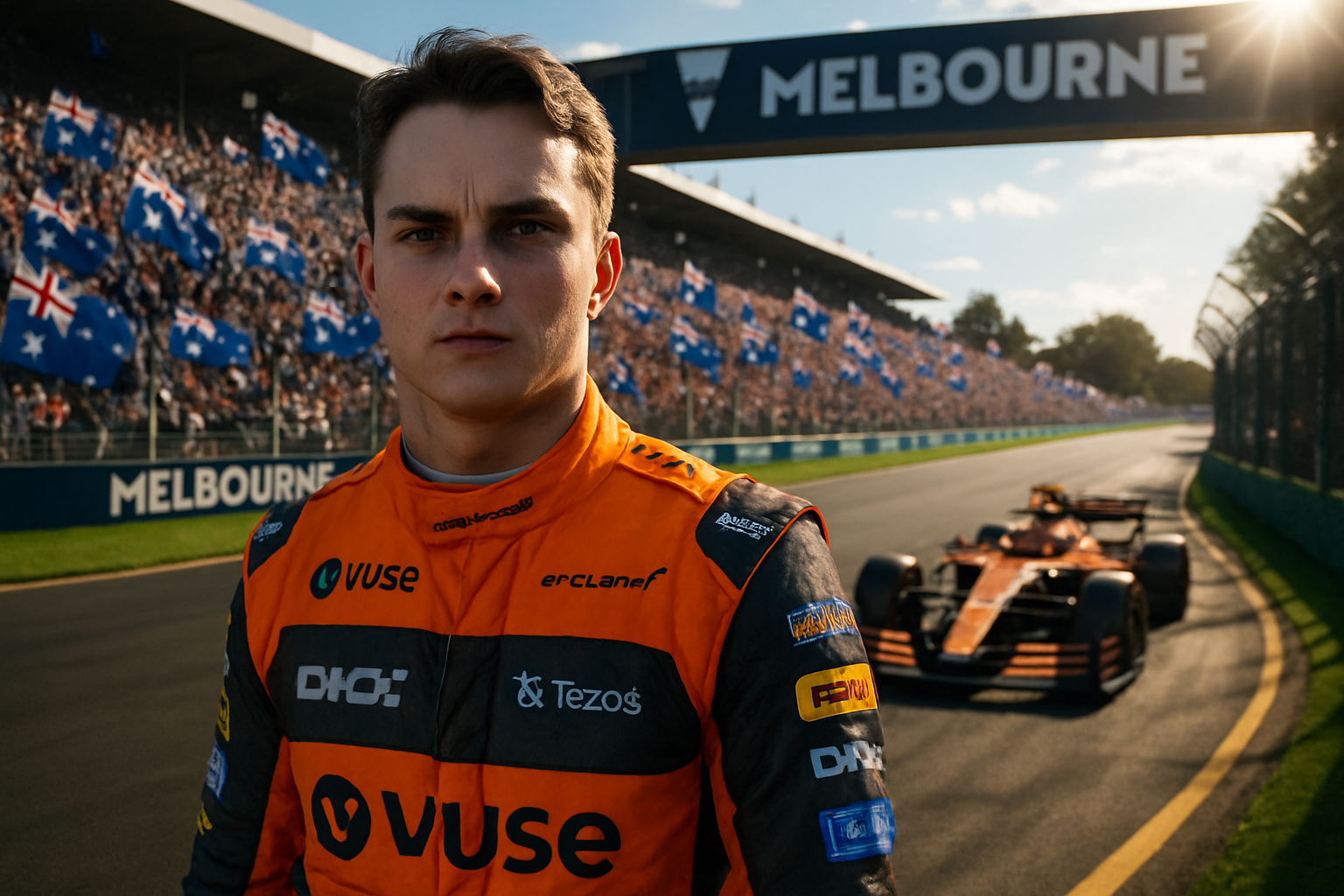
Oscar Piastri will start from the third row at his home Australian Grand Prix after qualifying fifth at Melbourne's Albert Park Circuit, as Mercedes secured a stunning front-row lockout to kick off Formula 1's most revolutionary season in decades.
The McLaren driver delighted the Melbourne crowd with his strong qualifying performance, positioning himself well for Sunday's season opener despite facing the challenge of F1's completely overhauled technical regulations. George Russell claimed pole position for Mercedes, with teammate Kimi Antonelli completing the front row in a remarkable recovery after a major practice crash.
Mercedes Returns to Championship Contention
Russell's commanding pole position, nearly 0.8 seconds faster than third-place finisher Isack Hadjar of Red Bull, signals Mercedes' successful adaptation to the 2026 technical revolution. The Silver Arrows achieved their first front-row lockout since the 2022 Brazilian Grand Prix, marking a potential fundamental shift in the competitive landscape after years of Red Bull dominance.
"The W17 has exceeded all our expectations," Russell said following qualifying. "We knew we had made progress, but this performance is beyond what we projected during winter testing."
Antonelli's second-place finish was particularly impressive given that he required extensive car rebuilds after a dramatic crash during final practice. The incident, which brought out red flags and required crane recovery, highlighted the challenging nature of the new regulations that have made the cars "much more sensitive" according to drivers.
Verstappen Faces Unprecedented Challenge
In the most significant qualifying setback of his recent career, Max Verstappen crashed out in Q1 after spinning into the tire barriers at Turn 8. The defending world champion will start from 20th position, creating an unprecedented opportunity for his rivals to capitalize while he attempts a recovery drive.
The crash highlighted Red Bull's adaptation challenges to the new regulations, which represent the first time in F1 history that both chassis and power unit rules have been changed simultaneously. This technical overhaul has created what many describe as the most unpredictable season opener in the sport's history.
Piastri Delivers for Melbourne Crowd
For Piastri, the fifth-place qualifying result represents a solid foundation for his home race performance. The Australian driver has consistently shown strong pace throughout the weekend, despite the challenges posed by the revolutionary technical regulations that have required drivers to completely relearn their approach to racing.
"Starting from the third row gives us good opportunities for the race," Piastri commented. "The new cars are incredibly sensitive, but we've adapted well and the team has given me a competitive package for the home crowd."
The Melbourne audience has embraced their local hero, with thousands flocking to Albert Park to witness the season opener. The circuit has undergone significant improvements, including larger bridges and enhanced shade areas, providing better facilities for the record crowds expected throughout the weekend.
Revolutionary Season Begins
The 2026 season represents the most comprehensive regulatory overhaul in F1 history, with simultaneous changes to both chassis and power unit regulations creating unprecedented challenges for teams. The introduction of VAR (Video Assistant Referee) technology marks another historic first, bringing enhanced race officiating capabilities to motorsport for the first time.
Ferrari's Charles Leclerc, who topped practice sessions earlier in the weekend and was fastest during Bahrain pre-season testing, qualified fourth despite pre-season expectations. The Scuderia's early pace advantage from winter testing appears to have been neutralized by Mercedes' superior adaptation to the new technical framework.
Lewis Hamilton's debut season with Ferrari begins from a challenging grid position as the 41-year-old seven-time champion enters his 20th F1 season. His partnership with Leclerc was expected to create one of the strongest driver lineups on the grid, but qualifying results suggest the team faces work to match Mercedes' early-season form.
Global Challenges Shape Season Opener
The Australian Grand Prix has proceeded despite significant global aviation disruptions caused by Middle Eastern conflicts that have affected F1 logistics. Over 18,000 flights were cancelled worldwide, forcing teams to develop unprecedented contingency plans including alternative routing strategies and enhanced fuel loading procedures.
Despite these operational challenges, the sport has demonstrated remarkable resilience, with all teams successfully reaching Melbourne for the season opener. The Albert Park Circuit's medical facilities, staffed by trauma specialists from Alfred Hospital, remain on standby for any incidents during the race weekend.
Championship Implications
With traditional competitive hierarchies potentially disrupted by the technical revolution, this season promises to be the most unpredictable in F1 history. Mercedes' return to championship contention, combined with Verstappen's qualifying disaster and Ferrari's adaptation challenges, has reshuffled expectations for the title fight.
For Piastri, starting from the third row at his home race provides an excellent opportunity to capitalize on the chaos ahead. With eleven teams now competing following Cadillac's entry to the sport, and VAR technology set to influence race outcomes, Sunday's Australian Grand Prix promises to be a defining moment in F1's new era.
The race begins at 5:00 AM local time on Sunday, with global audiences able to follow the action across multiple streaming platforms and traditional broadcasters. As F1 embarks on its most revolutionary season, all eyes will be on whether Piastri can deliver a memorable performance for the passionate Melbourne crowd at Albert Park.